th2ombre
It's ALWAYS about the light
Southern africa
Posted on June 29, 2023

The sun. Source of illumination so essential to life…and the wellspring of the visual arts’ nourishing power. Integral to life’s circadian rhythms, and the daily cycles of chill and warmth. In lockstep with earth’s planetary axis wobble that gives us seasons and climate. And chronometer to the passage of a life. In my case, eighty solar orbits on, I find myself a wizened version of the little kid I’ve always been—gobsmacked by the magnificence of nature in all of its raw power, beauty and diversity, and comforted by its nurturance of my life view of an architecture, and thus an Architect.
Those eight decades done, awakening a recognition of the diminishment of the time, energy and health available to relish big adventures. Pondering the bucket list, Cathy and I concurred that it was high time to visit the south of the Dark Continent. We chose Thomson Collection https://www.thomsoncollection.com the outfitter of our two previous trips to Africa and one to Peru to help us select locales and bush camps therein. They exceeded all expectations for planning, reservations, and pre-smoothing out any possible travel and transfer kinks. In all respects their help ensured this was literally and figuratively a move to the front of the line trip.
It’s half a world away geographically, and more than that in the cultural and nature experience—first to Johannesburg, South Africa, then directly on to Botswana, Zimbabwe and Zambia. Our time there being both their dry season and their winter, at between 19 and 13 degrees south latitude. Morning game drives dawn-chilly low 50s, high 80s mid afternoon for a little siesta or dip in the pool, and the temperature plummeting dramatically back to nippy following the afternoon game drives’ “Sundowner” and the night game hunt return to basecamp and dinner. We went for the game viewing and were smitten by the gracious politeness and courtesies of everyone we met. Not just the conciliatory camp staff, but everyone whose paths we crossed in our game vehicle or on foot, kids and adults radiating unsolicited smiles and waves, fresh air to the polarity and incivilities of my beloved U.S.. And as to nature? It’s been awhile since I’ve seen elephants or hippos on my daily dog walks.

The camps have turned hard core game hunting into a refined experience. “Tents” with hardwood floors, King-sized beds with Goldilocks’ just right lump-free firmness, fine linens, gossamer mosquito nets (largely unneeded, us seeing almost no pesky insects during the dry season), electricity and lighting, air conditioning or fans, hot and cold potable water, Architectural Digest baths— flush toilets with gentle-down seats for his geezerness, bathtubs, and both indoor and outdoor showers situated for privacy and killer immersed-in-nature views. A luxuriant take on the bush experience, but make no bones about it, this is insertion in nature, no holds barred. Above, looking into our hooch at the Khwai Leadwood camp in Botswana’s vast Okavango Delta waterway, me framing the shot from our shaded deck and outdoor seating area ten yards from riverbank trees. We were awakened in the middle of the night by a high decibel arboreal crashing and shearing of an elephant choosing his nighttime branches snack of just those trees. Right. There! Shall I mention the nearly continuous day and night basso profondo bellows of hippos, a Foley artist’s dream concoction akin to a mixture of contrabassoon and didgeridoo? No leaf blower sounds, thank you, but plenty of tropical bird calls and the “predators about” warning cries of baboons. Okay, then there’s the camp staff singing you an African-toned acapella welcome song on your arrival. It’s humbling when they already know you by your first name before you’ve even introduced yourself. Cool dampened rolled wash cloths to remove the trail dust on every game drive return along with a shot glass non alcoholic local ingredients digestive…and, oh, your hooch mini bar stocked with your preferred adult libations (thank you Thomson!). Spoil me, boy howdy!

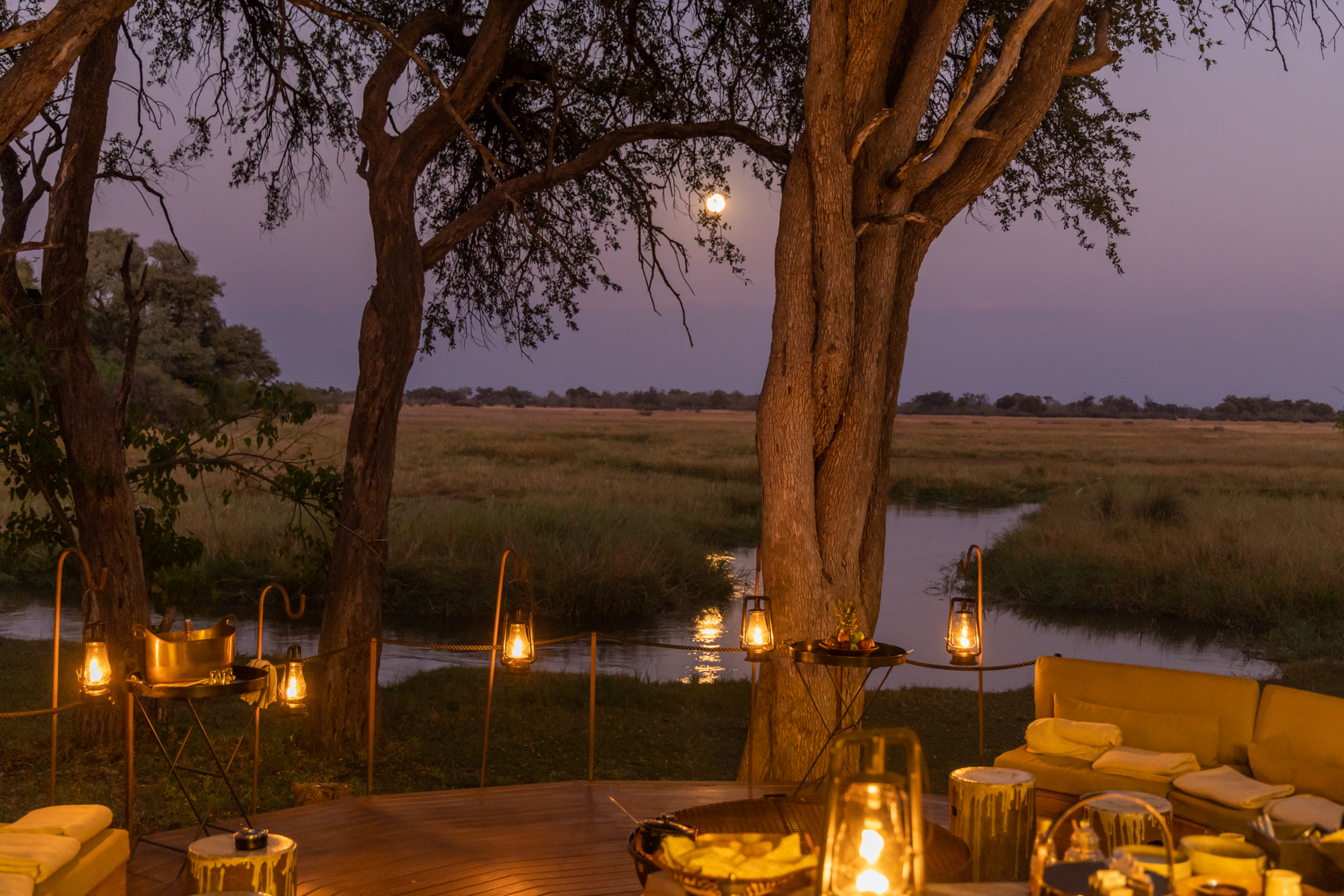
The Bushcamp day begins with the camp staff awakening us at 05:30, leaving fresh coffee and juice. A half hour later we’d be ushered by torchlight (it’s still dark, and the predators wander here) to a crackling wood fire for a light (African continental) breakfast of porridge, fruit, meats and cheeses, bread and pancakes. This meal is just to tide one over until the real “hot” breakfast or lunch—or both—four and a half hours later after the morning game drive. Saddle up in the vehicle with our guide as driver and head out to the morning hunt at 06:30. There is no set path to follow, only hunches and expert knowledge on where this or that species might be found. The “roads” are convoluted twisting trails, a track each, for the wheels on the left and those on the right and suitable only for heavy duty off-road Cruiser or Rover vehicles. Midway through the morning drive we’d repair to a shady and view-sumptuous spot for coffee, tea, juice and biscuits. Then back to two more hours of the hunt, all of it tailored to what we’ve conveyed we’re hoping to see. Then the downtime in the midday heat while the animals hide in the shade of thickets and we can partake of that late breakfast or lunch, perhaps a swim in the pool, read a book, go over the morning game images, or succumb to a Spain-be-proud siesta. High Tea at 15:30 with fresh-made yummies and beverages of your choice, then the afternoon game drive beginning at 16:00. Pause for a “Sundowner” break of finger food and drinks—verrrrry British G & T’s a common accompaniment—then the after-dark return to camp, searching for nocturnal critters along the way. A quick freshen up and dinner by candlelight with cocktails, beers, and wines paired to this evening’s chef selection. These aren’t cooks, don’t you know. They are trained chefs expertly preparing yet another sumptuous repast. Follow with a torchlight chaperoned return to the hooch. Collapse exhausted in that comfortable bed and drift off to the symphony of night forest sounds. Rinse and repeat.
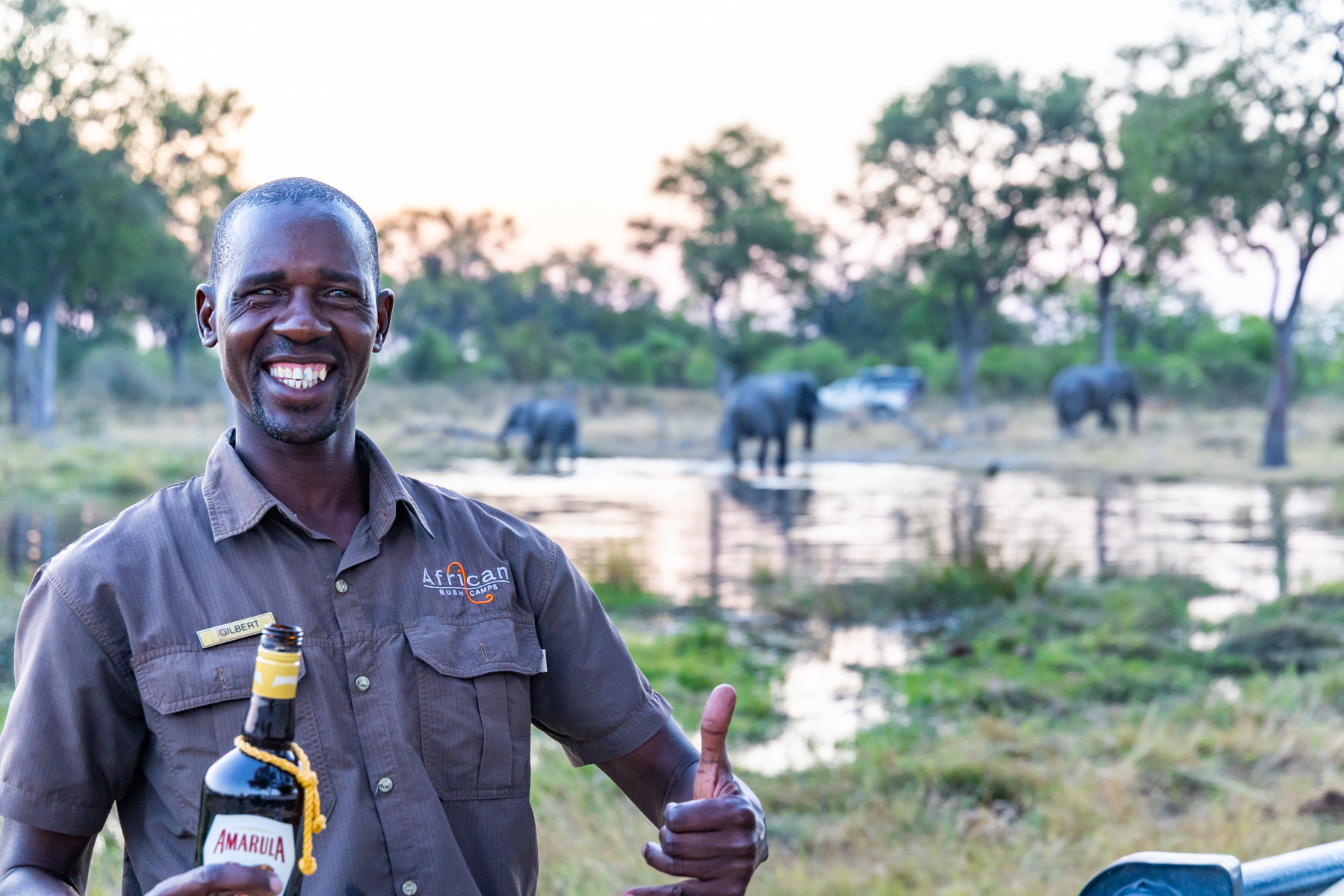
Our guides were Gilbert in Khwai Leadwood/Botswana Okavango Delta https://africanbushcamps.com/camps/khwai-leadwood, Elijah at Lolebezi (lower Zambezi River, Zambia) https://africanbushcamps.com/camps/lolebezi/, and Thomas at Billimungwe (South Luangwa National Park, Zambia) https://bushcampcompany.com/bilimungwe/. Calling them professional hunter guides understates the reality by orders of magnitude. Generally local histories, then formal guide school followed by apprenticeships. Driving those two wheel tracks, they constantly would pull off into the bushes on the left (British colonial, driving from the right seat) so as to look down at the dirt, reading the animal tracks. Yes, game often walk those same roadways. “Lions, quick stride in the opposite direction.”

Or they’d come to a stop, shutting off the engine to listen to the creature noises—”baboons raising alarm”… and we’d suddenly be bushwhacking through shoulder high grasses to a tangle of trees and brush searching for elusive leopards.

Gilbert in the morning chill

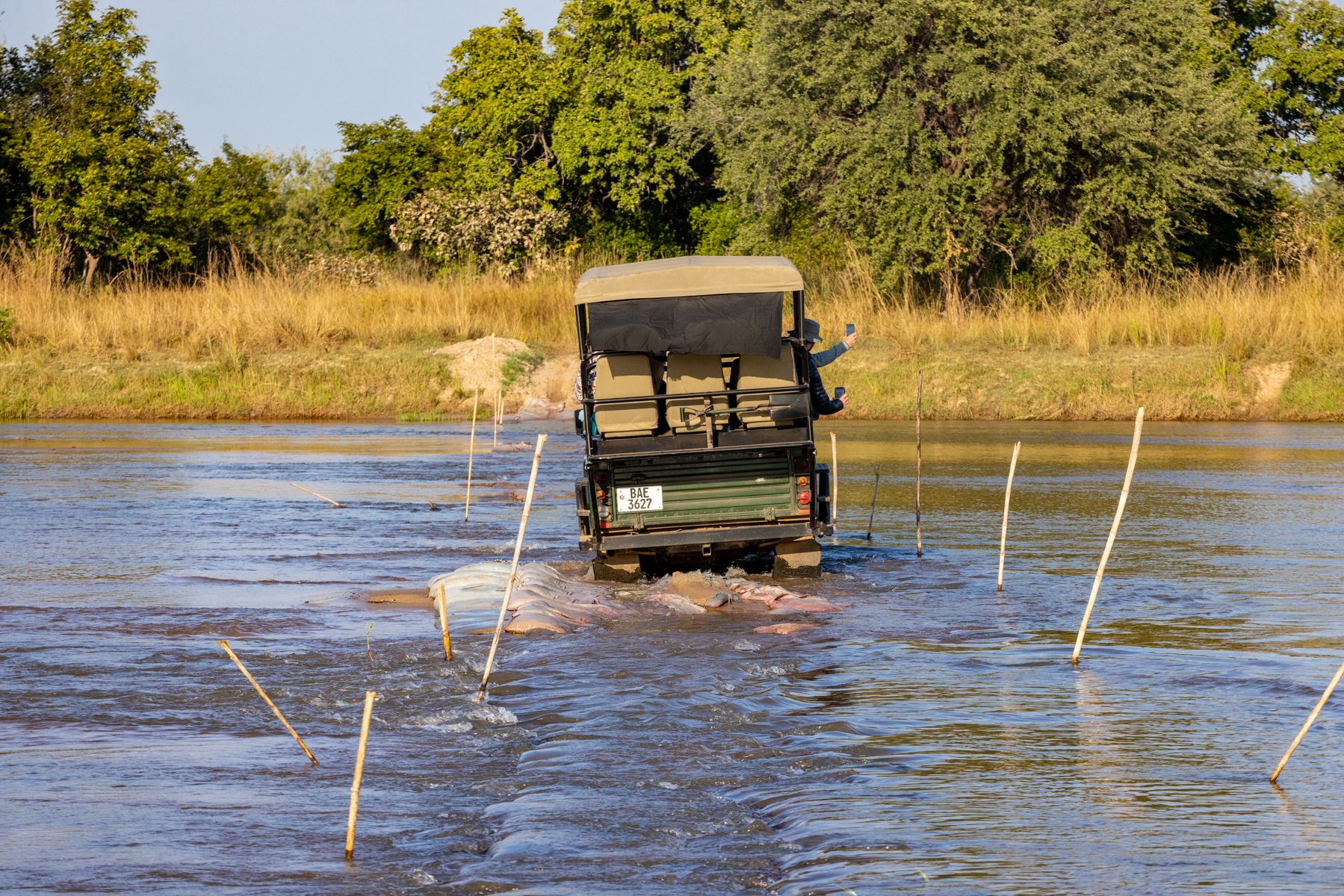
Our game drive vehicles were purpose-built, hell for stout Land Cruisers or Land Rovers with six passenger seats in a theater-style rise from front to back. We had times with all six seats occupied and others with just Cathy and me plus our guide. The vehicles were windowless open air all around, but with a rip-stop canvas top for shade. Hefty off-road suspension, and that was necessary. When game was sighted or intuited by animal cries or behavior we routinely exited the rugged two wheel roadways, bushwhacking into terrain and foliage that looked impassible to the uninitiated. This is a breezy affair, and spoiling us rotten, we were issued woolen-covered hot water bottles and hefty blankets for the chilly morning drives, and of course we dressed in layers. Here’s an opportunity to speak of game drive “refreshments.” Secure insulated boxes for food and beverages were stored in a compartment at the back of the vehicle. During mid morning tea breaks and afternoon sunsets, a purposely designed part of the vehicle’s front steel buttress would be flipped forward, forming a countertop on which a tablecloth would be placed, then covered with distilled spirits, chilled wines and beer, fruit juices, sparkling water, sodas and numerous finger food options. This is also when nearby thirsty trees and shrubs would receive our humble human offerings.

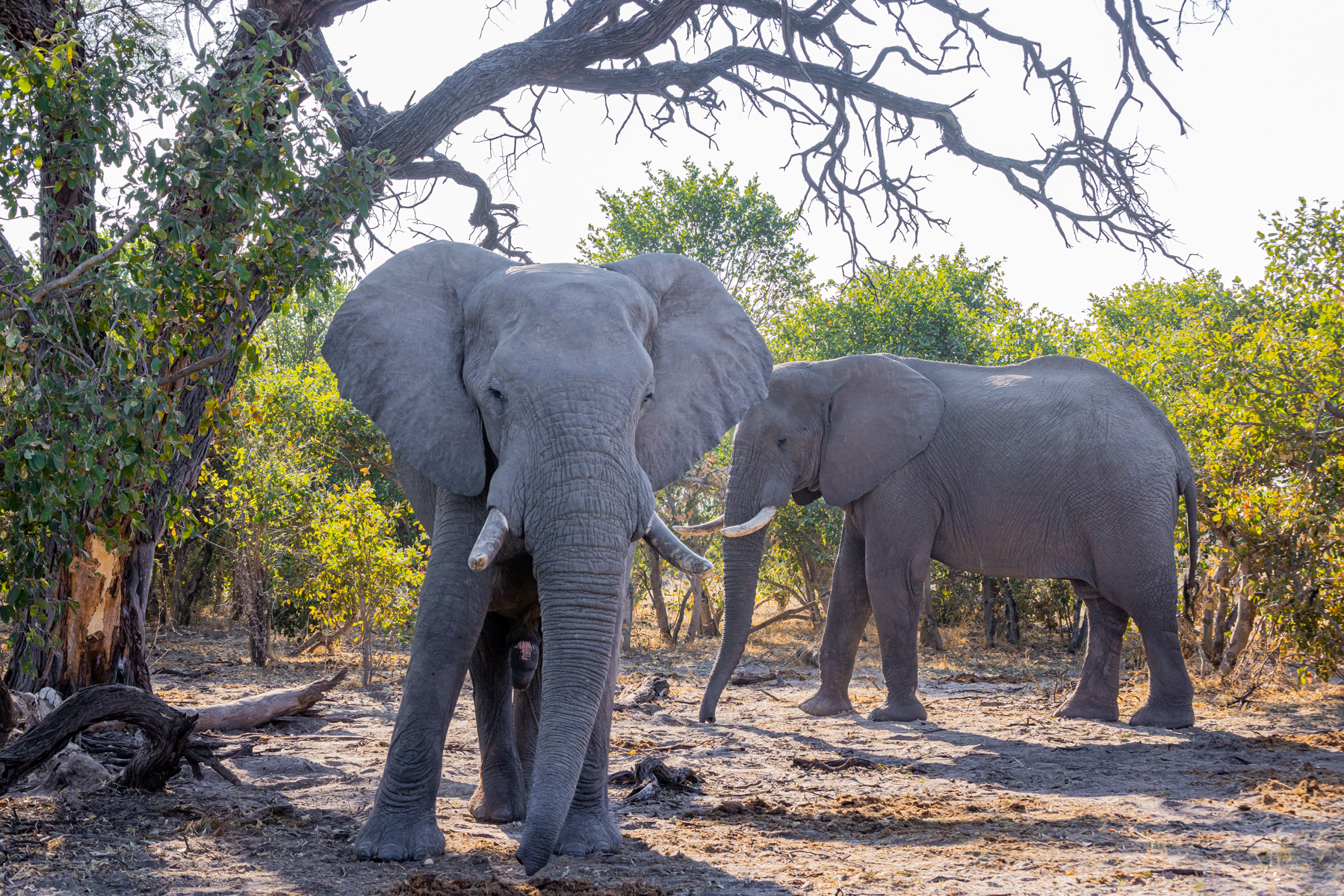
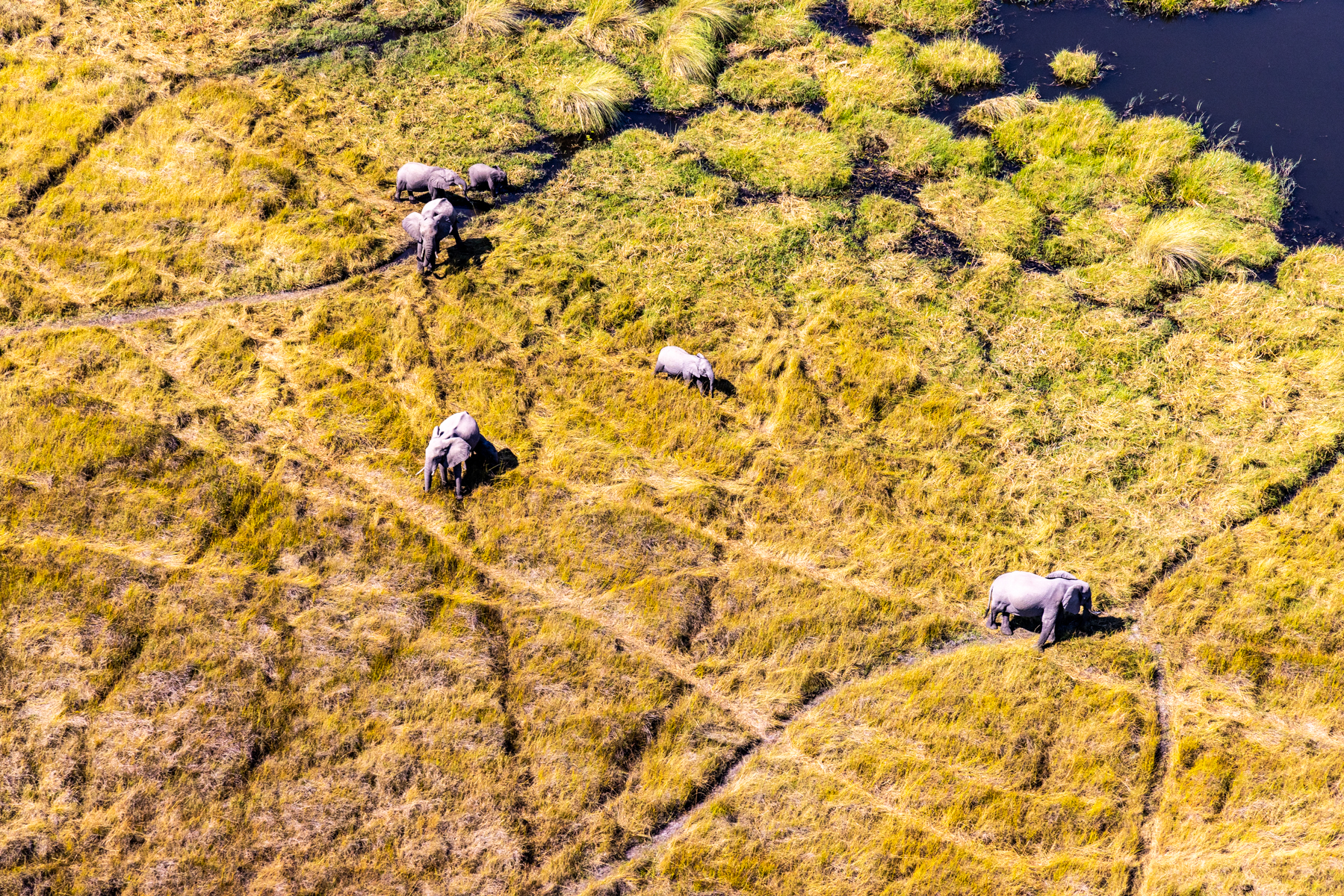
But we came for the game-viewing and my camera lenses grew white-hot with all the shooting in such a target-rich environment. I didn’t leave home with a pre-defined list of favorites, but soon found myself embracing wonder at the majesty of elephants and giraffes. My anecdotal take is that anti-poaching efforts in Botswana and Zambia must be paying off. Elephants were a staple on our game hunts and numerous times we encountered large herds of the pachyderms.

Elephants like their baths. A just finished mud bath above, and wading into cool Lilly-strewn water, below. One of the ubiquitous termite mounds in the foreground.

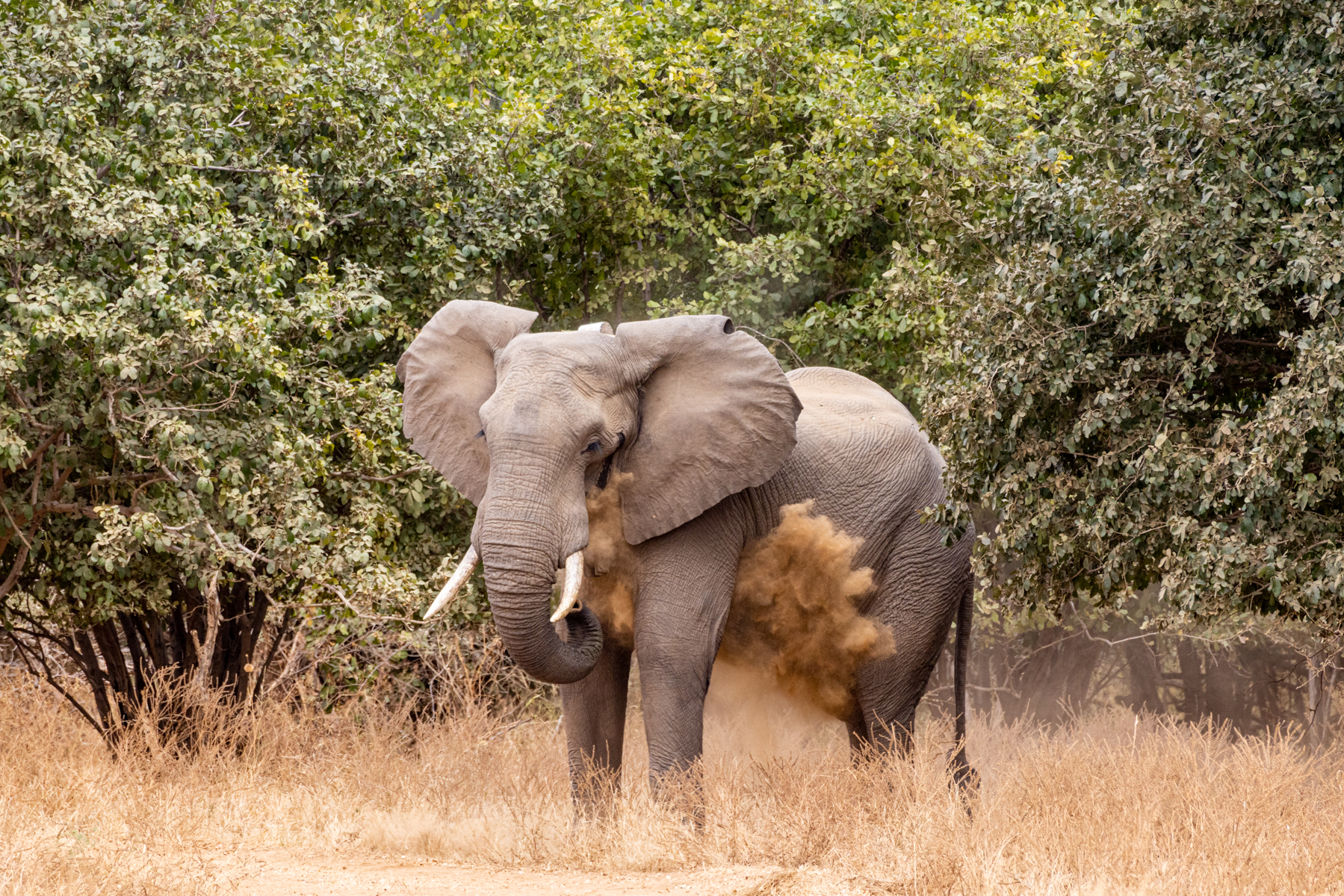
Their fondness of dirt showers effected by sucking up soil with their trunk, then shooting it wherever if feels oh so right.

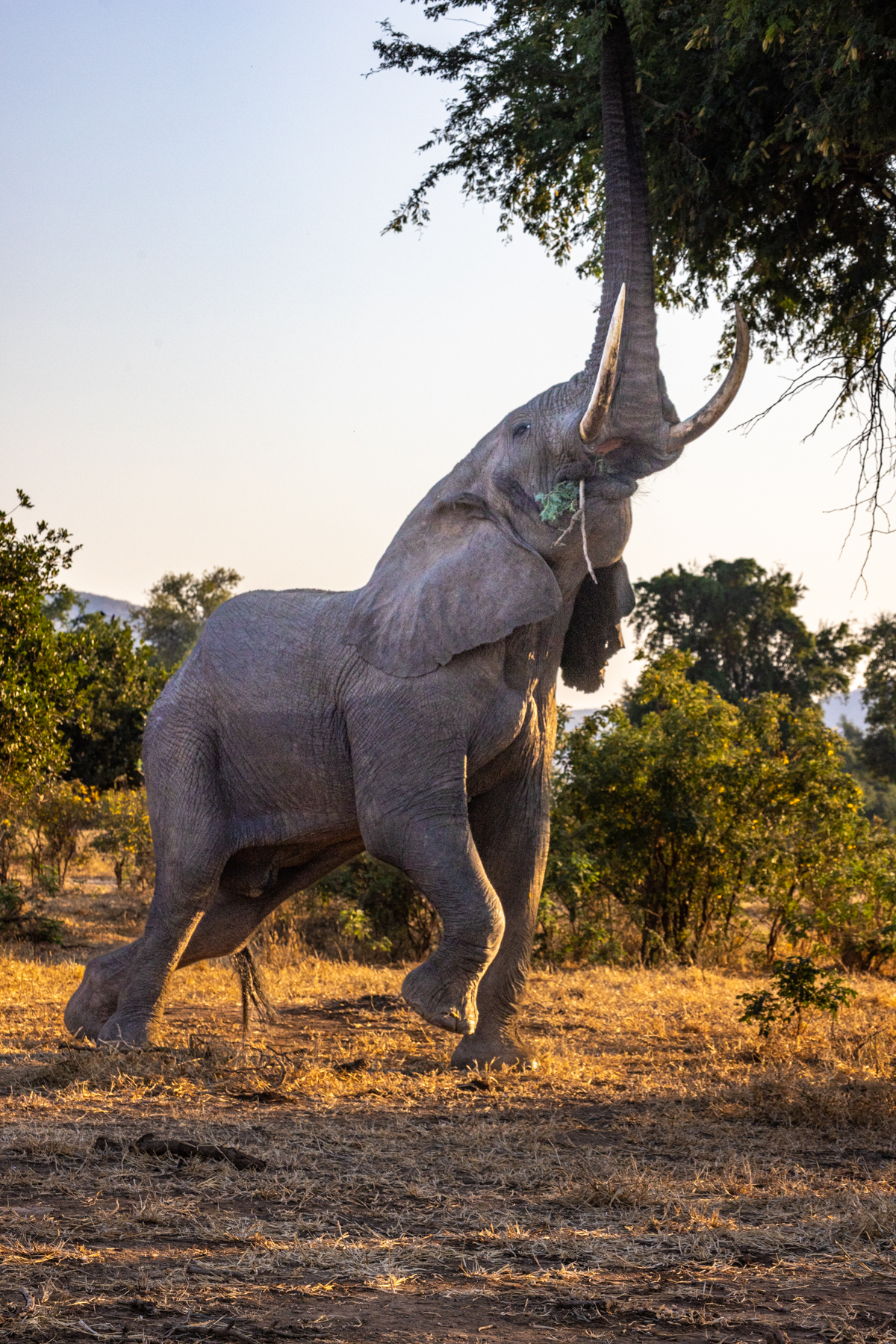
The beast above had a well-honed technique for those hard to reach high branches. He’d first ease his whole torso downwards a foot or two, like an air suspension bus about to disgorge passengers, then ease the left hind foot backwards to a toe-tap, and raise his right forefoot in elegant body-English as he arched his back and extended his trunk to reach up and tear off his vegan snack.
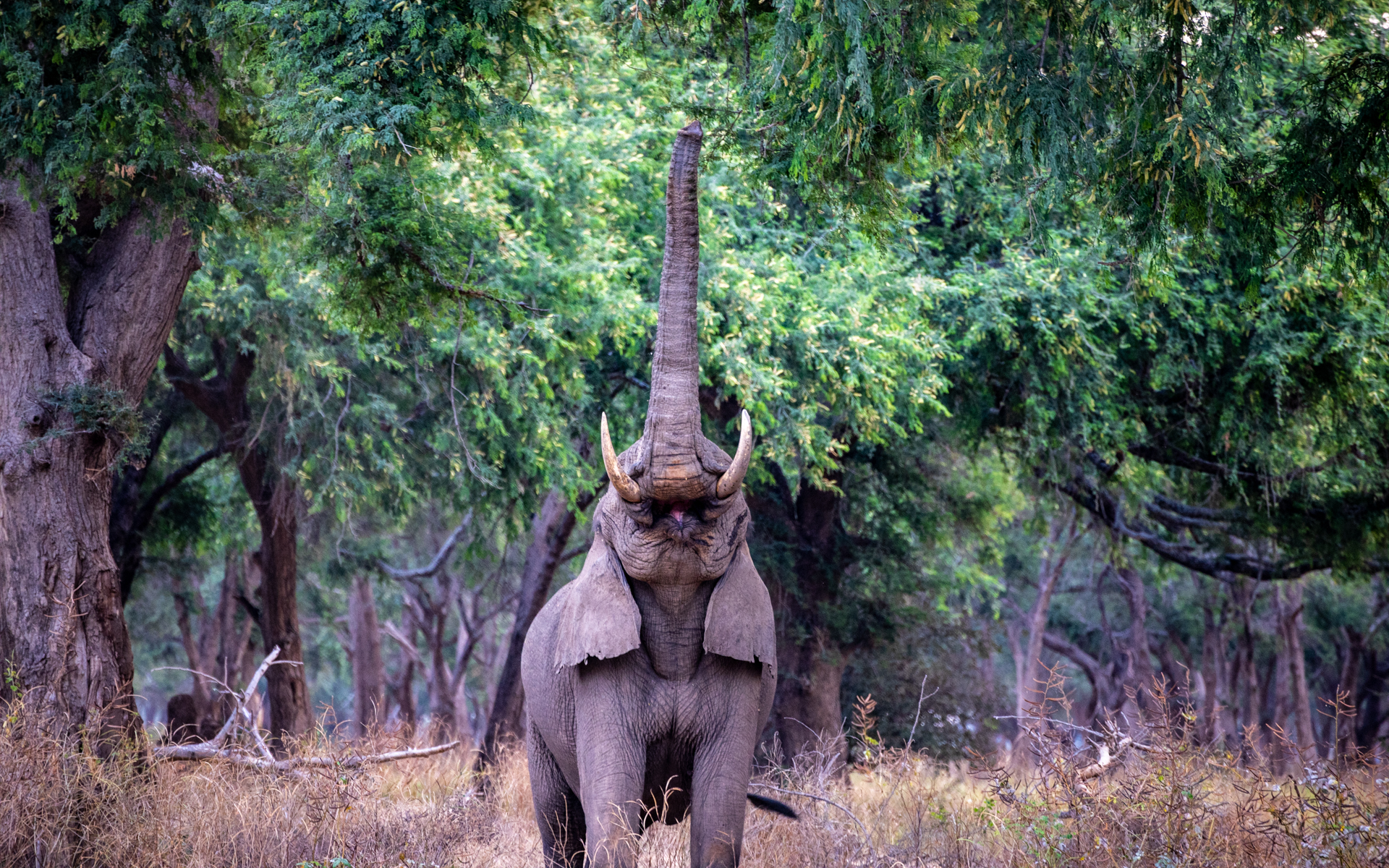
Below, he’s jaw grinding a branch and leaf morsel. Whether by accident or on purpose, when he brought down the limb he’d torn from the overhead canopy, it rested across his tusks, and he used his trunk in a leisurely stripping of leaves and twigs to stuff into his mouth. There’s some pollen on his right eye that wafted away as he sauntered off, meal consumed. Some insider backstory, perhaps? Elephants’ feet are modestly cushioned, which is why their walking foot plants are ever so quiet. Their front feet are nearly round and bigger than their somewhat oval rear feet. The tip of African elephants’ trunks have two opposing extensions and they wield them like our thumb and index finger for a prehensile grasp. Asian elephants have only one such grasping terminus. Elephants’ trunks possess 40,000 muscles, the control of which takes some learning by the little ones. African elephants not only can trumpet, but can also emit a low frequency guttural rumble from their body, a sub-woofer emission that their chums (and us) can hear and feel. Elephants have relatively inefficient digestive systems. About 40% of what they consume results in digestive success, the 60% inefficiency showing up in their large elephant pie droppings. They have two longish molars on each side, top and bottom, eight teeth total, and have six sets of teeth in their lifetime, their version of our human baby and adult teeth. They mix up their diet, the variety helping stave off the wear down loss of the molars. When the last of those are finally worn out, death may come from starvation. In an intriguing bit of natural selection, a genetic twist has produced a certain portion of African elephants without tusks. This makes them unappealing to poachers. A decade ago they made up 6% of the population. That has increased presently to 20%.


Here’s a whimsical tidbit. I’ve mentioned the mid-morning game drive coffee break cum bush watering? On this particular morning Elijah chose a lovely stopping spot in the shade of a large tree, angled so we could watch the hippos cavorting in a nearby water pond, waterbucks and impalas peacefully grazing on grasses. Ever the gentleman, I waited until Cathy had returned from her comfort break before aiming at the base of the tree behind our vehicle. No sooner had I wandered back to partake of some juice and biscuits than a large bull elephant slipped silently and effortlessly through the brush right where I had just zipped up my fly! He was the first of a bachelor group of four, and we and our vehicle were directly on their path to the water. Elijah quickly gathered us on the other side of the Cruiser and whispered for us to get inside, stay low and quiet. The lead bull came along the right side of our ride, not ten feet away, stopping to gauge our threat level and his response. He stood there still and rigid before relaxing his trunk, and resuming his ear fanning. Then he and his chums carried on to drink and spray the water.


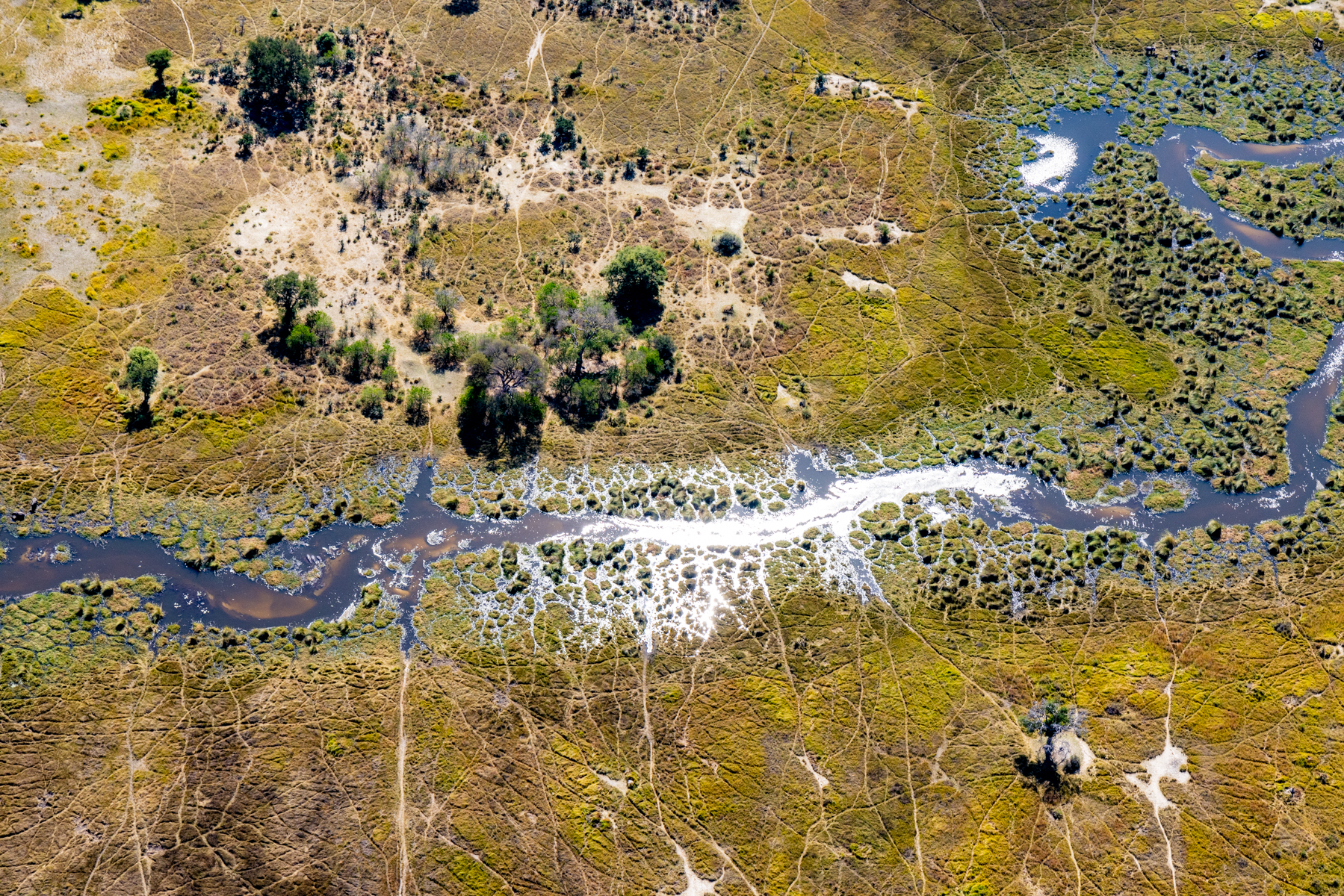
To our typical twice-daily game drives we added other exploratory variations, including a helicopter overflight of the areas we’d been exploring on the ground. This is a labyrinth of water and grasses, trees and termite mounds interspersed by animal trail furrows, terrestrial stretch marks oft created by the heft and size of elephants and hippos.
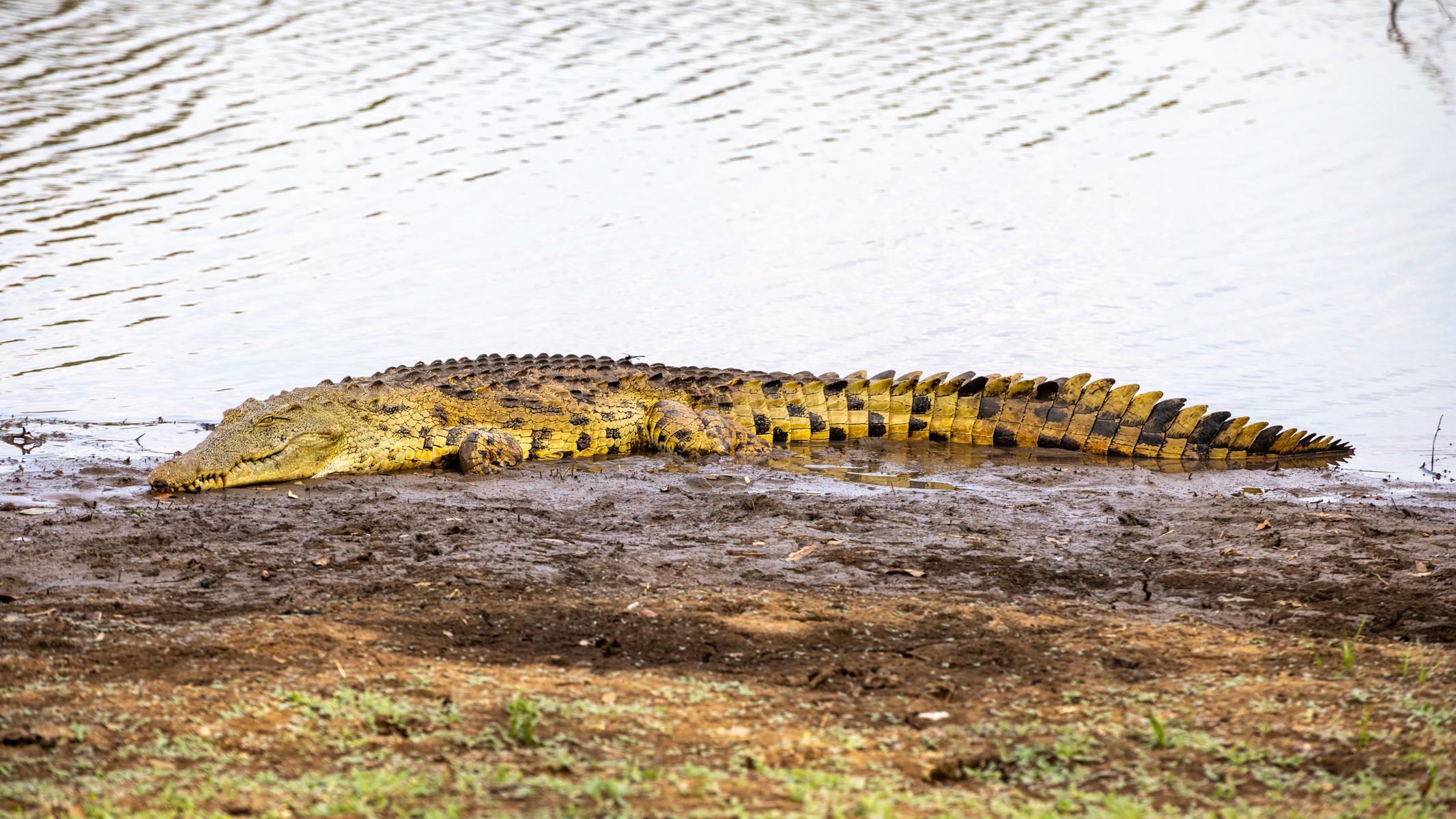
And where there’s water, besides hippos one should expect crocodiles. I count 16 large crocs in this one frame. Very glad we didn’t have engine trouble resulting in a forced landing.


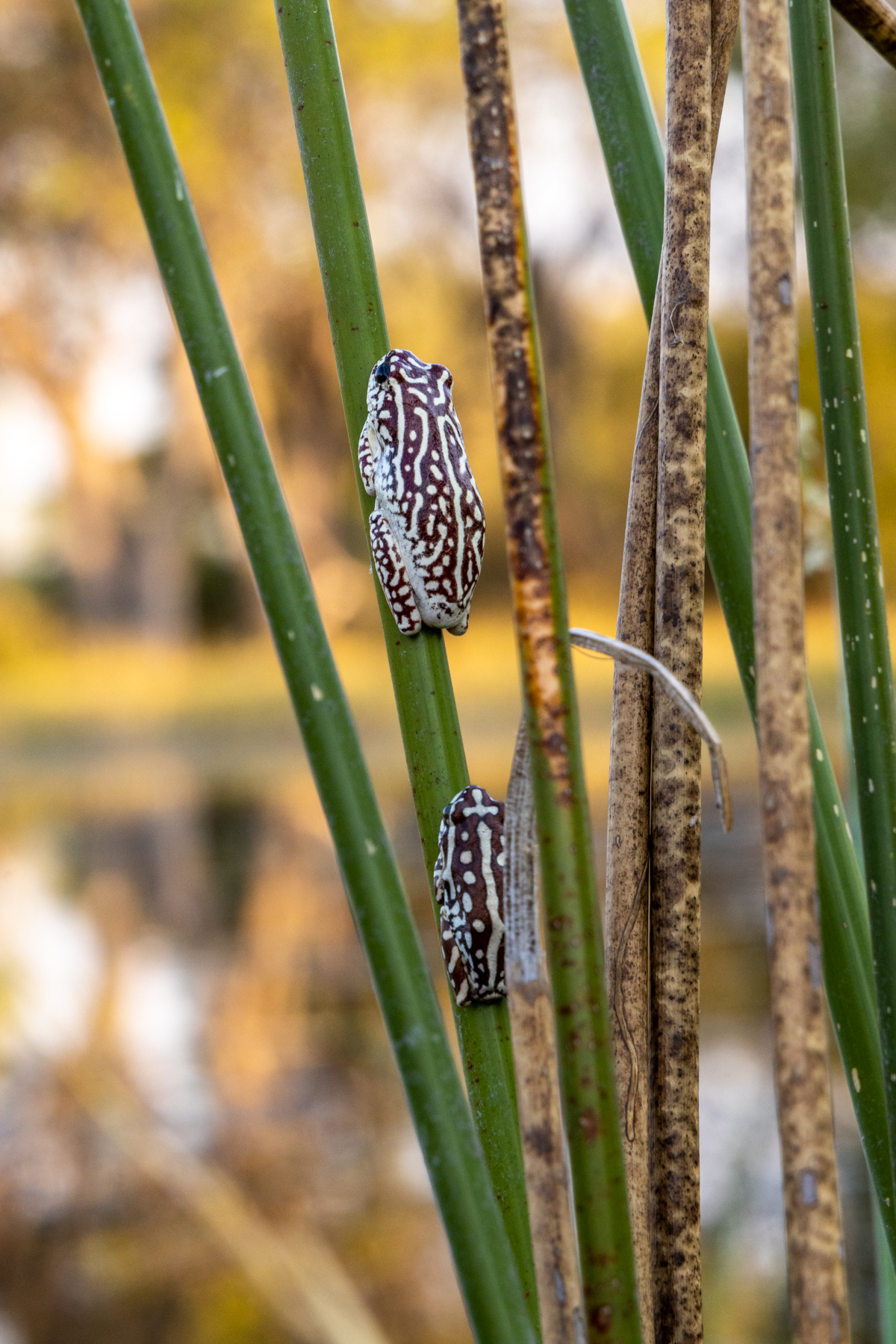
For another twist to the traditional game drive we enjoyed a mokoro skull in the waters of the Okavango Delta. Mokoros are a dugout with us sitting down inside and the guide poling us like a Venetian gondolier misplaced to Botswana. With our guide’s keen knowledge we found Angolan reed frogs hanging on water grasses. This is a big thing because they are such a little thing—about the size of your little finger nail. We were told that they’d begin their song to the night about when we were just grinning our way into our evening twilight Sundowner.
In the African bush, the most likely thing to expect is the unexpected.

As we returned to our put-in/take-out spot, the sun dropping quickly below the treetops, we found ourselves treated to first one, then countless members of a large breeding herd of elephants. Breeding herds are matriarchal. As males reach sexual adolescence they are sent off, which leads to both wandering single males and bachelor groups.

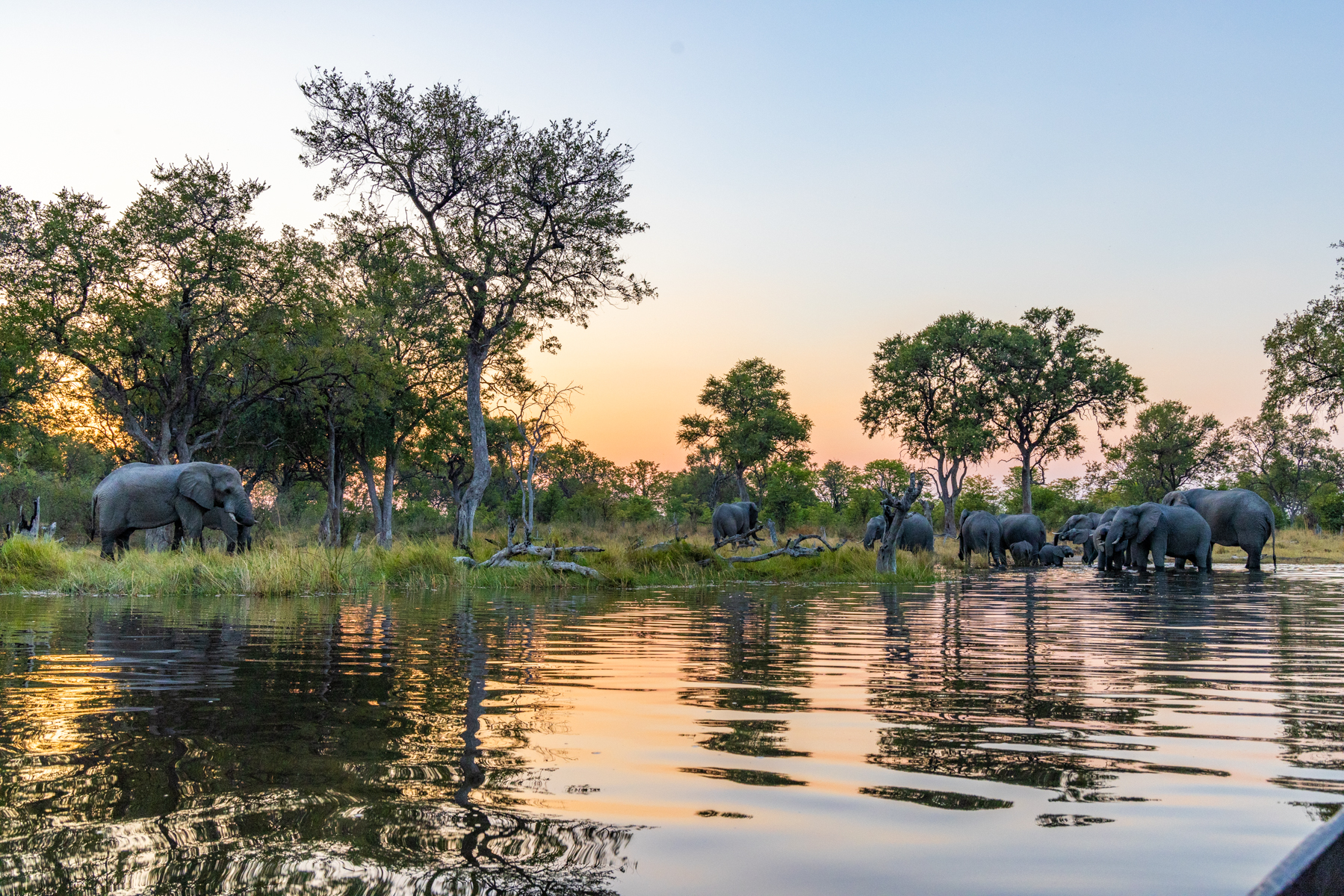
The herd congregated at their spot along the bank some forty yards from our bush cruiser. We settled into our Sundowner while the elephants enjoyed their own version. And right on cue the Angolan frogs filled the air with their mysterious song, a continuous coloratura soprano hum exactly like a roomful of humans delicately clinking their crystal stemware with their knives. Yet another time when nature favored me with a jaw drop.
May I recommend for your viewing pleasure the documentary “The Elephant Queen” available for streaming? It conveys not only the matriarchal nature of elephants groups, but wonderfully highlights the species’ sense of togetherness, of close bonds within herds, of the mentoring and protection of young by old. This played out quite personally for us at Billimungwe, our last game lodge, in Zambia’s South Luangwa national park. Coming back from a morning game hunt, a bit knackered and favoring a little nap, an idea made preposterous when a seven member family moseyed up to the waterhole over which our hooch was located. Oh, my. Mom shepherding her calf to the water’s edge, clearly mentoring how to wield its trunk for a drink. The little one decidedly copying its mother’s motions.
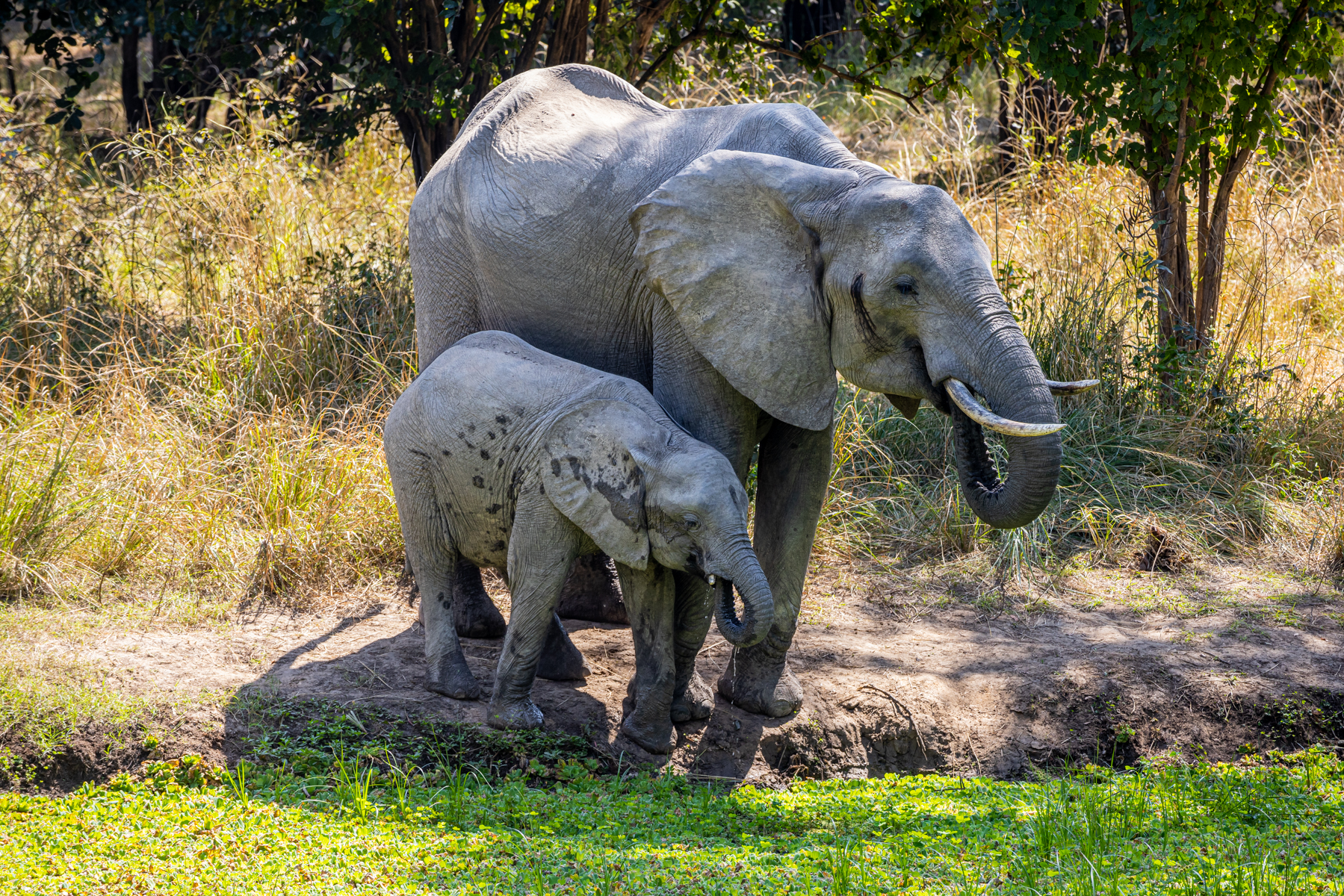
A slightly older sibling or cousin wading right into the swim of things.

Then the two youngsters, thirst quenched, turn to walk back to the adult in the pond, a bout of maturity dashed when the youngest, succumbing to a “why not?” moment beyond its control, revels in rolling on its back in the dirt, punctuated with a finishing exclamation point of a trunk blown dust shower. Somebody’s gotta do it! Sooo good.


Well, speaking of mothers and little ones. Mom patiently holding still while junior nurses.

Elephants’ bulbous bodies make me want to chuckle. I can’t help it. Nor can I help thinking that giraffes look like elegant statesmen, who wouldn’t surprise me in morning suits. I’m none too subtle about my reverence for the rich low light colors of dawn and dusk. A nice byproduct of early and late game hunts. The times are chosen because that’s when the animals are about, but who am I to complain about the atmospheric pastels?
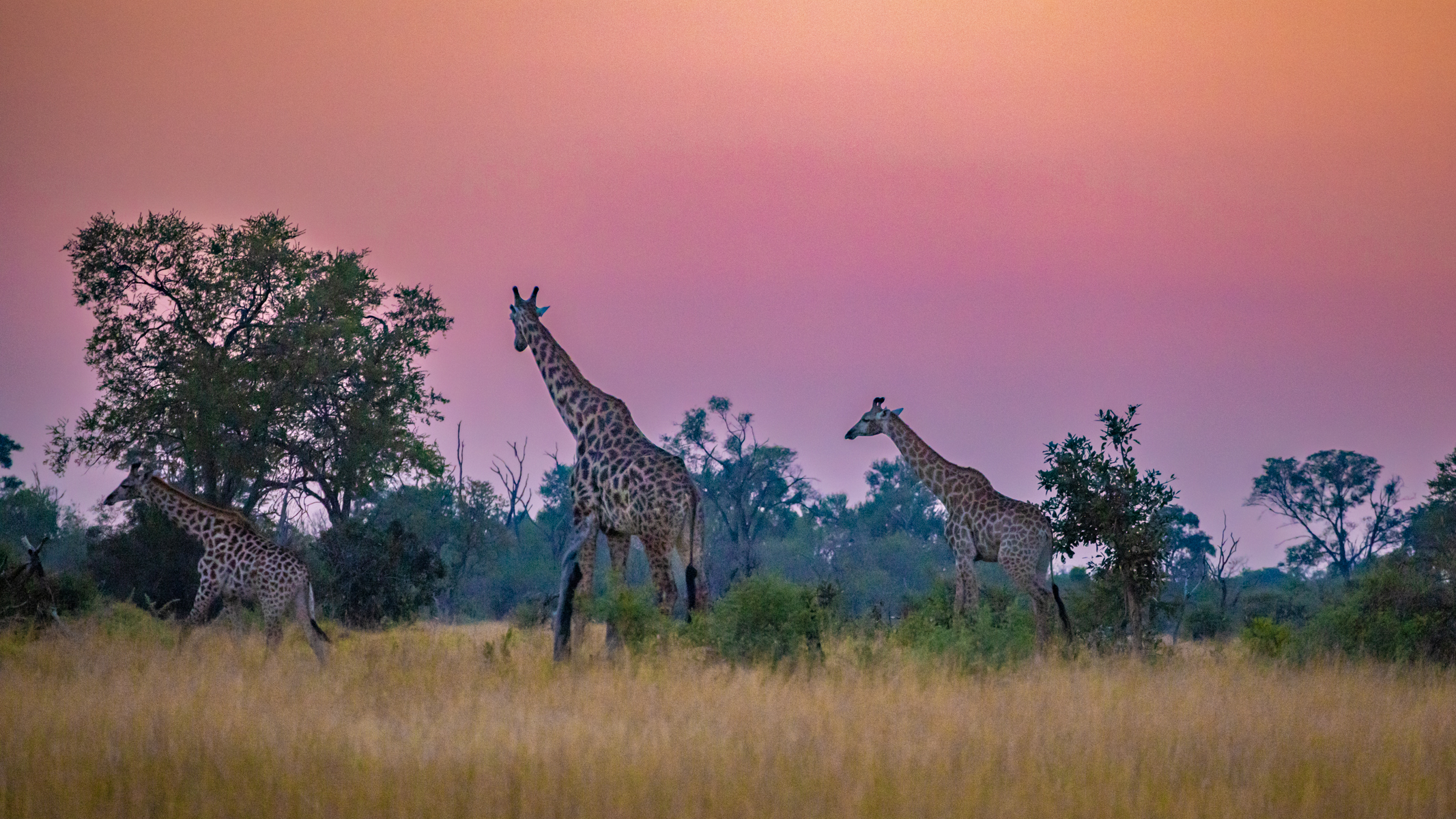

There’s an anatomical reason giraffes’ gaits are of such languid svelteness, and it’s more than their tall spindly frames. Commonly four-leggers not running, but walking, do so in a reptilian fashion, left front and right rear together and vice versa. Giraffes’ walking gait is two right legs together, then two left together. Neville Chamberlain never looked so proper.

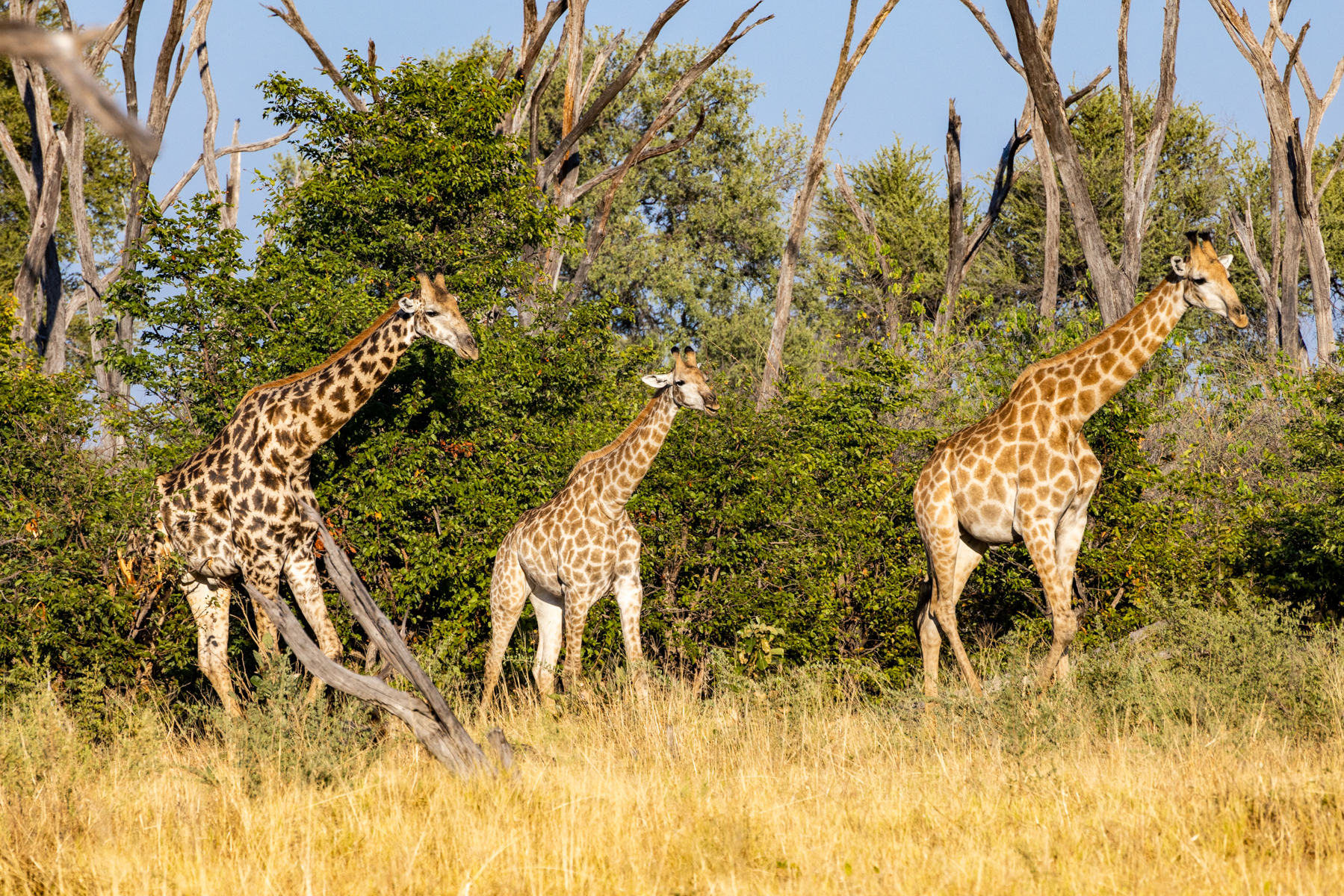
Yes, bird cleaning of insects and other pests is their lot in life for giraffes, hippos, and cape buffalo. Maybe they are effective at ear wax removal, too? This would be a male, as his horns are bald. Male pattern baldness jokes aside, females’ horns are furry on top. I nabbed the picture below at a one-day stay to decompress from jet-lag when we first arrived in Africa, at a place called Thamo Telele, which translated from Setswana, means long legs. It is a sanctuary for giraffes, a creature that by all appearances is gentle and calm. Except when males set their sights on females in estrus. The resident biologist showed us a video she’d taken right there in the sanctuary of males fighting. Standing alongside one another, leaning down and back, then violently swinging their entire neck and head into body blows of their opponent. Visualize this as a MLB slugger cocked, then releasing into a whole-body over-the-fence home run, the giraffe’s neck and head being the bat. There’s a lot of momentum with their body dimensions. Crooks in the neck and concussions would seem inevitable.

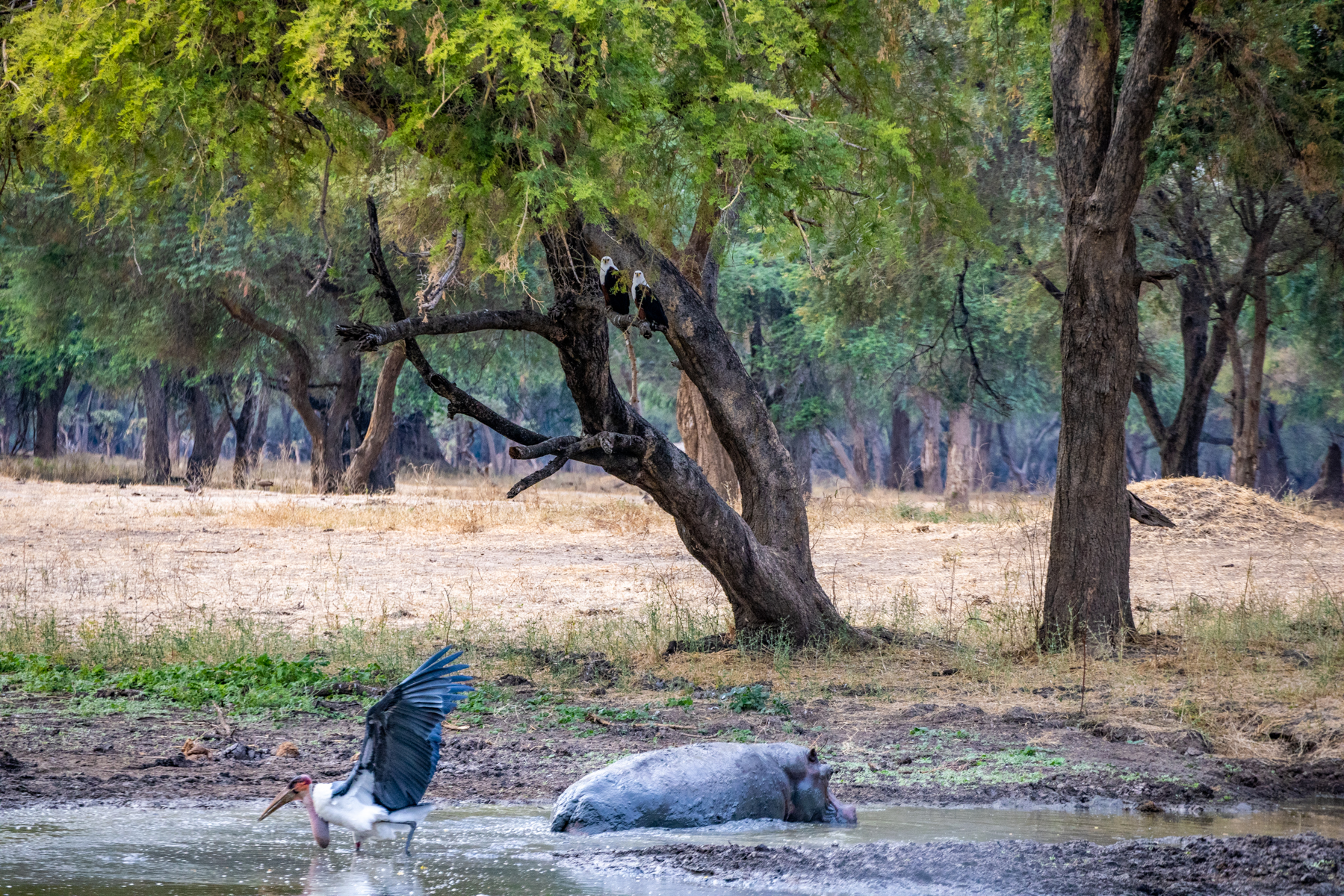
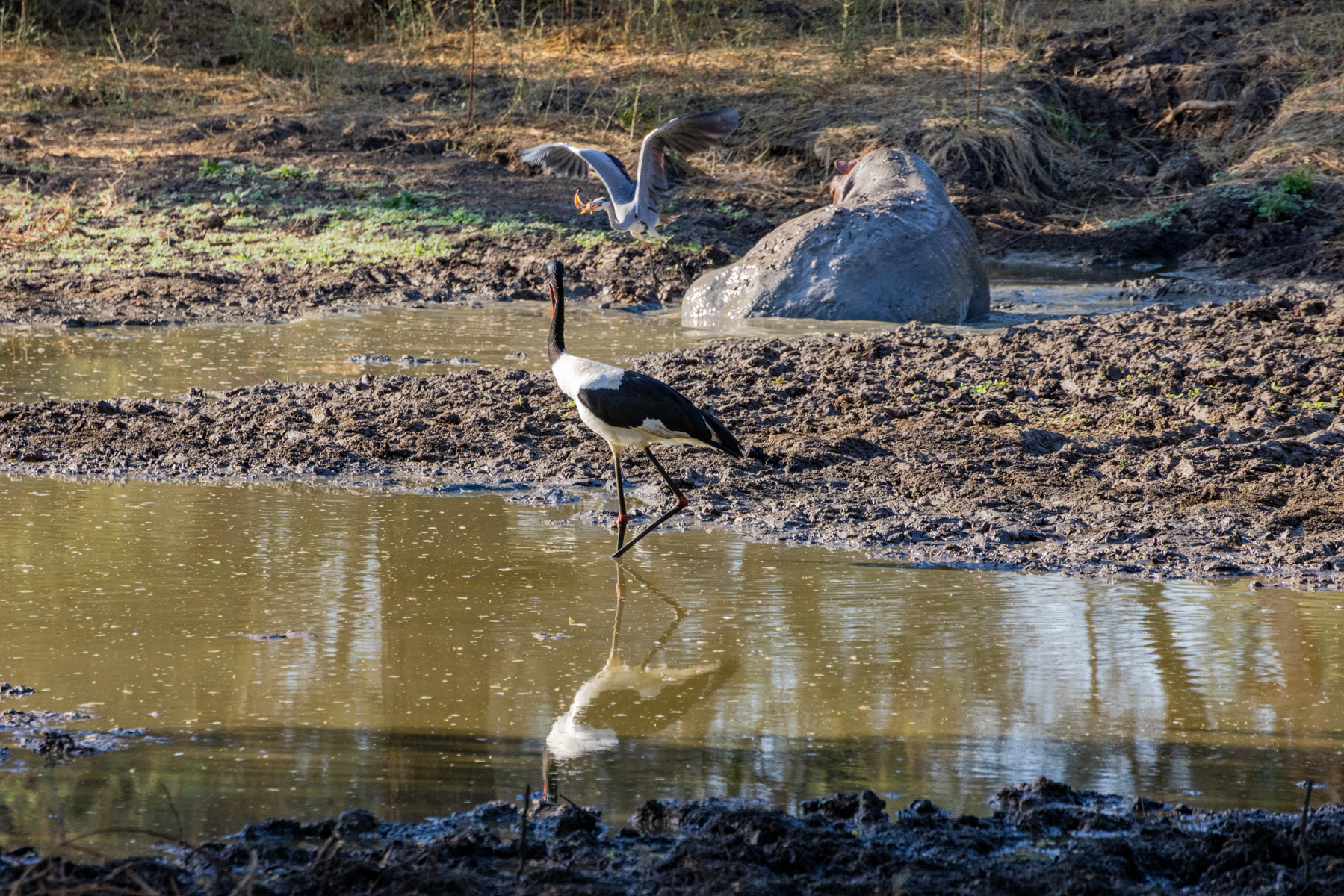
Hippopotamus. Hippos. On dry land, surprisingly agile and fast for their size. And not a creature to be trifled with. They spend much of their day immersed in the water, a load lightening for their huge bodies, but also a means of avoiding sunburn on their sensitive skin. My octogenarian dermis can relate.
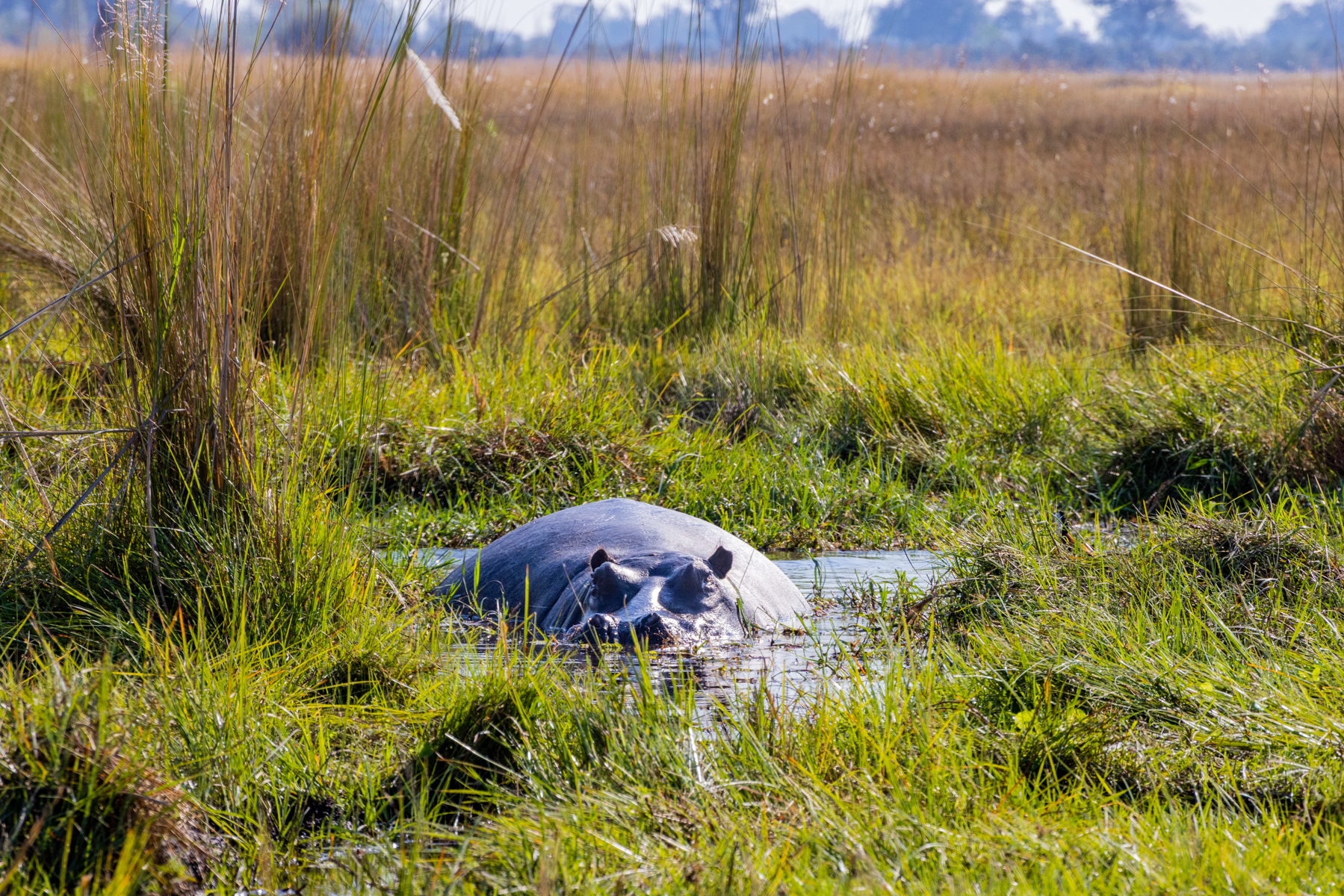
During our time at Lolebezi Bush Camp in Zambia we elected to take one of our afternoon game hunts as a canoe journey on a side arm of the Zambezi river known as the Discovery Channel, and begun literally right in front of our particular lodging. This is a hippo strewn waterway with a moderate current, and in our instance, a 15 foot crocodile just yards from our eventual takeout spot. And that was after numerous paddle course adjustments for the countless hippos. Not quite Steven Spielberg, but it conveys a sense of safari adventure. Volume up.
The hide scars, blatant testimony to an ungentle comportment. And those enormous canines give as good as they get.



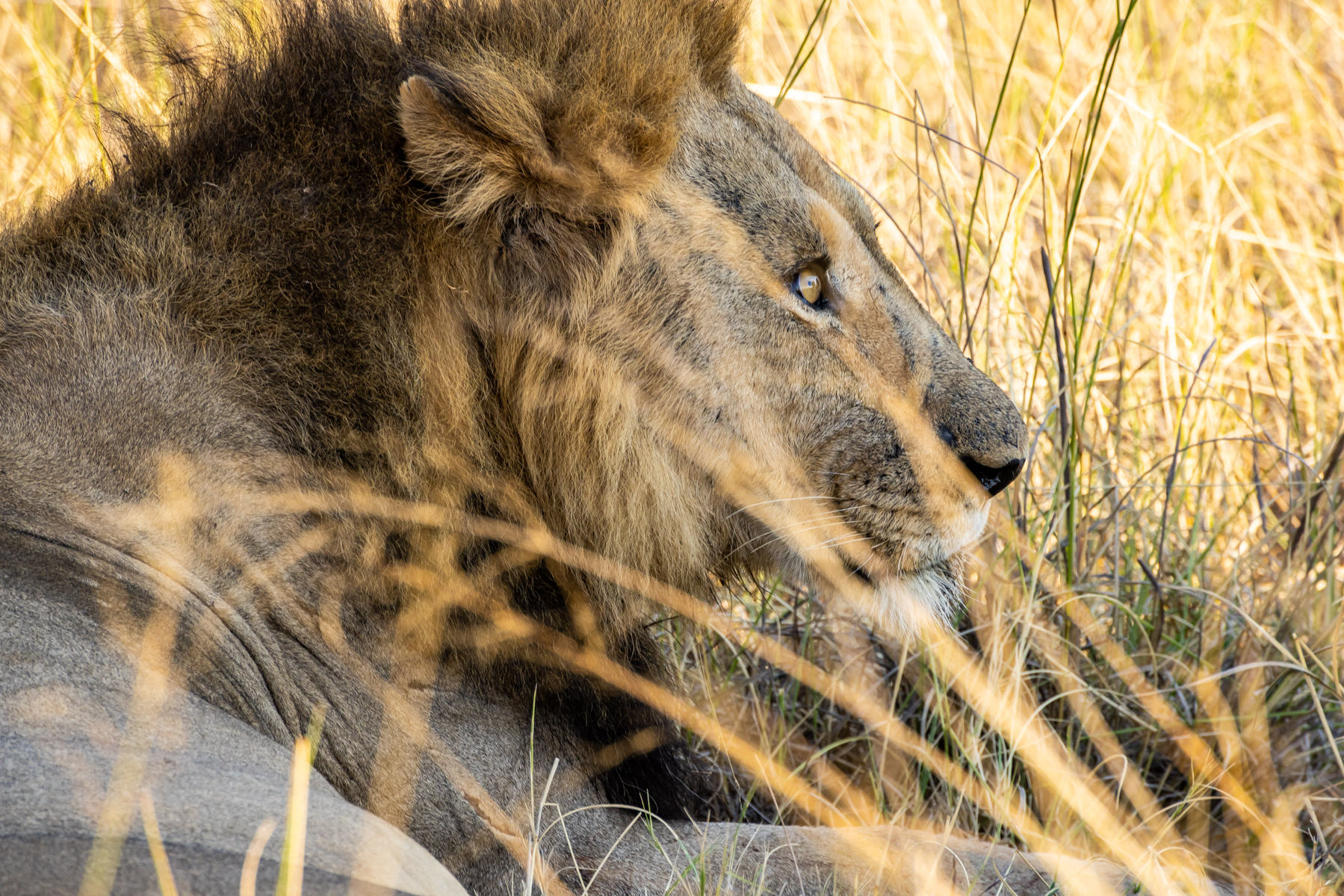
Lion. Simba in Swahili. Tau or Podumo in the Setswana of Botswana. I have no idea the term in any of the 73 native languages of Zambia. King of the African cats. Alpha predator. Males can hold their own in hunting, although females are often as not doing the, well, lion’s share as a pack, with the males showing up after the kill to claim their share.

There’s an interesting glimpse into lion behavior with the male in the next three shots. He lounged some 20 yards from a female on the other side of a thicket, who though single at the moment, was part of a pride that didn’t include him, a solo interloper. Apparently sensing him before he showed up, she had hidden her two cubs and somehow conveyed to them to stay hidden and quiet, as the reason he was in the neighborhood was to kill the cubs and claim her as his seminal own. Lionesses who lose cubs in this way go quickly into estrus to be mated with multiple times per day for a few days by that male, who wants the perpetuation of only his own scion.


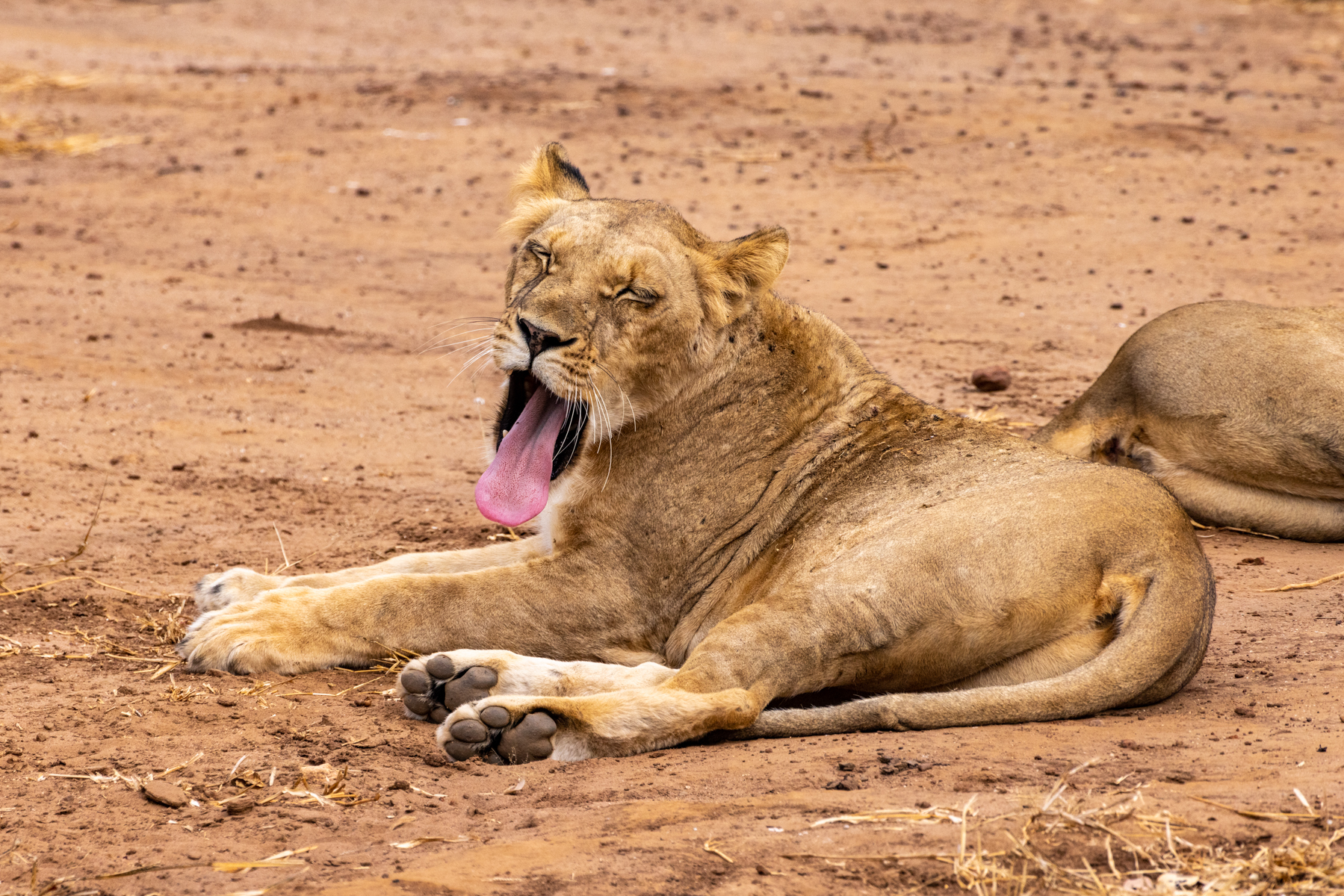
After some diligent searching and radio updates with other game drive guides we came upon the pride we were told the female belonged to. Here’s another lion behavior glimpse. The pride had just finished off gorging on a kill, and repaired to the grass in the shade of a handy tree. Perhaps you’ve had one of those “I can’t believe I ate the whole thing” food comas where collapsing supine with bulging tummy was inescapable? That paw across her chest, testament to the moment.


Do not enter this next segment if you take offense at graphic sexual depictions. A male doing his best to impregnate a female.

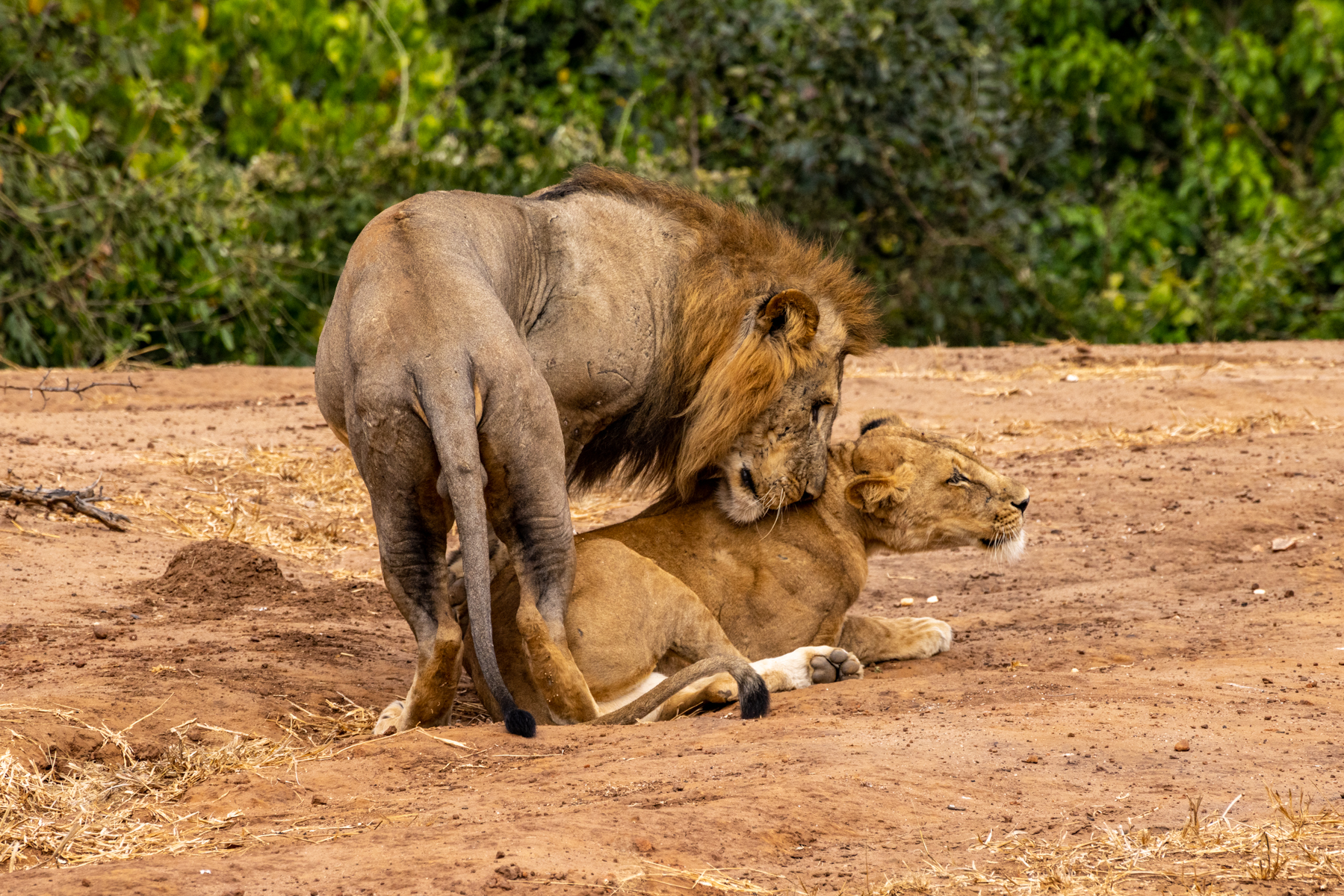

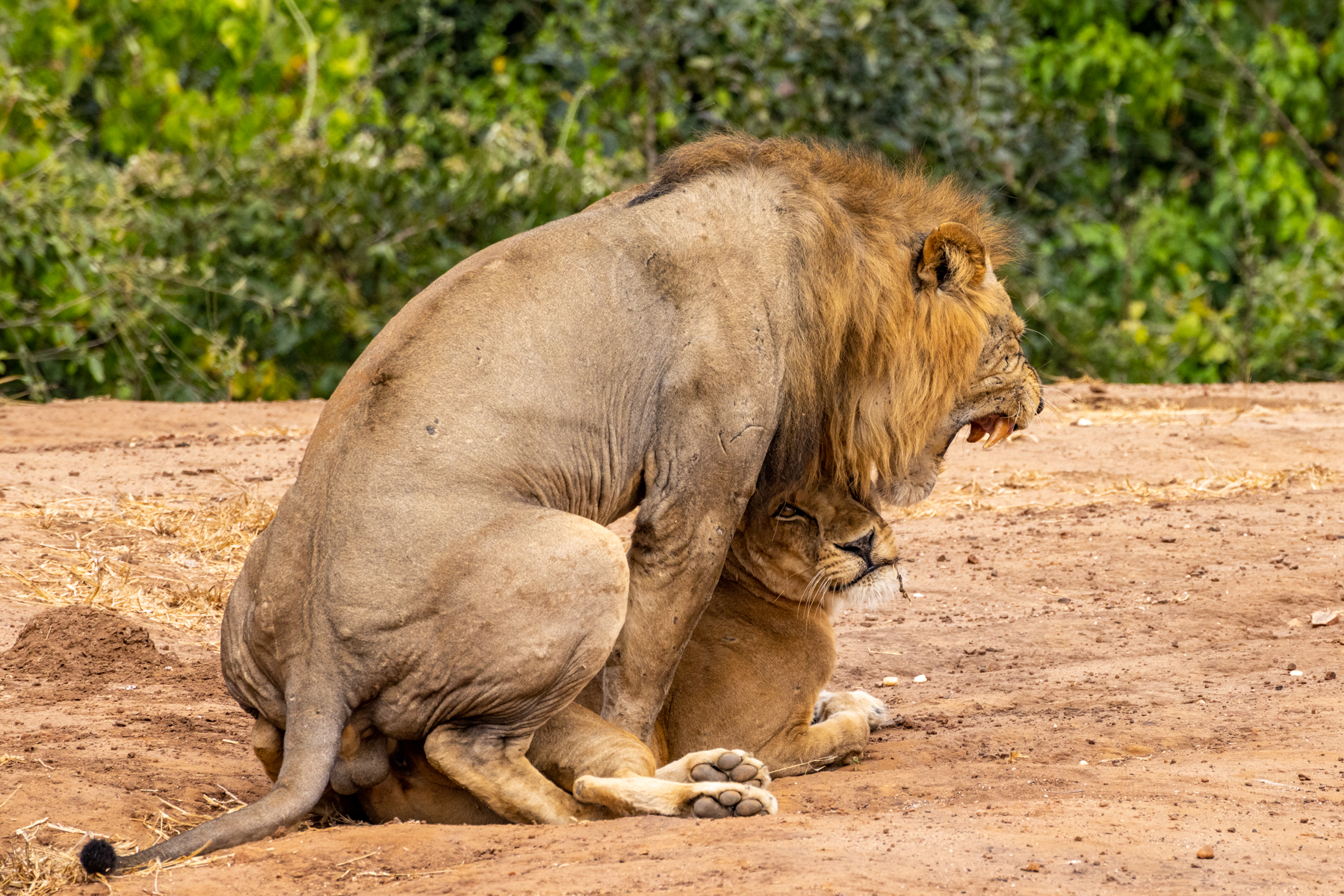
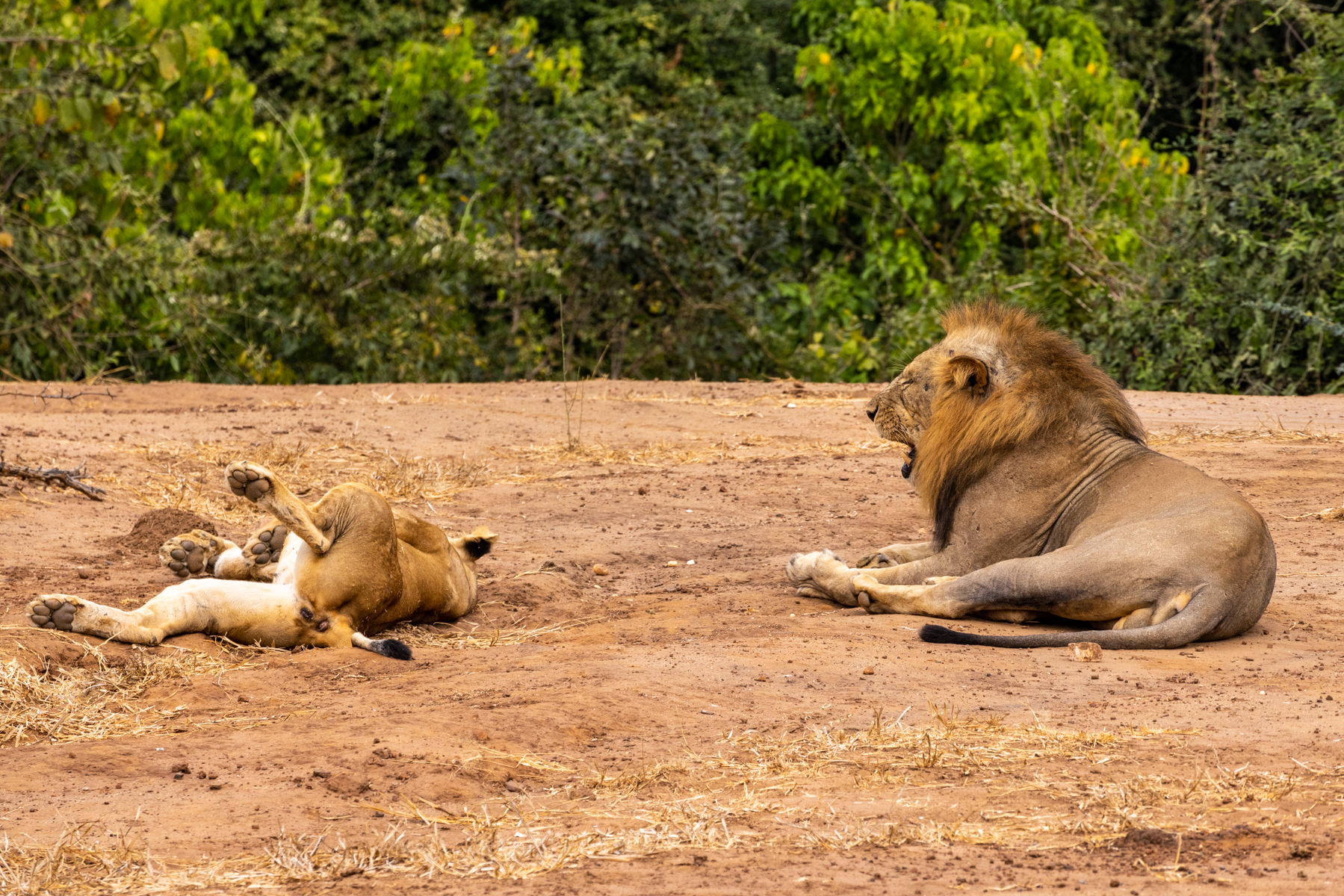
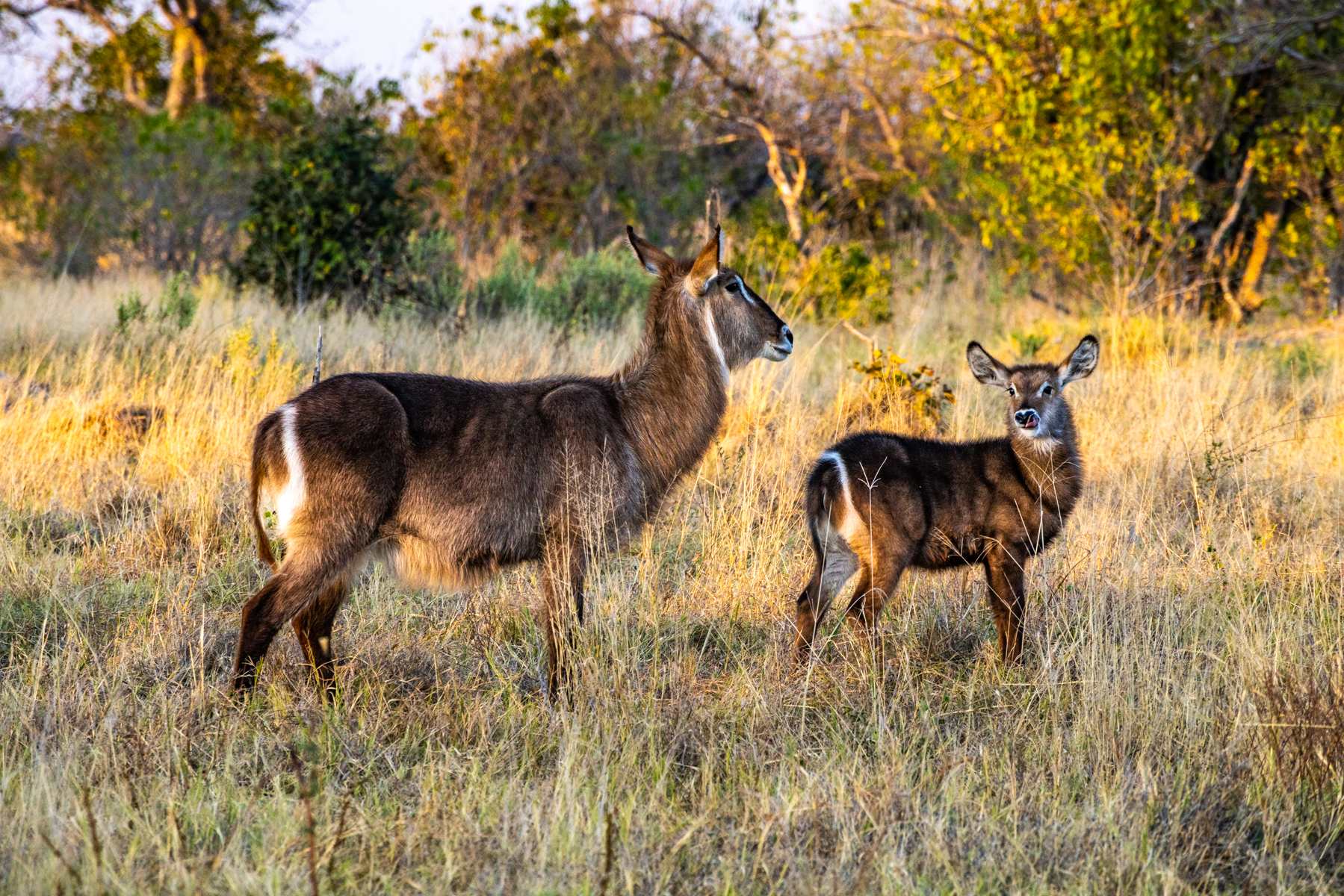
Predators quite literally live off prey.


Our travel between bush camps used smaller aircraft operating into dirt airstrips and paved regional airports. After departing the Delta, our travels took us by Cessna Caravan to Kasane aerodrome in the northeast corner of Botswana tucked in between a panhandle of Namibia to the north, Zambia to the northeast, and Zimbabwe to the east, to visit Victoria Falls. Like our Grand Canyon, it’s one of the seven wonders of the natural world. The falls are a precipitous drop of 355 feet of the Zambezi river into a gorge, and form the border between Zambia (the former Northern Rhodesia) and Zimbabwe (Southern Rhodesia). The Zambezi, at 2574 km in length is the fourth longest river in Africa. Named for England’s Queen Victoria (who never visited the falls) by David Livingstone when he came upon it in 1855. Yes, that self-same “Dr. Livingstone, I presume?” The indigenous name is considerably more apt—Mosi-oa-Tunya, which in English translates as “the smoke that thunders.” Does it ever. Staying to visit the falls can be done from the Zambian side or Zimbabwean side. We literally scored by accident when Thomson suggested a stay at 528 Victoria Falls Guesthouse https://528victoriafalls.com in the small Zimbabwean town of Victoria Falls. A truly scrumptious B&B. And seeing the falls from Zimbabwe is from the perspective of the water coursing over the edge. The mists thrown up by the crashing water shift viscerally from cloud to fog to sudden rain showers.

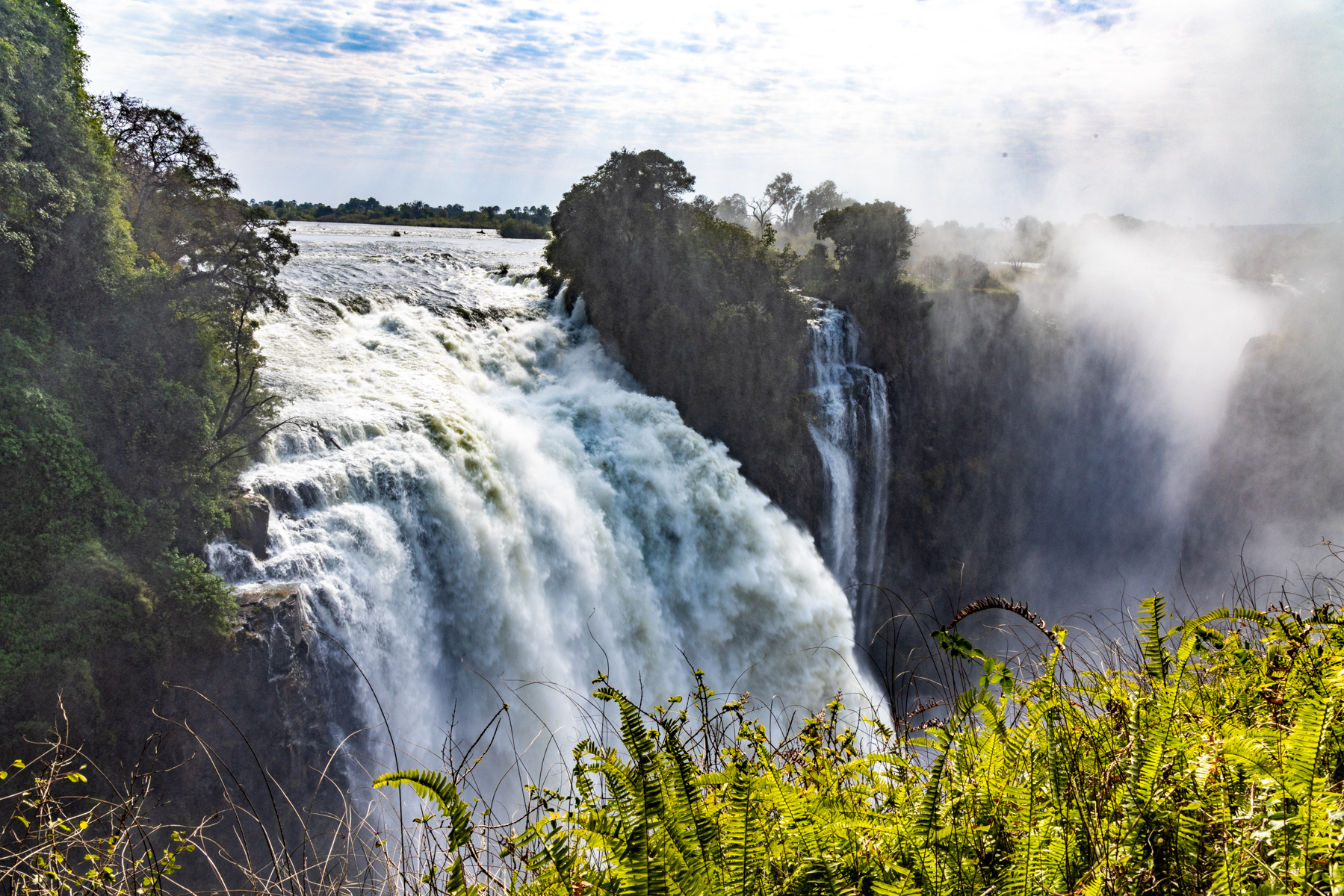
Oh, my goodness!

Below, the fruits of my effort to try local concoctions. Note the indigenous name and waterfall graphic. We also taste tested and taste tested Okavango Gin in Botswana and Zambezi Gin in Zambia. Did I mention taste testing the local gins? Whimsical fun.

After two days at the Falls, we flew into Jeki airstrip (elevation 2165′ MSL) to access Lolebezi bush camp in the Britten Norman Islander (8J-UAS) in the foreground.
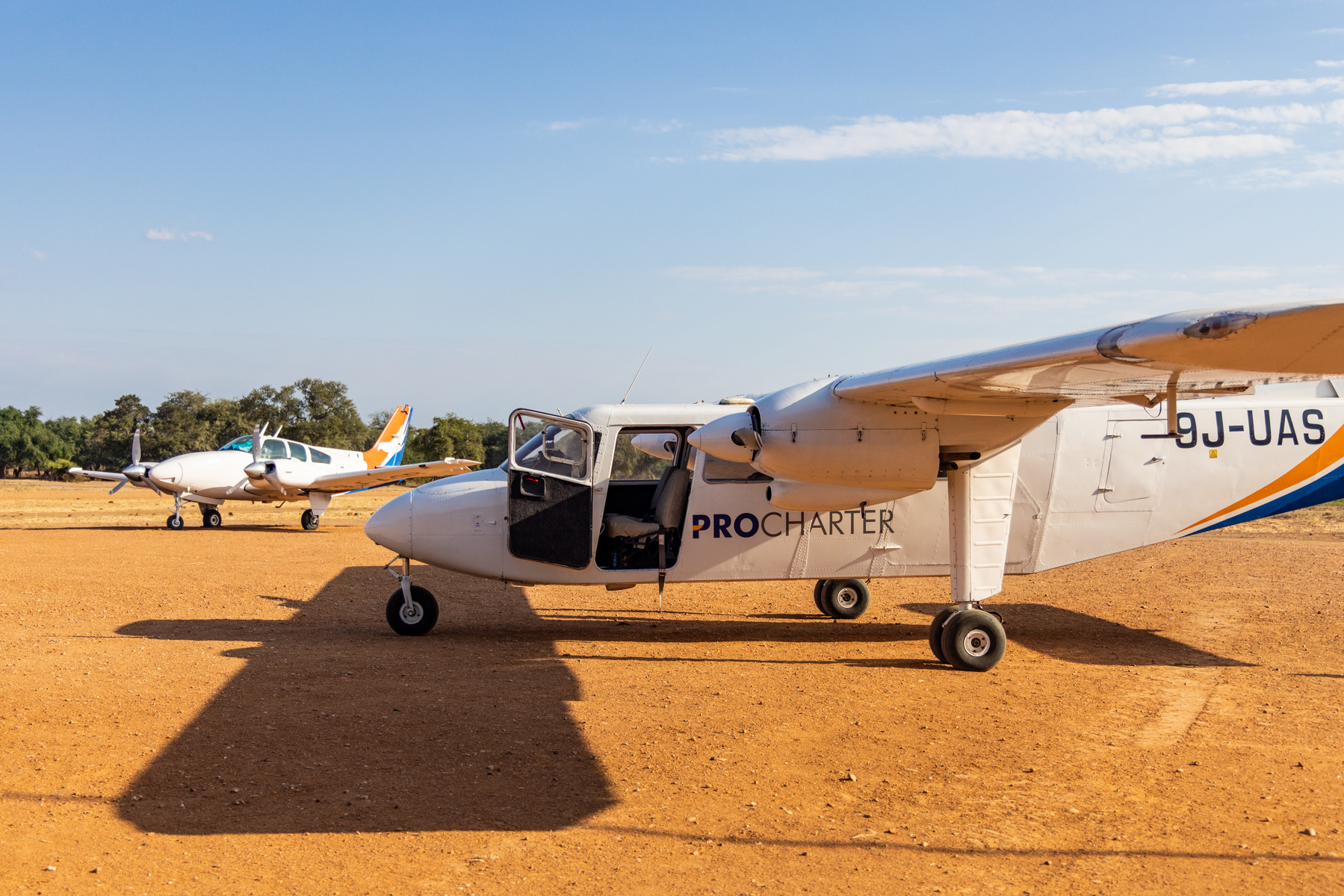

We departed Jeki three days later in the Beech Baron you see in the background of that airstrip picture, first to Lusaka thence Mfuwe aerodrome for Bilimungwe (it means chameleon) bush camp in South Luangwa. For the record I did part of the flying in the Baron, which had 5800 hard-working hours on the Hobbs meter.
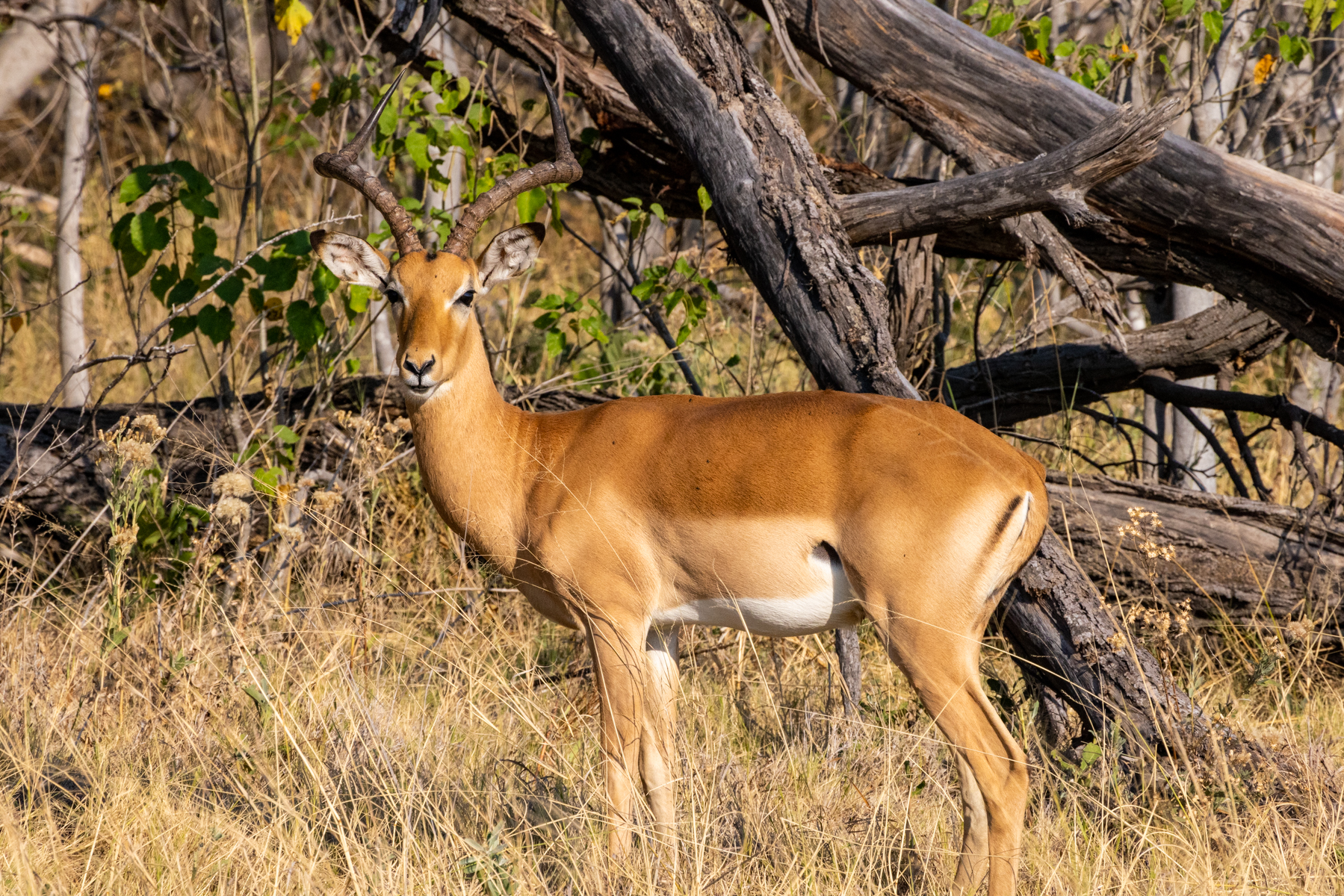
Prey? The impala, a male above, his harem, below. Creatures found everywhere in the bush.

It turns out that an impala amounts to both a few days’ tummy fill and an up-a-tree hoist able weight for the elusive leopard, who does so to avoid defending the kill from other predators such as hyenas. I fantasized about getting some daylight closeups of leopards. No such luck. They are hidden at all times, but because they hunt prey at night, our guides Elijah and Thomas were both tenacious and skillful at finding these stealthy creatures, then maneuvering the vehicle to put me tight to the action. All of these shots are in the dark of night. Per my request, and no surprise to them that I made it, they directed a hand held game light off subject, allowing me to use the penumbral light for focusing and exposure.


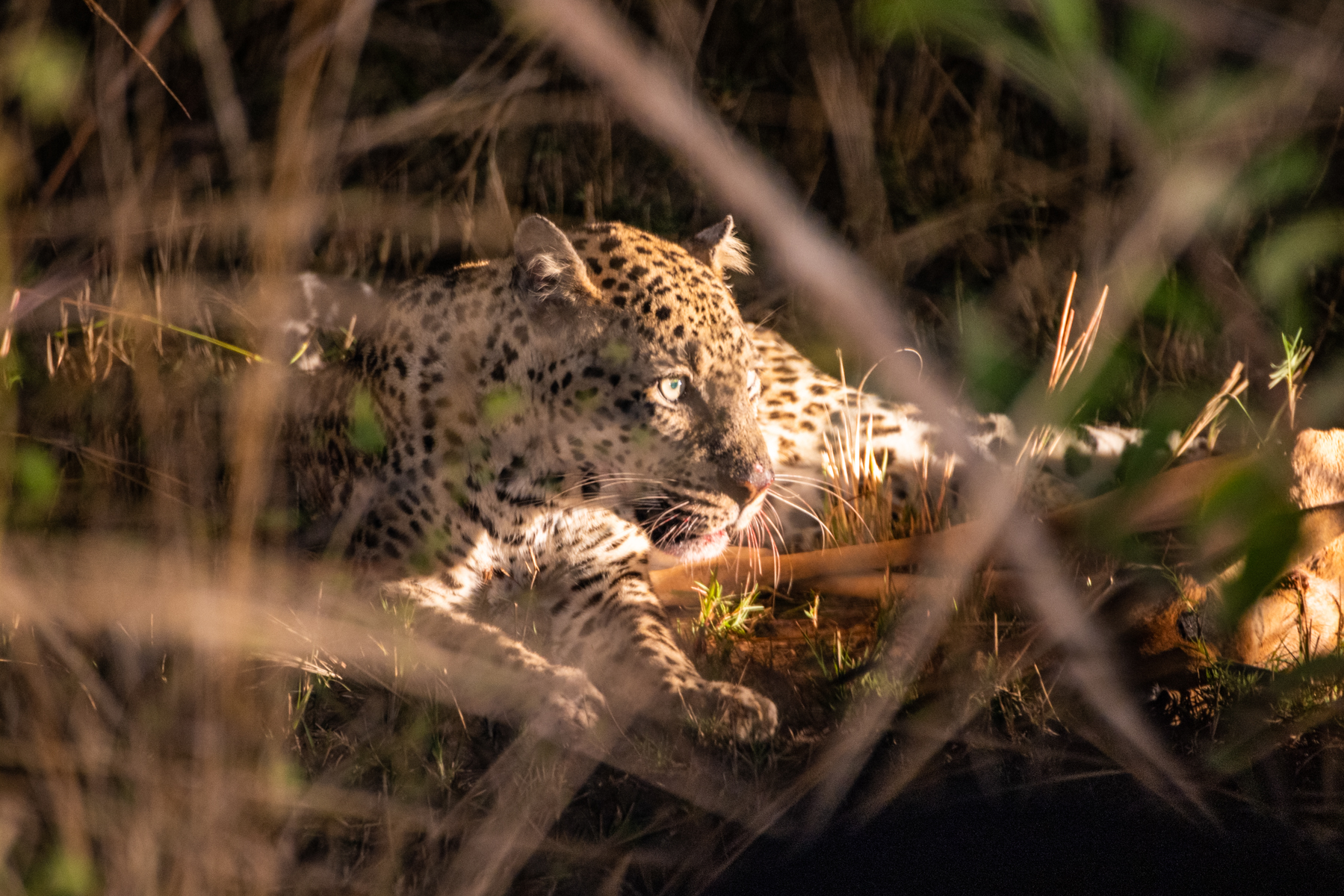
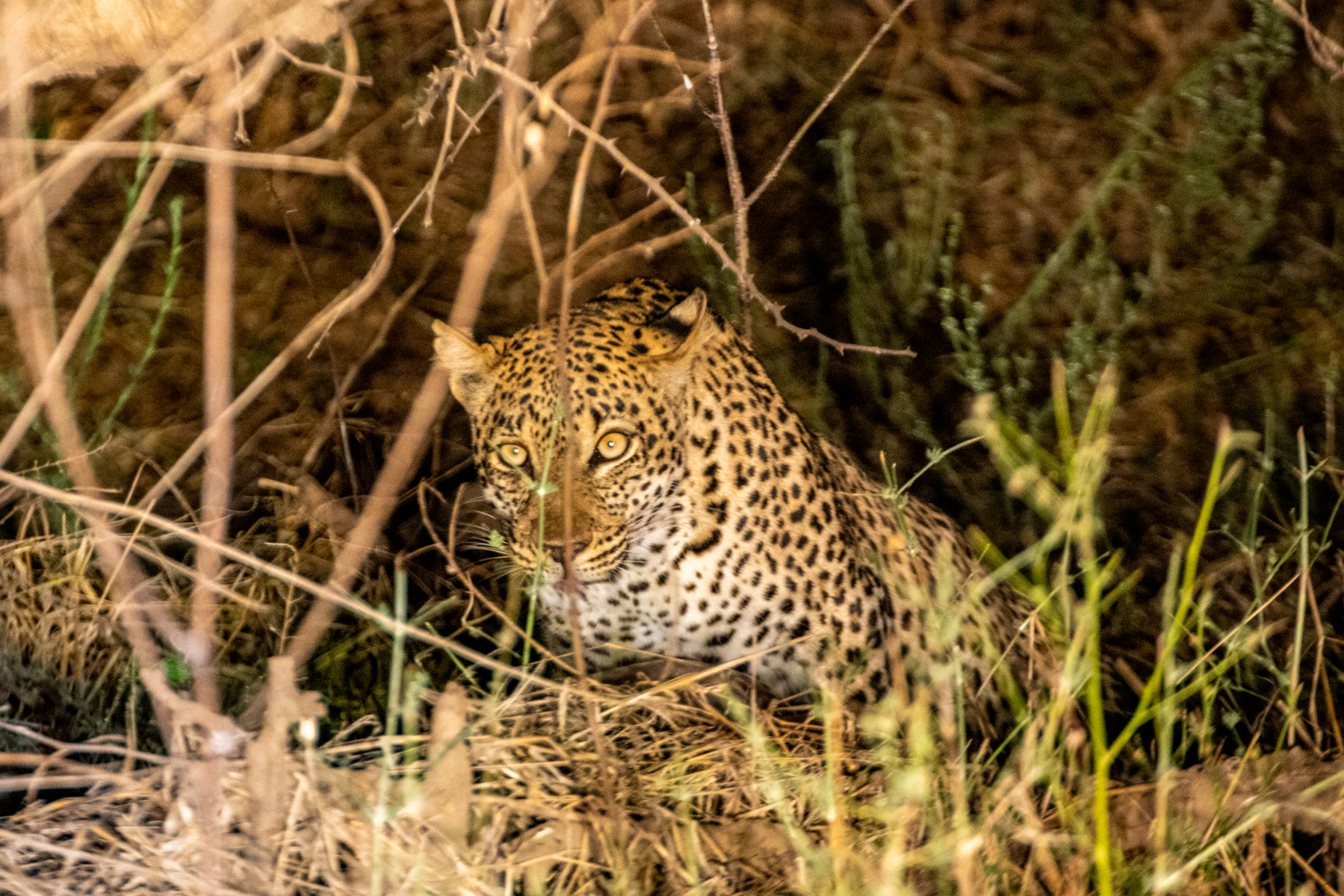
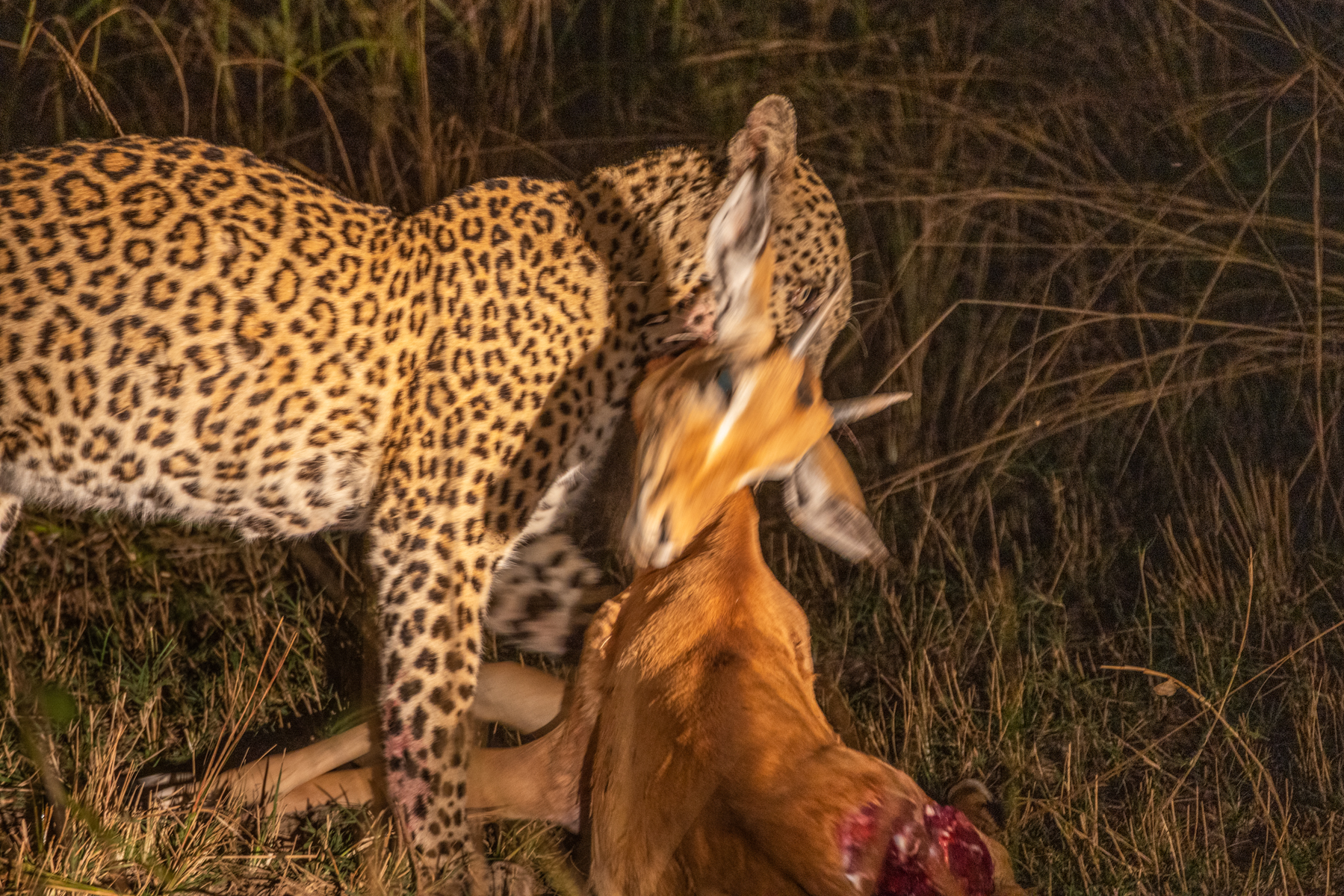
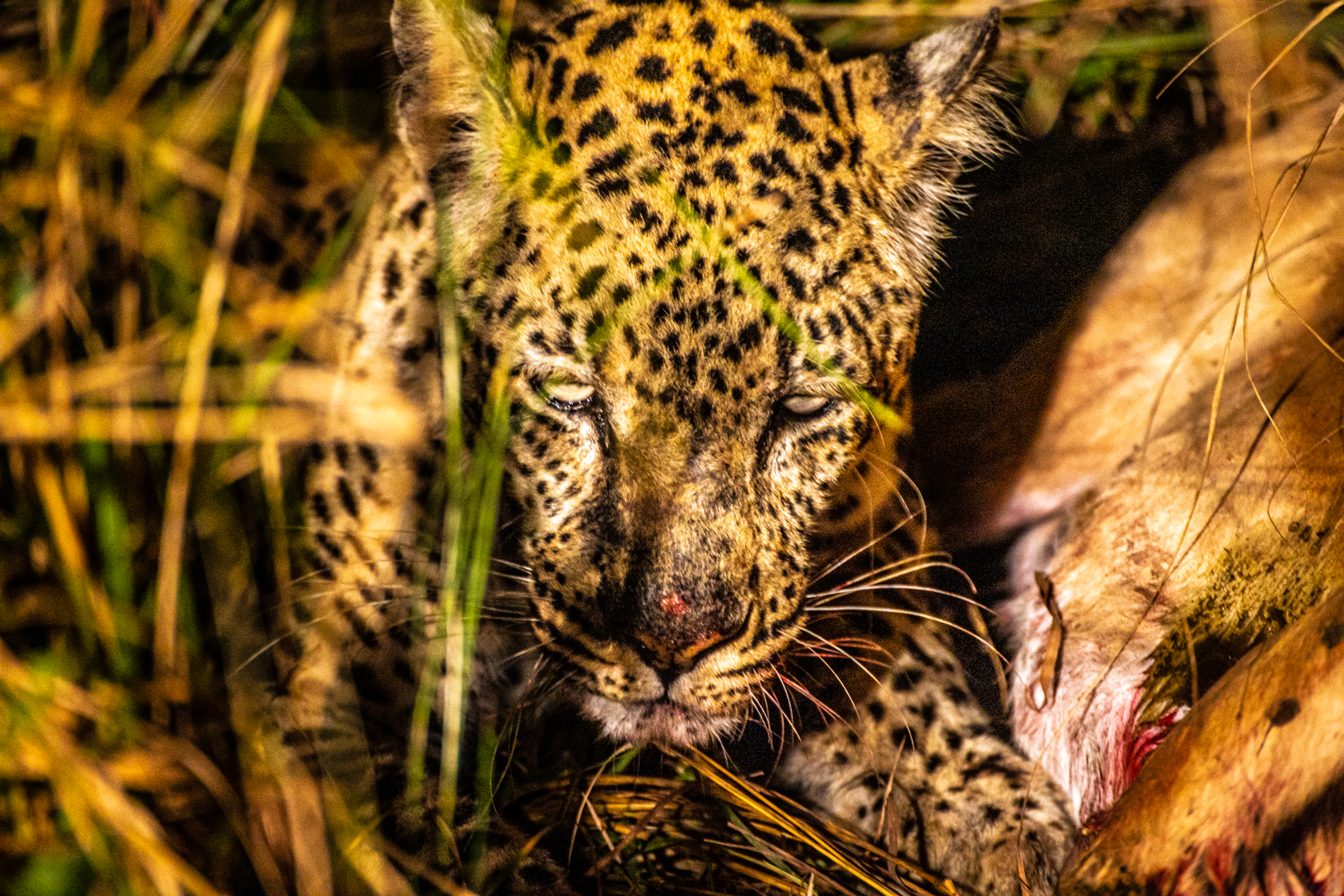
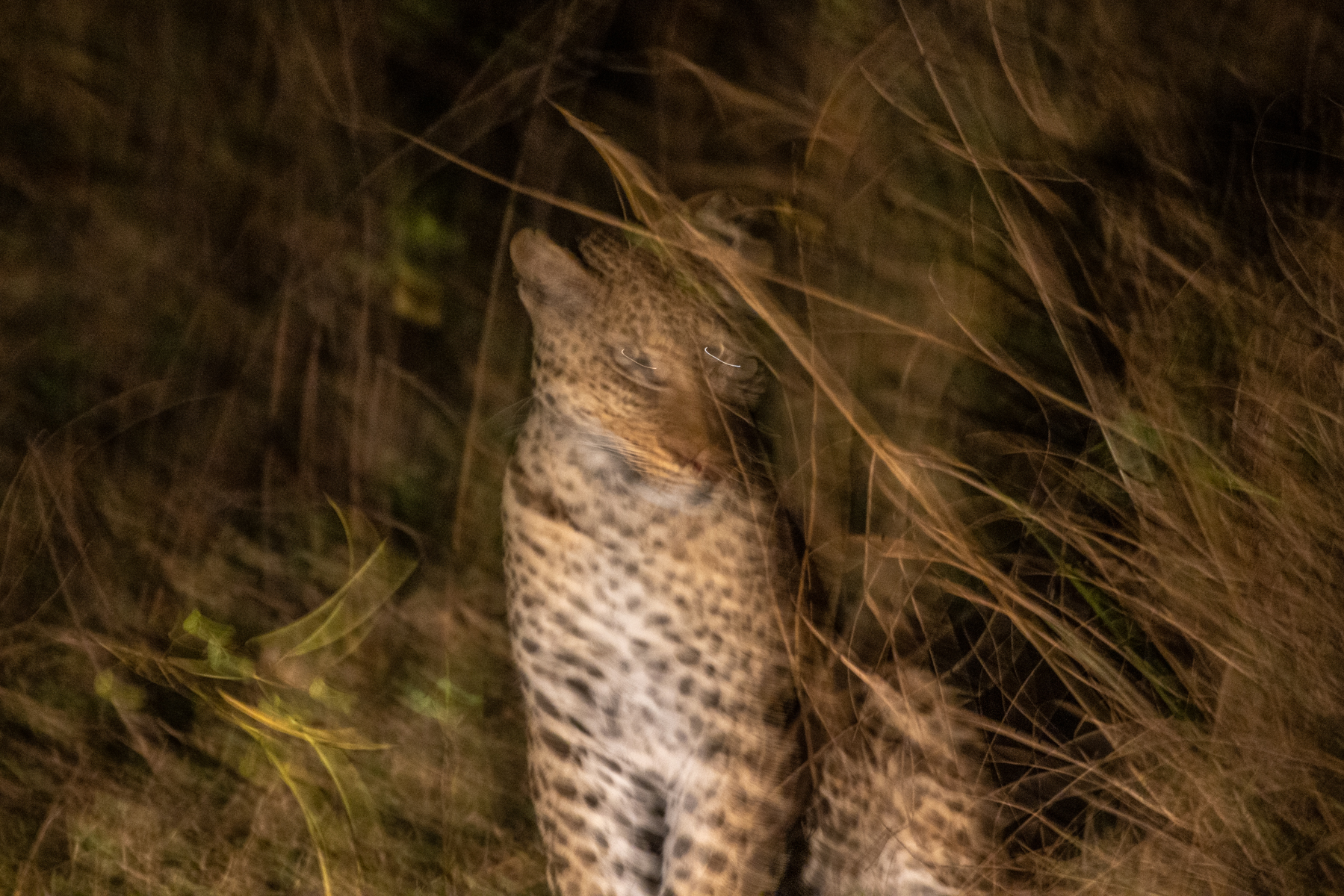
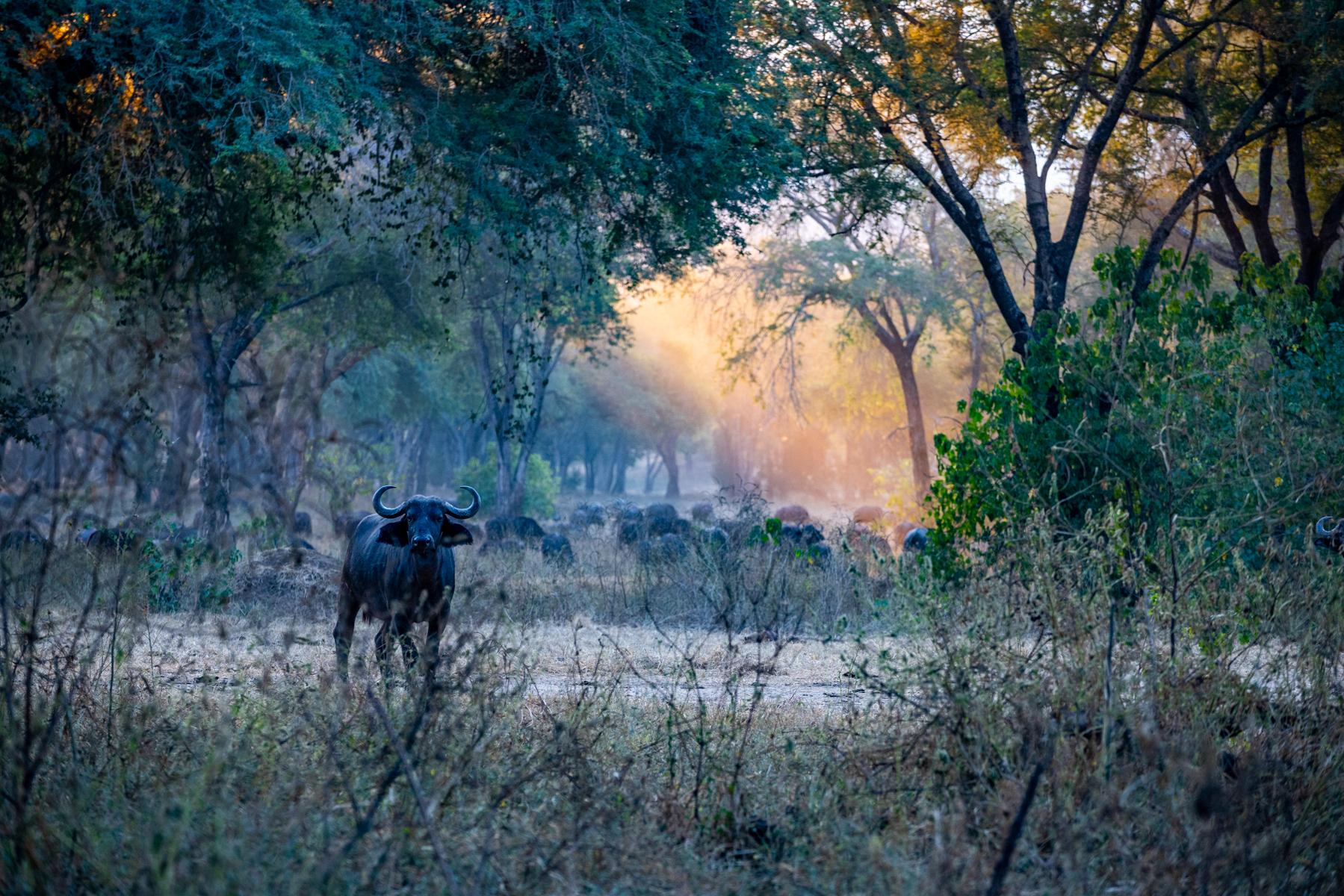
In discussing the dangerous creatures of Africa, reference is often made to the “Big Five”—elephant, lion, leopard, buffalo and rhinoceros. Rhinos have been poached for their horns into nonexistence in the areas we visited, but are being reintroduced into Zambia’s North Luangwa National Park. Expectations are the same for the future in South Luangwa where we were. So no rhinos, but there was plenty of African Buffalo, a big and potentially cranky creature.

That’s a male, above, whose horn structure makes me think of Darth Vader. Below, on an afternoon game drive, the sun dropping towards the day’s Sundowner, generating a theatrical light shaft in the dust the buffalo have trampled up in their grazing.
Hyenas aren’t on the Big Five list, even though they are dangerous in their pack hunting, more than just scavengers. Crocodiles also fail to make the cut. Nor do wild dogs, another pack hunter. Arguably an arbitrary list. We didn’t see a single wild dog on our trip, not for lack of trying. And when it came to hyenas, we had plenty of ravaged carcass, fresh footprint and laughing call evidence, but our only sighting was of these two pups who had been left by their mother for the time that our paths crossed. That’s some creature’s bone on which they are gnawing and playing tug of war. Training for adulthood.


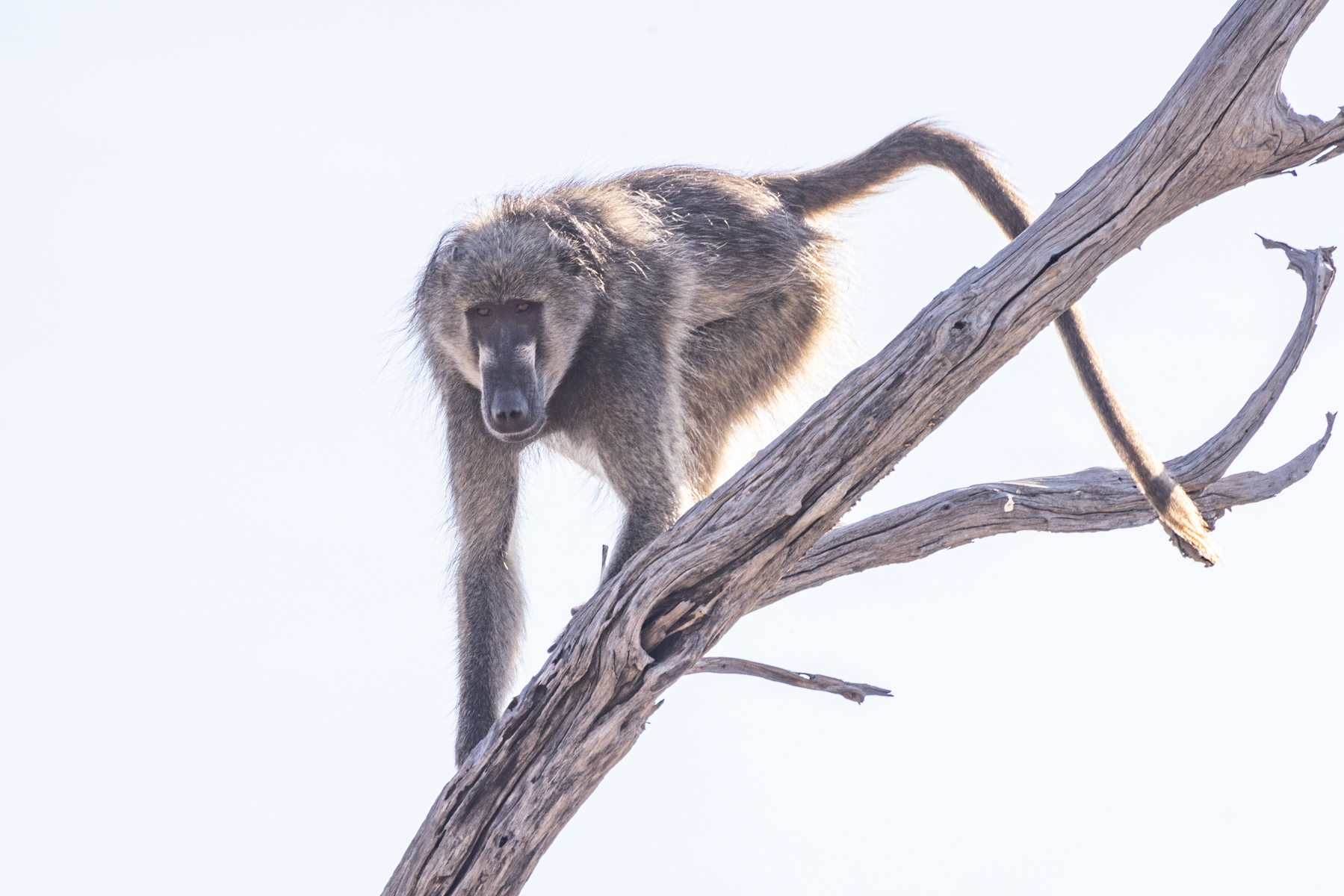
Primates we commonly saw were baboons, up a tree particularly when predators were seen nearby, their raucous calls a warning cry particular to the danger.
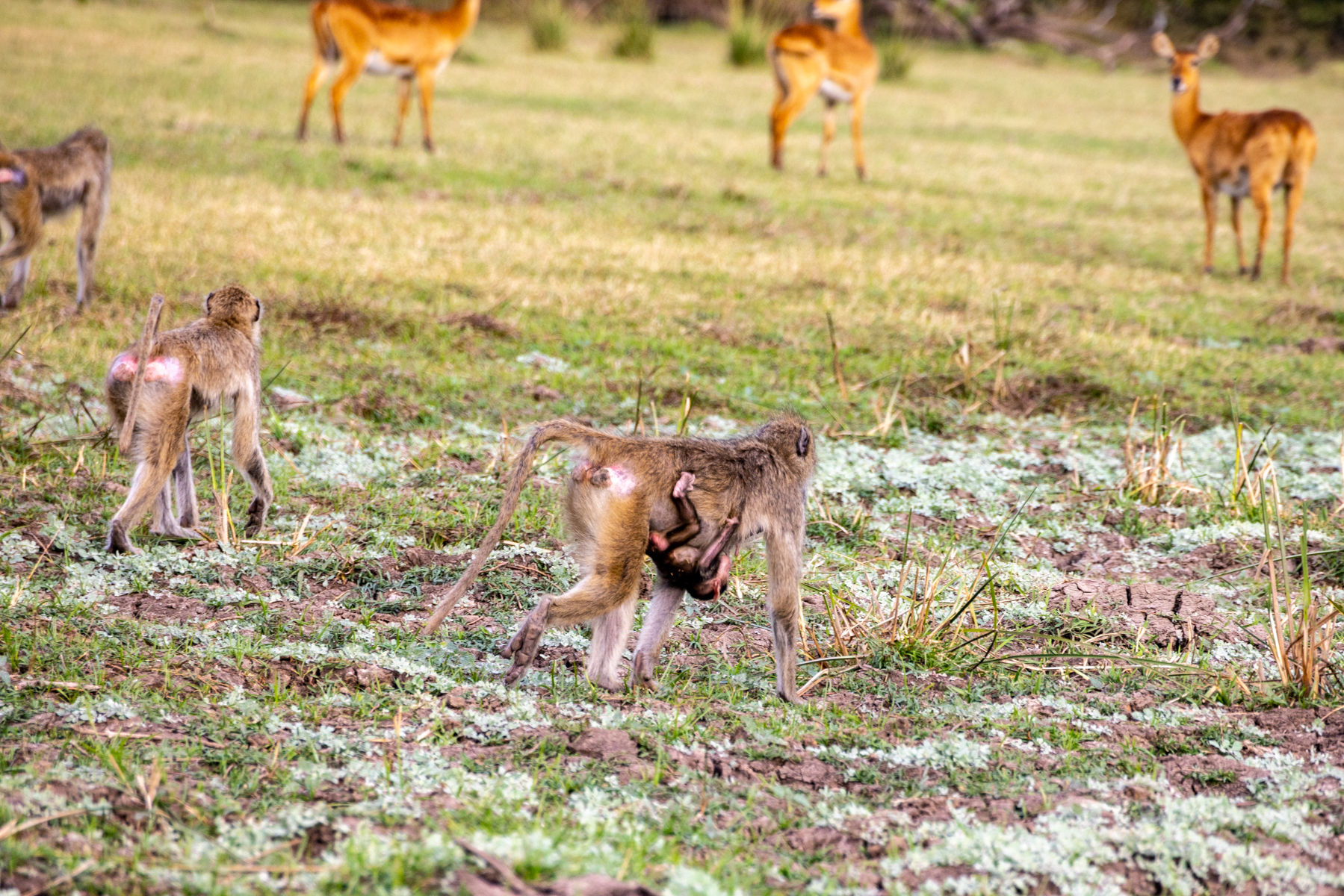
I find vervet monkeys possessed of a more appealing appearance and behavior. My anecdotal take is that they confined their ground time to the area immediately near their arboreal home, and, aloft, showed absolute mastery at racing along tree limbs and long airborne leaps between branches. Quite entertaining to watch.


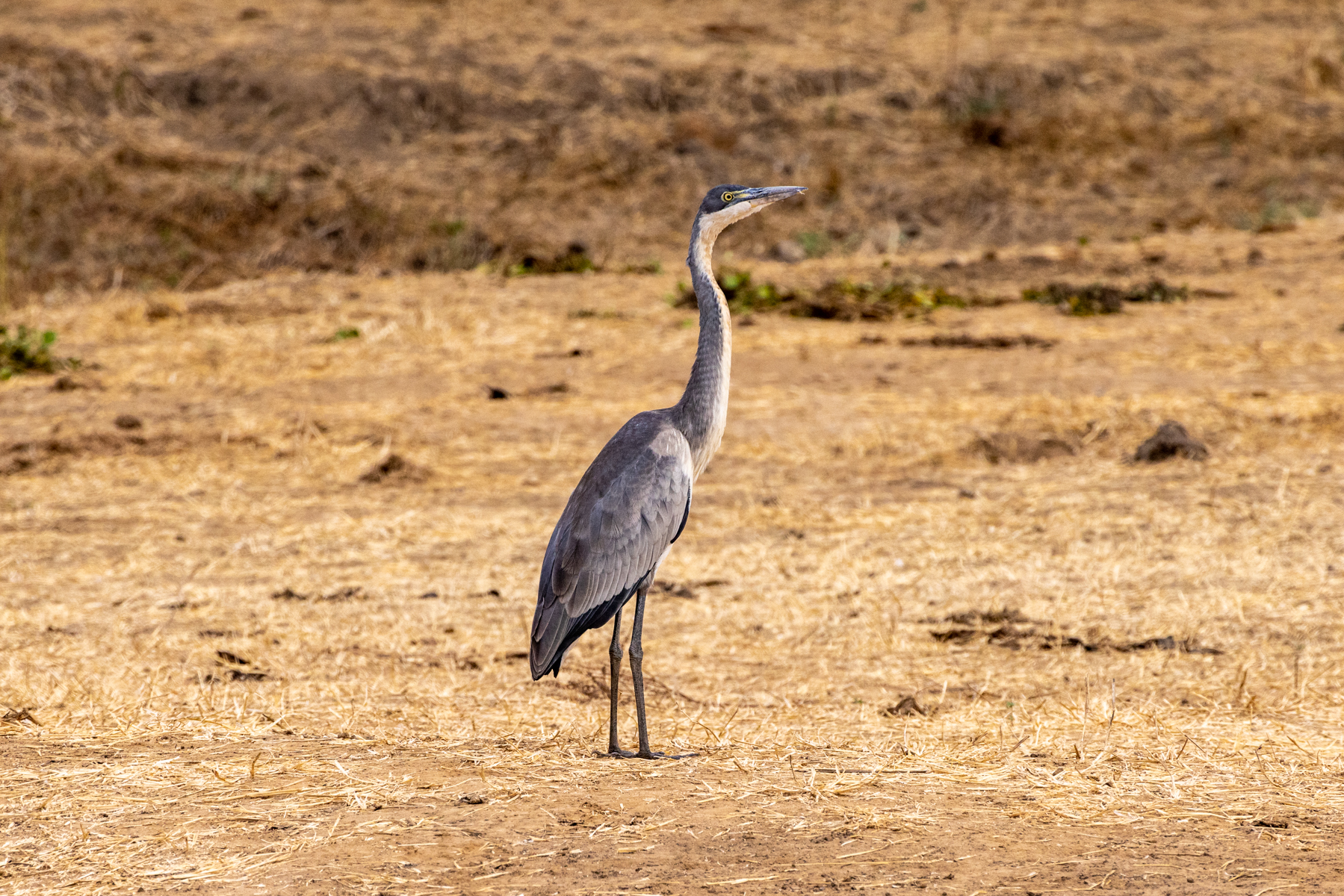
There are many visitors who come to these Southern Africa regions principally for the birds, and there’s a plethora from which to choose.



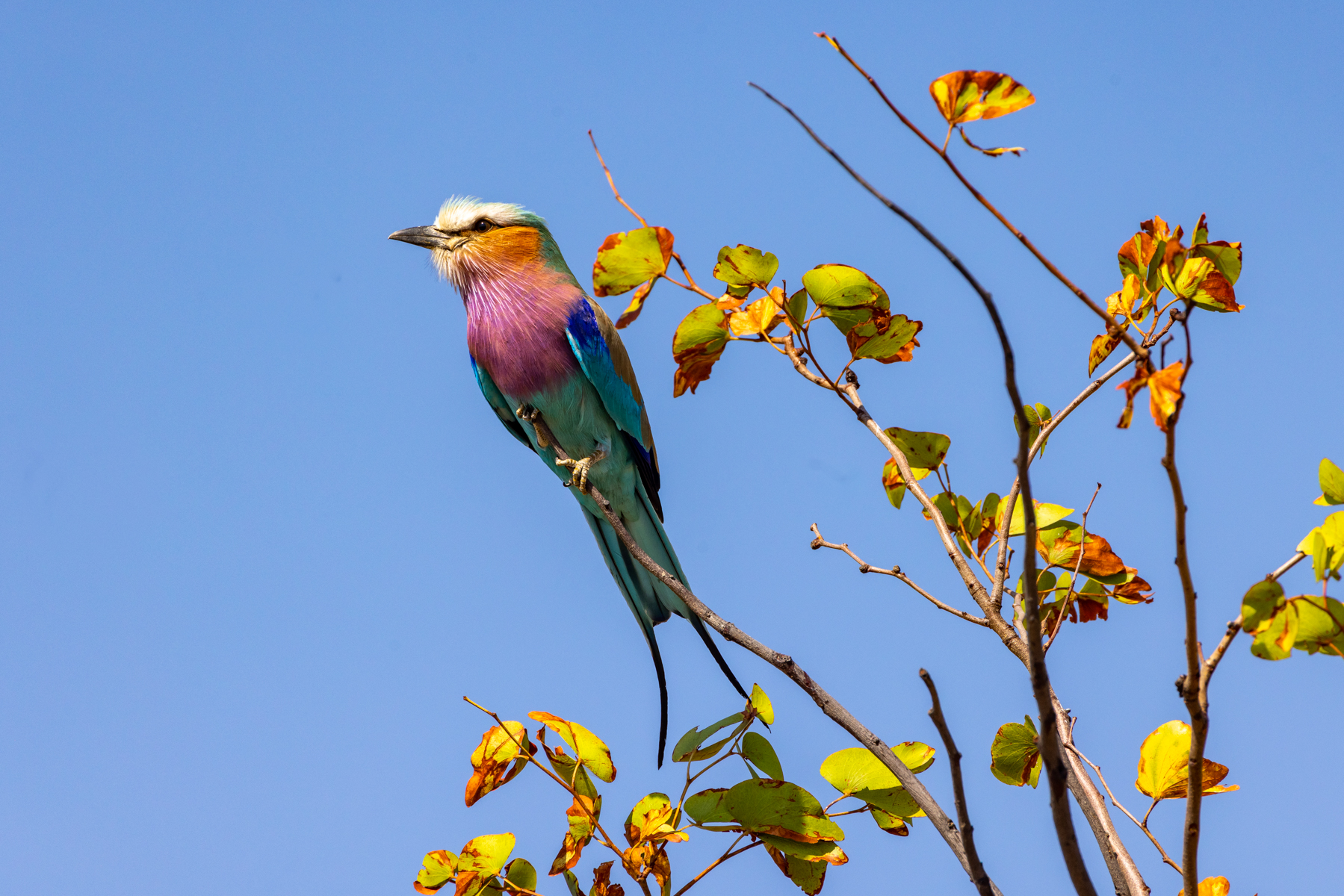
Below, the Lilac-Breasted Roller, about the size of a Robin, possessed of both gorgeous plumage and intriguing courtship behavior. They zoom rapidly upwards a hundred feet or so, then dive vertically downwards rolling about their longitudinal axis as they descend. I’ll have you all resorting to a Google search as I mention that his Aresti diagram would be a vertical descending line with a curved bisecting arrow. That, too, is a part of my eighty orbits of earth’s day star. Fond memories of wrenching about in my own colorful bird.
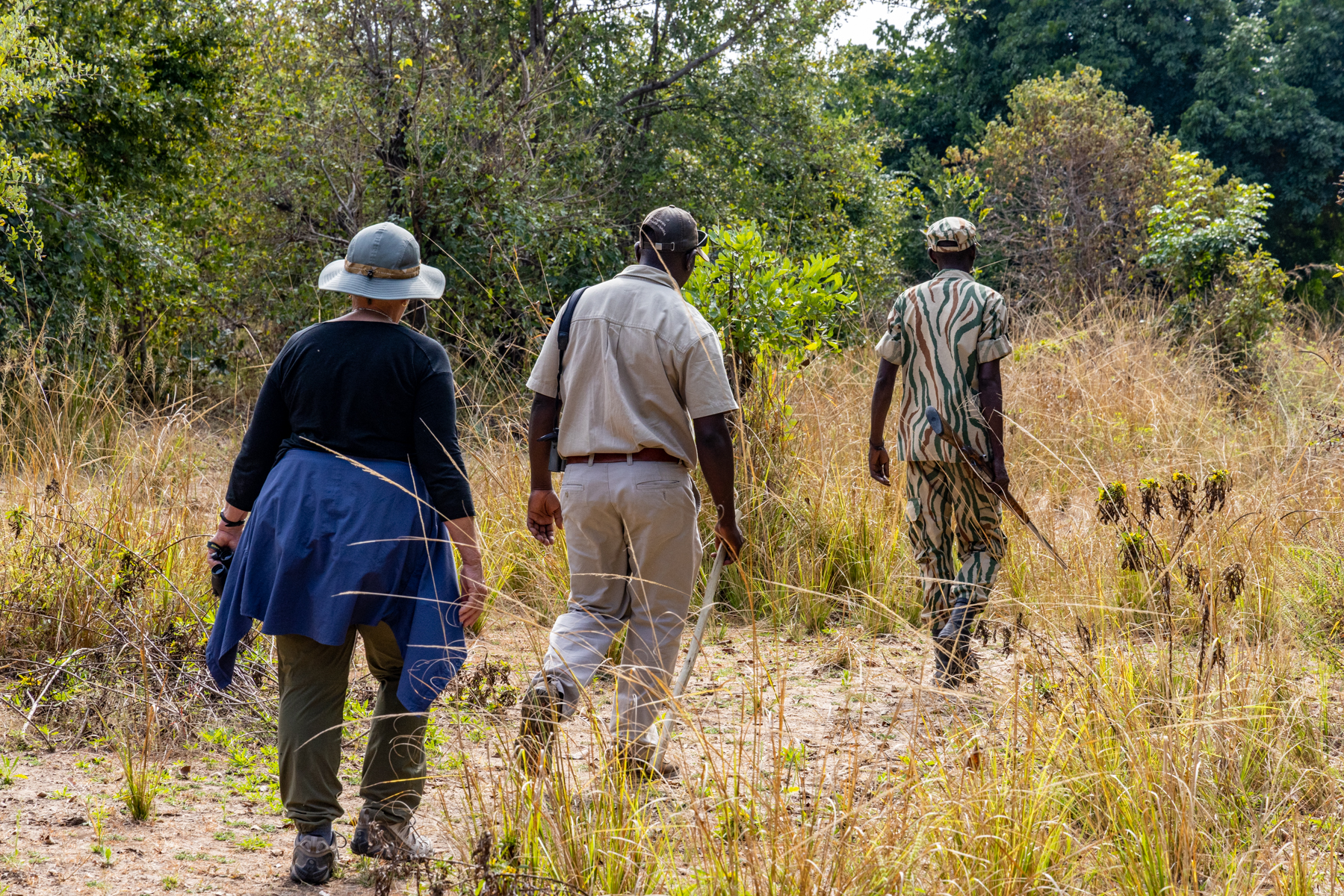
I should mention another mode of game hunting. Whether we hunted them, or vice versa, who knows? On one South Luangwa morning we switched to a foot safari. That’s Cathy, below, following our guide, Thomas. I was behind her, framing the shot, followed in turn, by our shyly comported porter/guide-in-training Ishmael. On point is park ranger Kelvin carrying his elephant gun, a .408 caliber bolt-action rifle. Five rounds in the breech, more on his person. He accepted my good-natured teasing when I’d ask “how’s your temperature?” at least after I explained the scientific scale. And, not that I have any Melville expertise, but with Ishmael I allowed as how his given name carries some highly regarded literary reference. And here is a segue to another serendipitous moment in our trip. These are intelligent, field-educated people possessed of knowledge depth for their where and what, but not necessarily considerable experience of the things for which we might turn to Google. One evening Sundowner twilight, returning from nearby bush watering, I looked up at a crescent moon, and a bright shiny Venus. And then, “whoa” rapidly transiting the vault above, stage left to stage right, was the incredibly incandescent International Space Station. I rushed to our little group and abruptly interrupted the conversation to point out the rapid passage of the ISS. They were thrilled to learn that there were humans up there orbiting our planet and conducting scientific research. With nothing resembling an internet connection, this moment of shared education was all verbal. In salutation, everyone of us raised a task-appropriate libation to this common moment.
A few shots that are just intended to convey the beauty of the region.
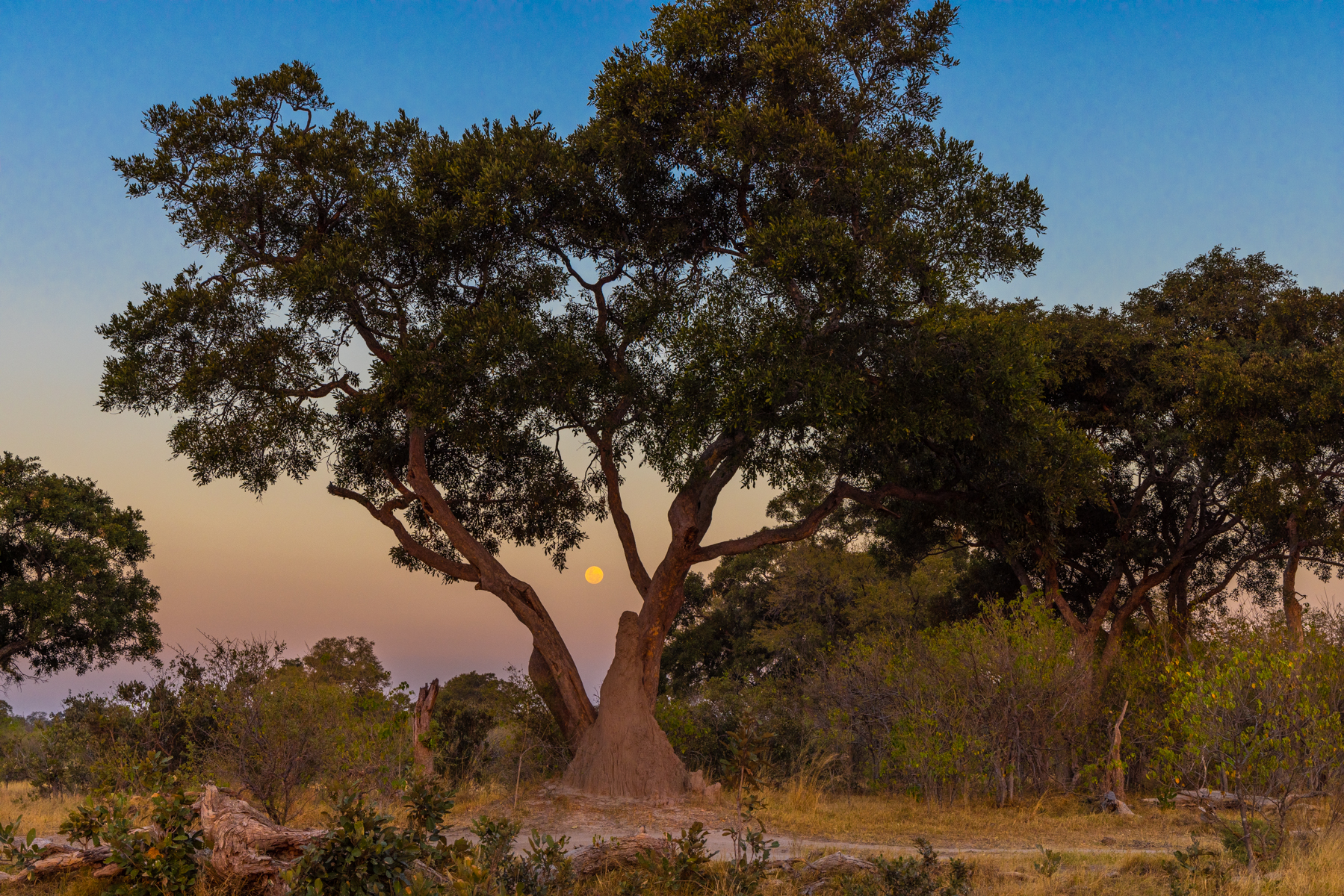
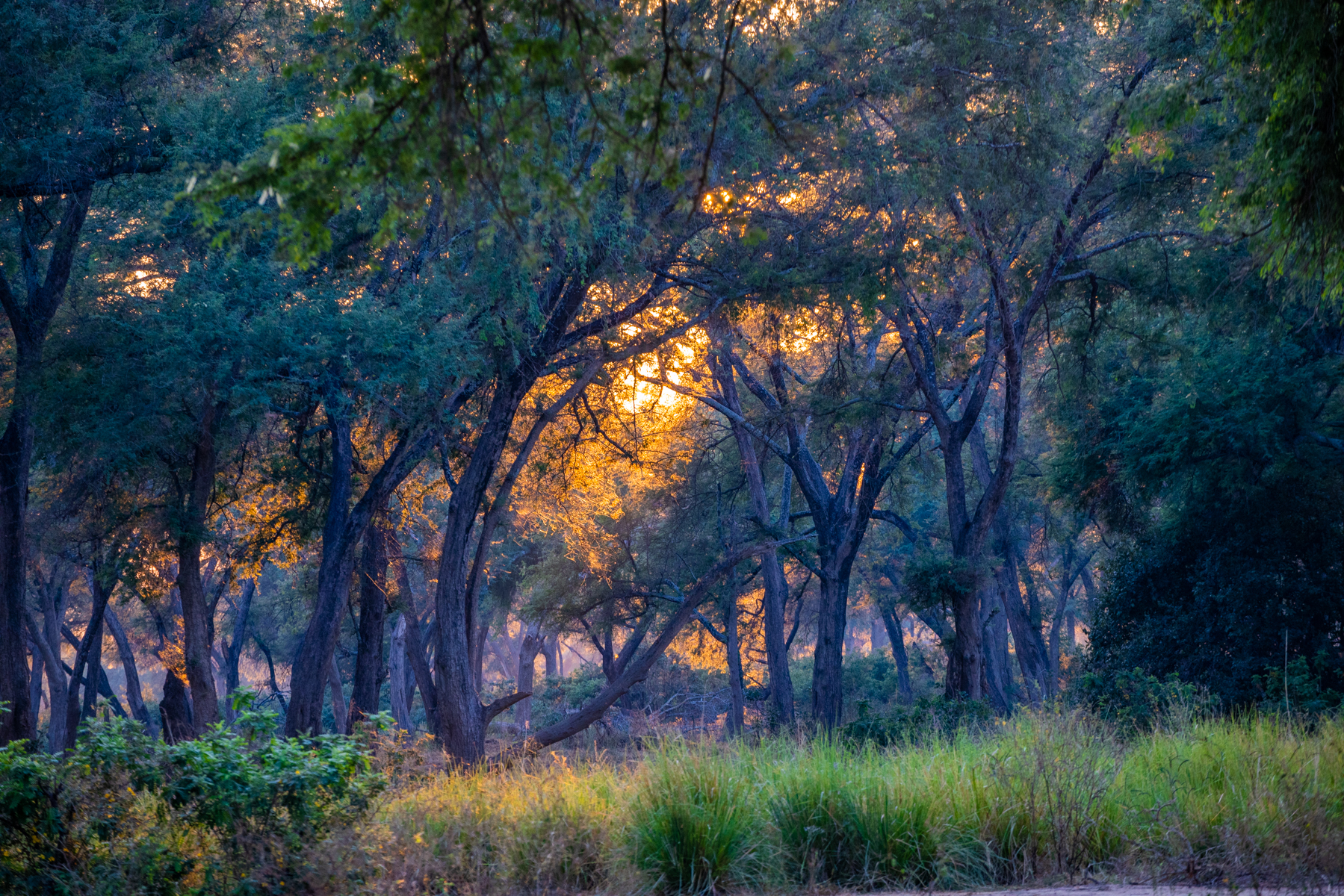

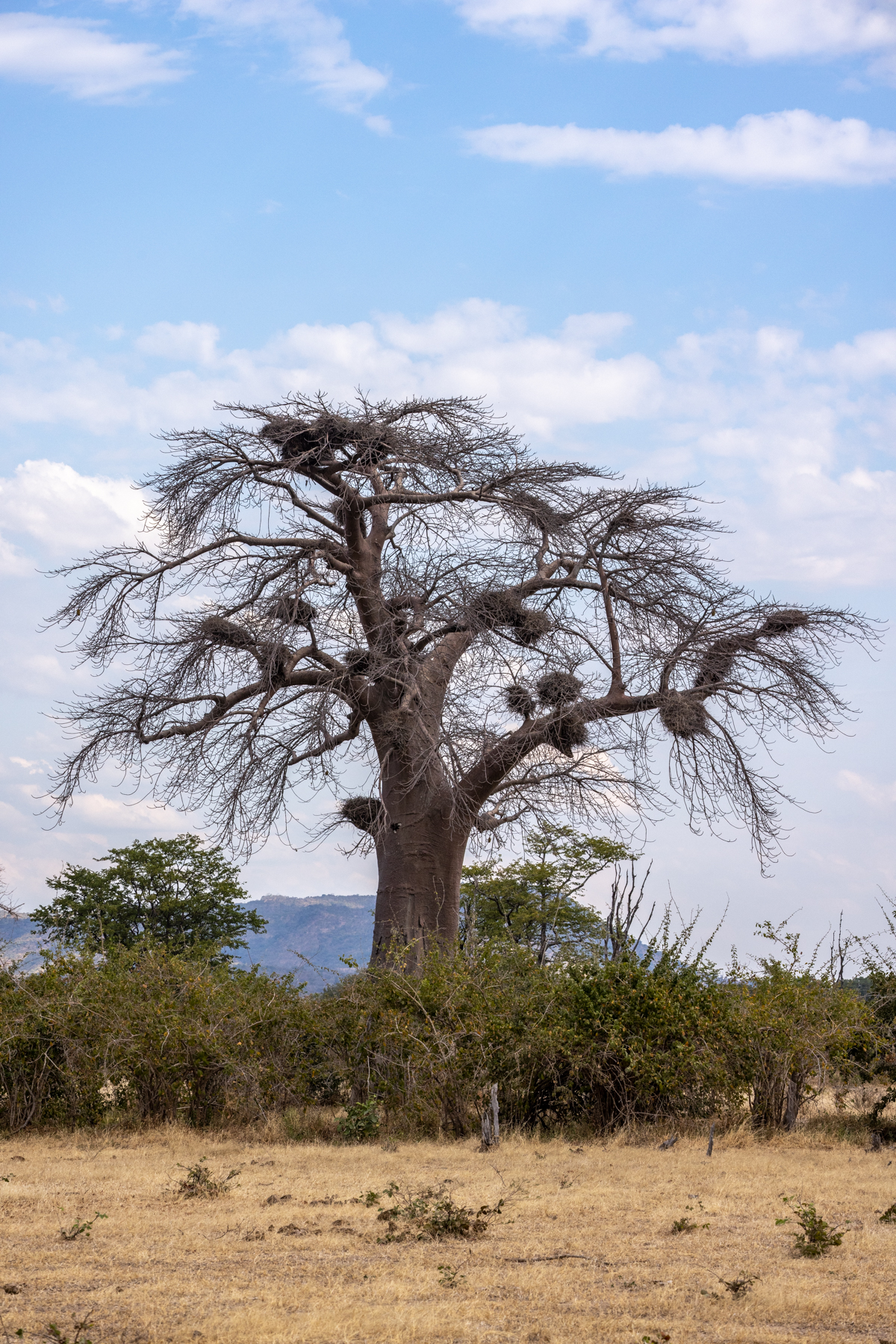
A two-part Time-Lapse of our last night’s Milky Way starscape and last morning’s breakfast sunrise over the Zambezi river, South Luangwa National Park, Zambia. I find it fascinating that in the southern latitude the sun rises and arcs to the left as it climbs. Here, it arcs to the right.
And after all the weeks’ problem-free game drives in and through the deep bush, as it was time to climb aboard for the four hour drive from that sunrise to Mfuwe aerodrome to begin our 43-hour flight saga back to Del Mar, there was this moment of levity. A flat tire. Don’t bother to call AAA!

Cheers, Tom
 th2ombre
Recent Comments