th2ombre
It's ALWAYS about the light
But why Colombia?
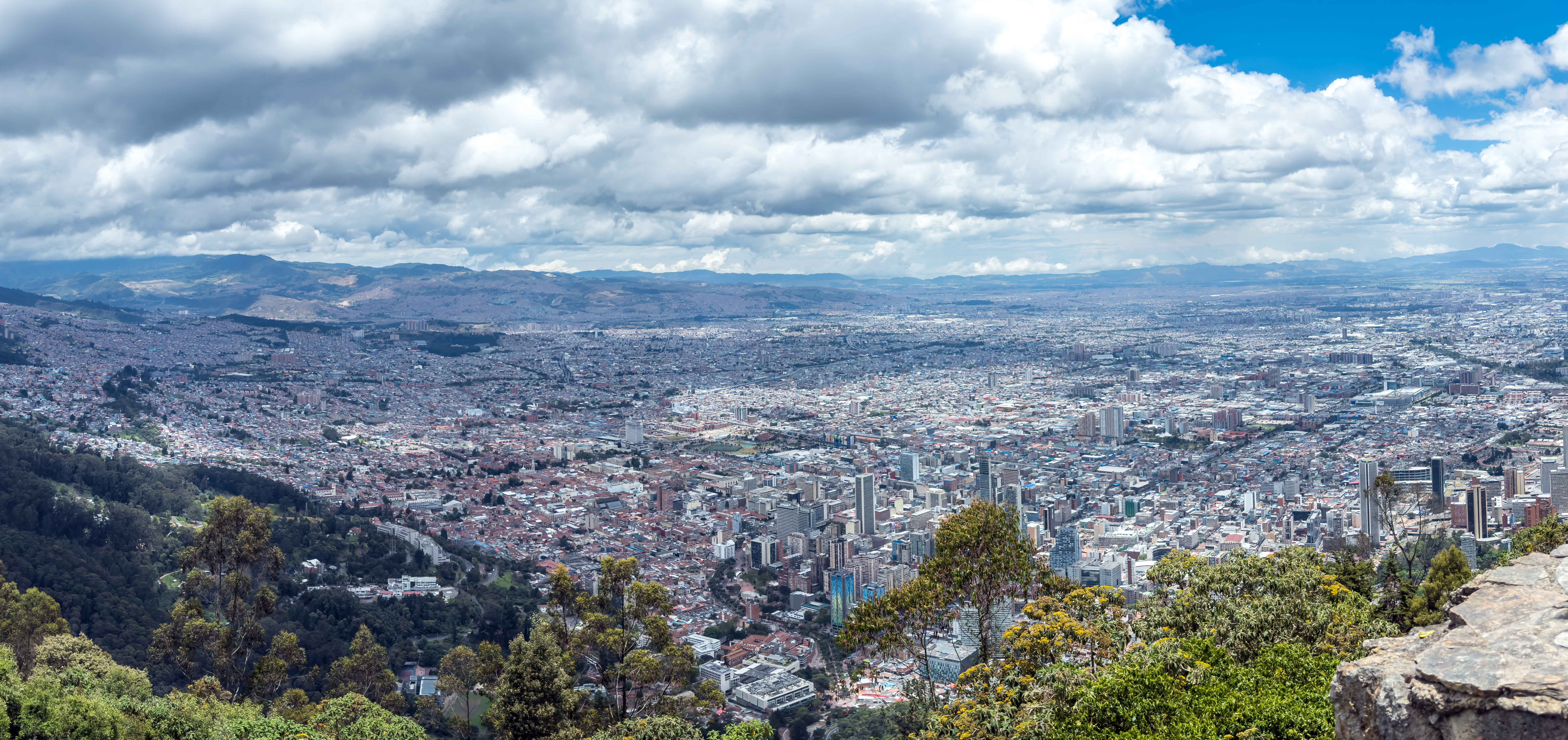
A not uncommon question from local chums. Blythe answer—why not? Not to mention that my main squeeze got it into her head that it being terra incognita for us was ample reason to reconnoiter. Now that we’ve gone and returned, a more informed answer is the country is beautiful and the people are very friendly. With just over 440,000 square miles, Colombia’s area is slightly larger than Texas and California combined. It has two coastlines—on the Pacific and the Caribbean. An Andean nation with three separate ranges (Cordilleras) running roughly north to south, which accounts for elevations of 8,700′ MSL for its capital and largest city, Bogotá (official airport name El Dorado International, a clue) and 4,900′ for second largest, Medellín.
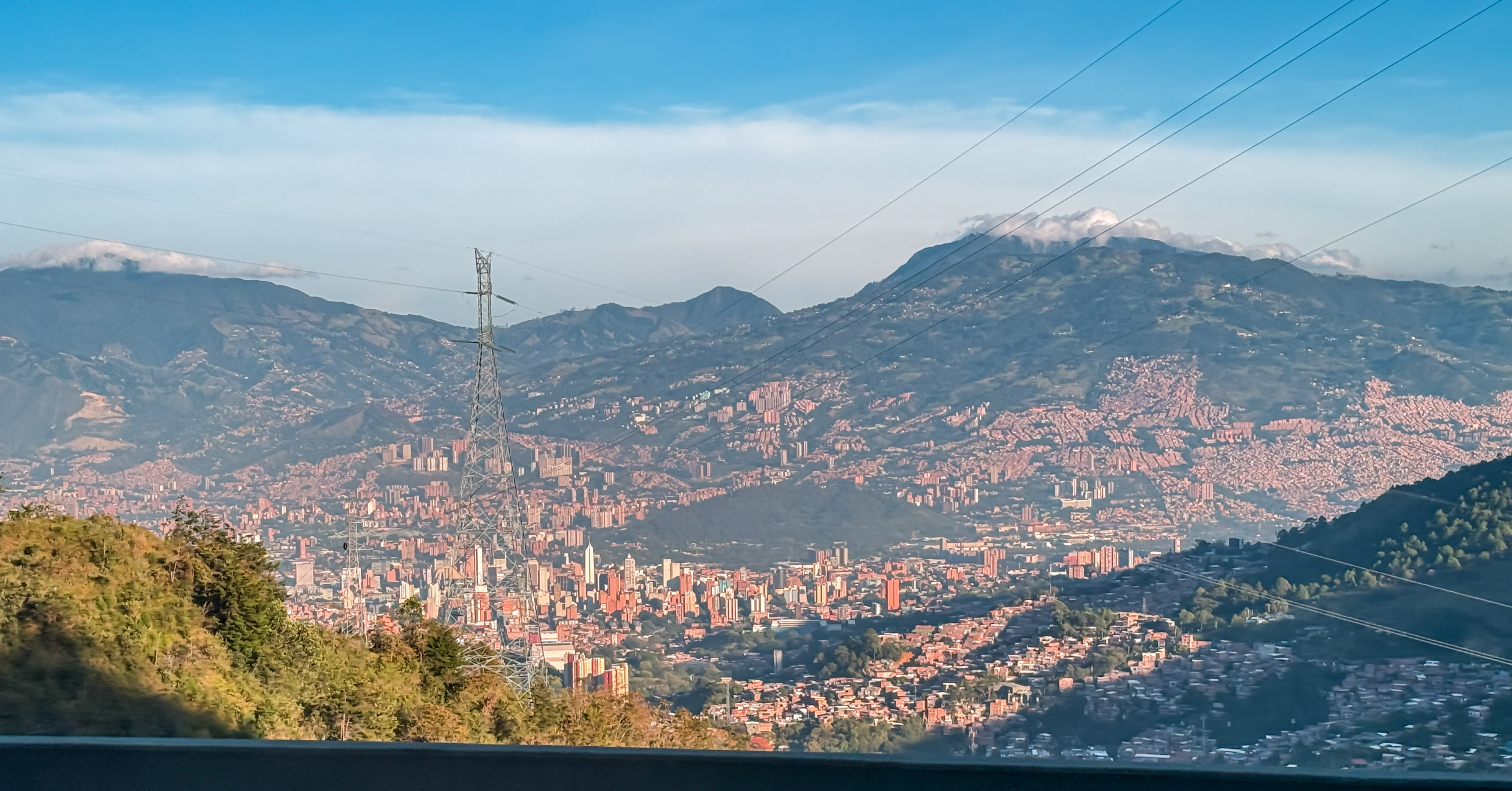
And those elevations are deceiving, as both cities are in topographic bowls with the suburbs hugging surrounding higher terrain. Ambulation, especially on our first few days was slower and more breathless than our sea level normal. Our itinerary had us beginning in Bogotá and exiting from Medellín, while puttering about between 4 and 6 degrees of equatorial North Latitude. Those elevations produced coolish nights and warm days, essentially perpetual Springtime. Though down at the Pacific coast at Bahia Solano in the Chocó region, which our guides were amazed and greatly pleased that a couple of gringos would visit, it was hot and humid with nightly thunderstorms the rule. By the way, I use the gringo term self-deprecatingly. It’s not something any Colombian ever verbalized.
Which is segue to a core experience that says much about the people and validates the pleasure of exploring there. A reservation which I felt as Cathy urged embracing this trip, was safety, given the notorious narco history of the country. Does Pablo Escobar ring a bell? Colombia’s government has had a track record alternating between giving the cocaine trade a light touch, even negotiating a 2016 peace accord with the FARC guerrilla and crime group, counterposed with robust military and police responses. The current president, Abelardo de la Espriella, elected just seventeen days before our arrival, is a perhaps illuminating mix. His prior career had been as a defense attorney defending narco traffickers, and yet he was elected espousing a tough on crime agenda, and a purposeful shift away from the “Chavismo” style practices of other regional leaders. For some time now, a less socialized governance has been ascendent in South America, including Colombia, a reflection of violence fatigue , or perhaps to curry favor with the Donald administration? Unclear to me, but the gente, the people, are pleased to walk peaceably about their neighborhoods these days, police in dark blue and chartreuse uniforms scattered about with no hint of overbearance, not to mention a standing army of 400,000. A vignette perhaps? Dinnertime and after dark, Cathy and I hunting for an Italian restaurant near our Medellín “Hotel Diez,” and not so much getting lost, but just unable to find the place which we knew to be nearby. Cathy fretted, but (this time) not being challenged like so many men with map aversion, I turned to a policeman and in my best halting Spanish asked if he knew where the Romero Artisanal Cuisine was? His hand did not go to the Glock on his belt, but smiling, he asked a shopkeeper next to him, and with those directions gestured for us to follow. We joined him in crossing the street, him holding up his hand to advancing autos in a classic “PARE” (STOP in Colombia) gesture, walked us down the block and around a corner, heading uphill, to find Romero up on the second floor, just over yonder. You see the bedrock safeness evidenced here for the citizens and visitors?
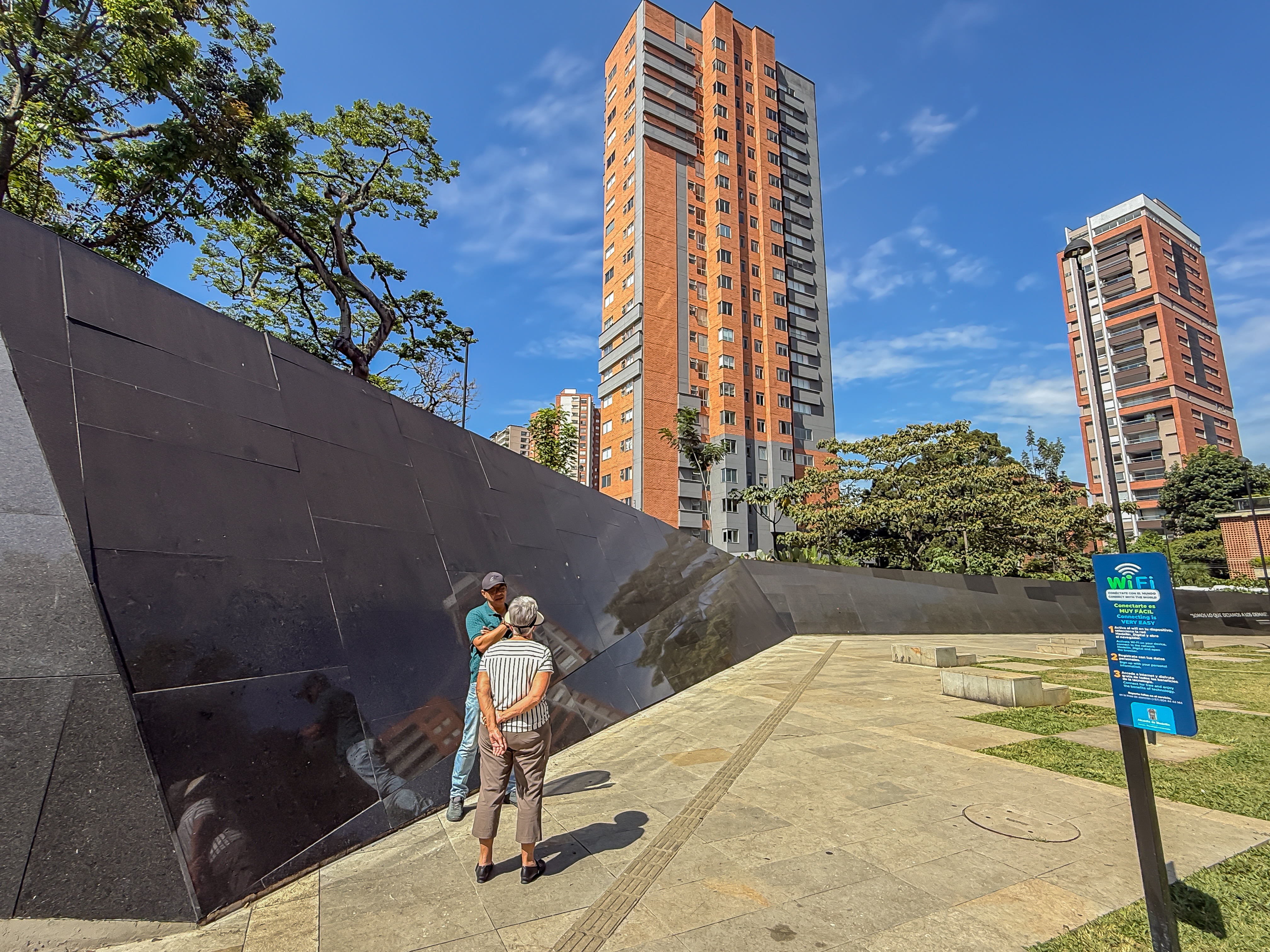
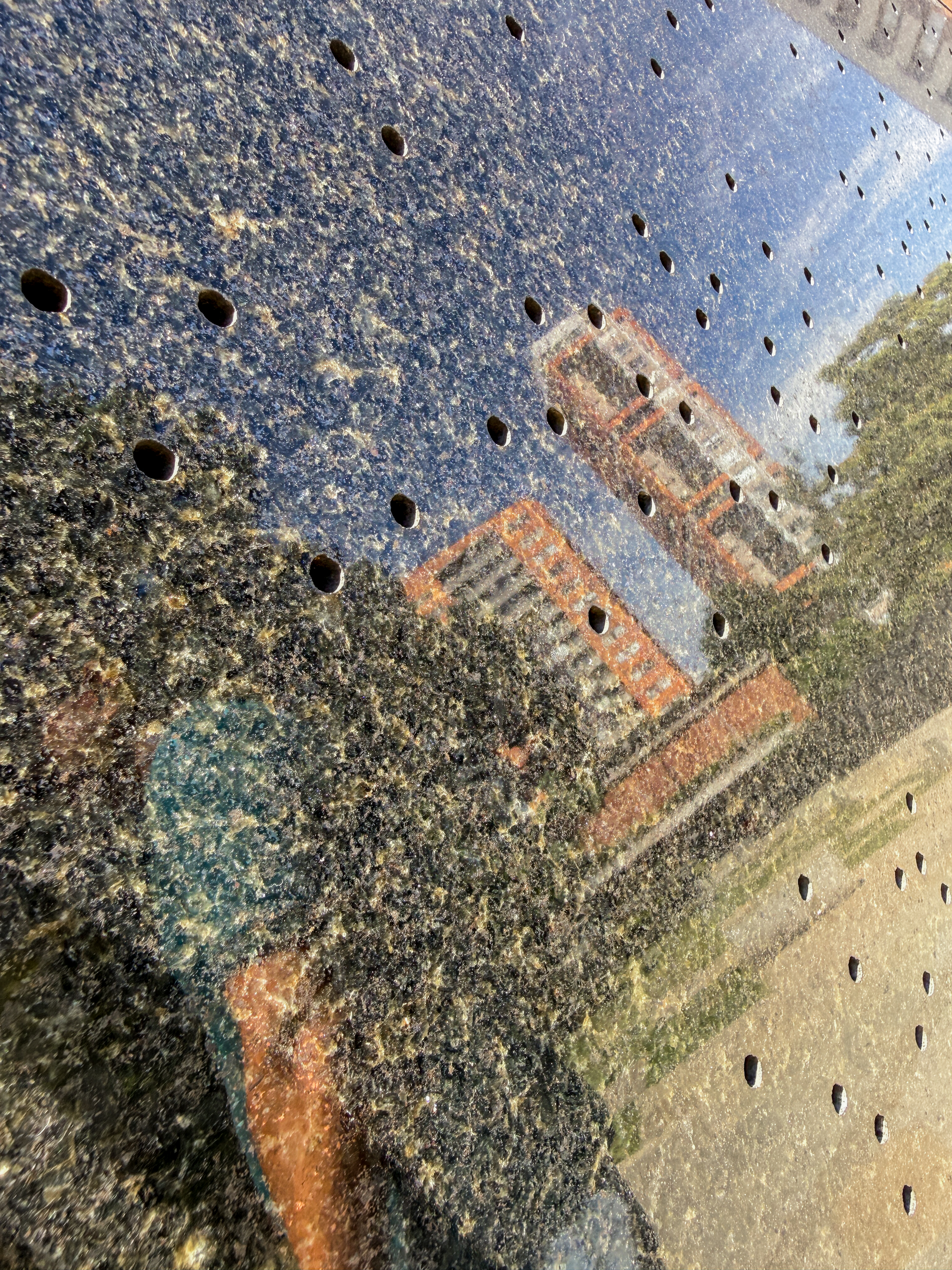
Another Example. We had personal local guides every step of the way throughout our two weeks there, arranged for, as were our lodgings and vehicular and Colombian air travel by our in-country outfitter Impulse Travel Colombia. https://impulsetravel.co/ I give them a gold star recommendation, by the way. Be sure to give Felipe my regards, ditto operations Sergeant Major/Girl Friday/Itinerary Director, Laura. On this particular day, our guide, Doriel, started us off at Medellín’s Inflection Park. It’s roughly a block square, and was previously the site of Pablo Escobar’s compound before he was killed by an elite Colombian National Police unit. Note the park’s name, as in change point. His compound is gone, razed and removed. They’ve erected a wall, very reminiscent of our Vietnam Memorial, of great poignancy to me. The north side is riddled with 46,612 holes, as acknowledgement of the known number of individuals whose lives were violently ended in narco violence. The south side is covered with etched dates/locations/number of deaths from narco bombings. Inflection park—demonstrable back-turning on crime violence.
Doriel was bent on sharing Medellín’s multi-faceted personality. Next up on this full day was a visit to Plaza Botero, where we took in the twenty-three sculptures by Fernando Botero, a painter and bronze sculptor with a unique distorted proportion take on the human form. Sense of humor, political critique, personal vision problems? Who knows, I’m no multi adjective art critic. A touch of whimsy—these bronzes are dark, except where human hands frequently touch them, the skin imparting a polished golden copper hue over time. These statues are physiologically correct nudes. Guess where the statues are most golden in color?
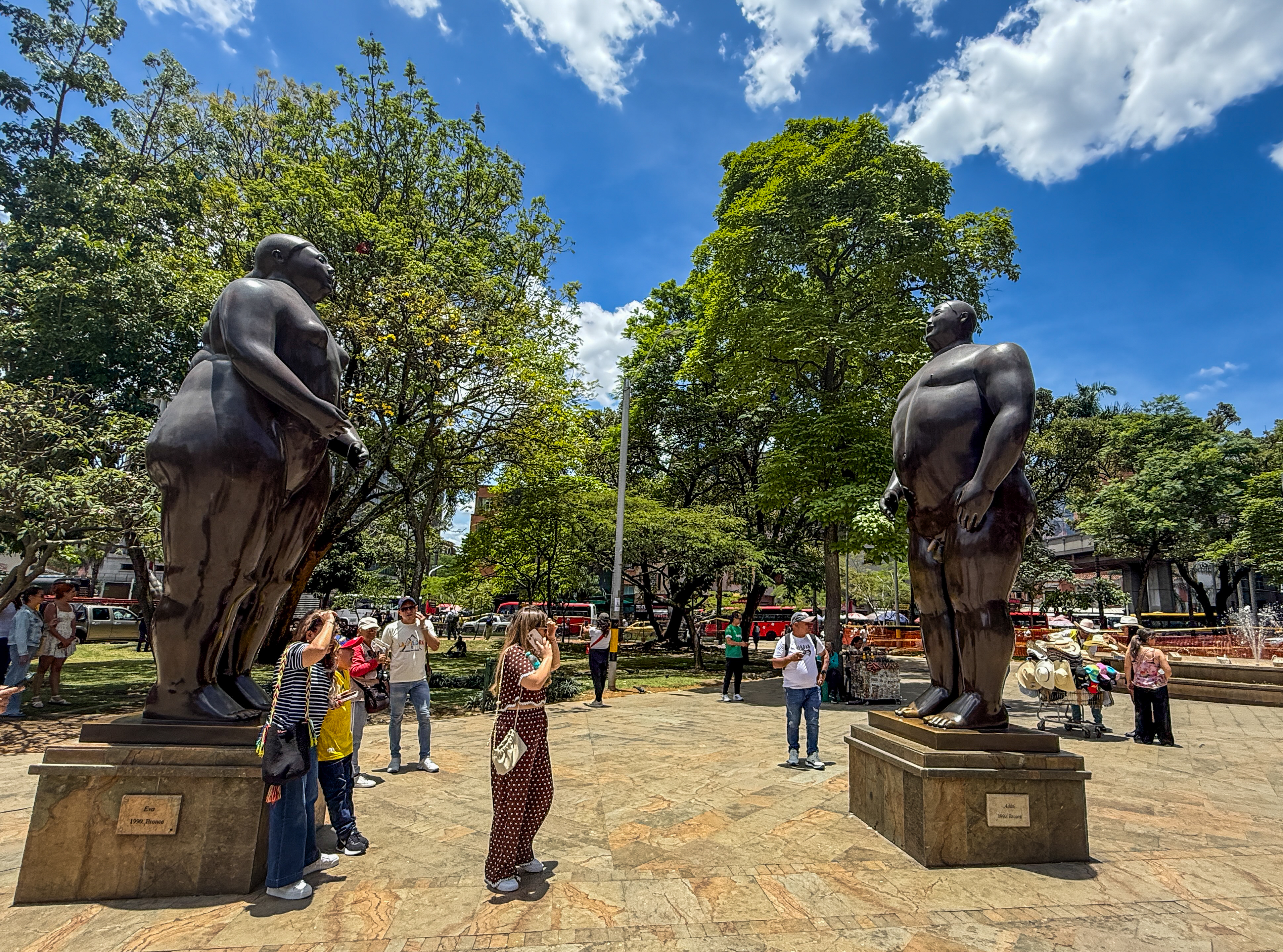
This was a busy and crowded plaza. Doriel advised keeping a sharp eye and grip on I-phones, wallets and such. Human nature being what it is, not all of River City is trouble-free. And walking about were more than a few ladies (and gents?) making their charms rentable. Prostitution is not illegal in Colombia. The “is she or isn’t she” judgement somewhat complicated by the demonstrable embrace of T & A in this Latin culture. No puns intended. I should also convey that Cocaine is not Coca, even if made from it. The Andean countries all have long histories of indigeõs cultivating and using coca. Just a pinch between cheek and gum and you’ve a mood-enhancing energy boost. You can buy it legally, make tea with it, whatever. It’s the chemical alteration to cocaine where the trouble comes in. And not to make light of the violent nature of traffickers, but there wouldn’t be a problem if there wasn’t a market. Just sayin’.
Leaving the park, Doriel guided us onto the metro system, getting about by going native. The system was clean, and while crowded, there was no sense of menace, nor the whiff of unwashed humanity! Just the gente going hither and yon in their daily ways. This included both metro cars and gondolas to reach the steeply ensconced communes.
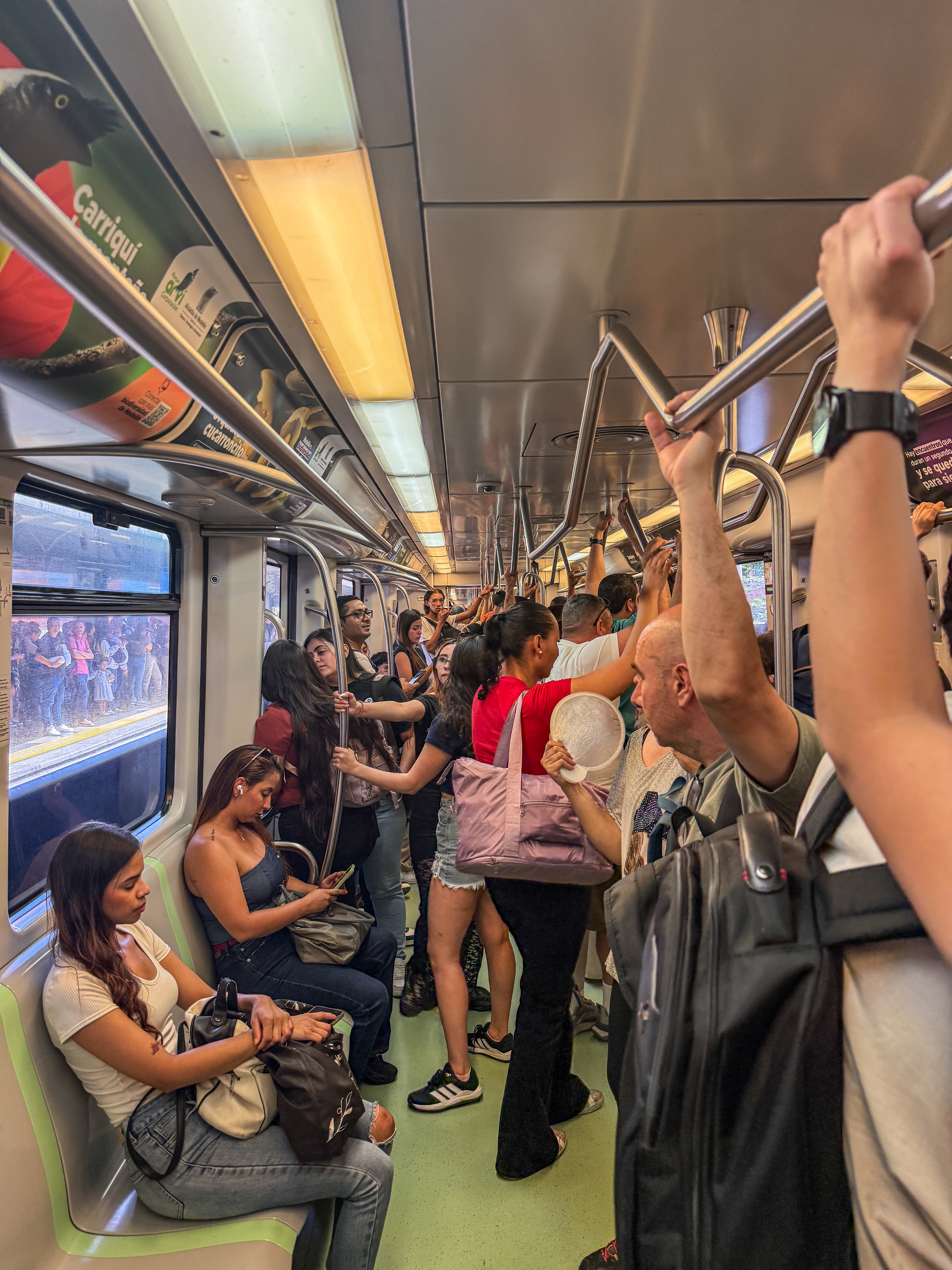
We were headed to Commune 13, Comuna Trece en Español. One of several in the larger Medellín area, and until recently not a safe place for just about anyone. Now, a thriving and teeming place, post inflection. Doriel connected us to an earnest young man who grew up there, and whose mother was a “13” kindergarten teacher who joined others in seeking a life without the violence. She and like-minded folks thought their future lay with tourism, and that could be enhanced with art. There was always art, but before inflection, it extolled violence, now a more peaceful and colorful life.
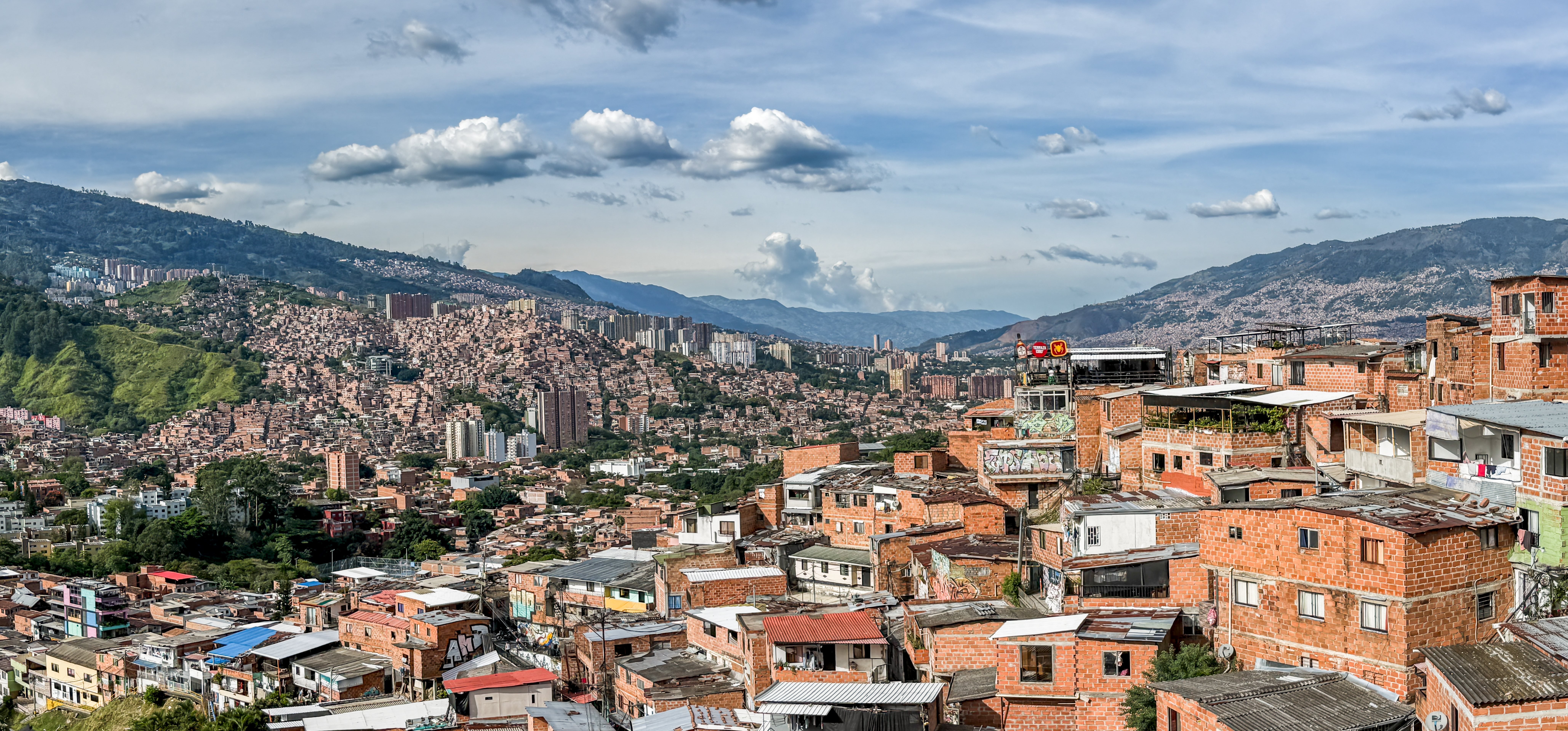
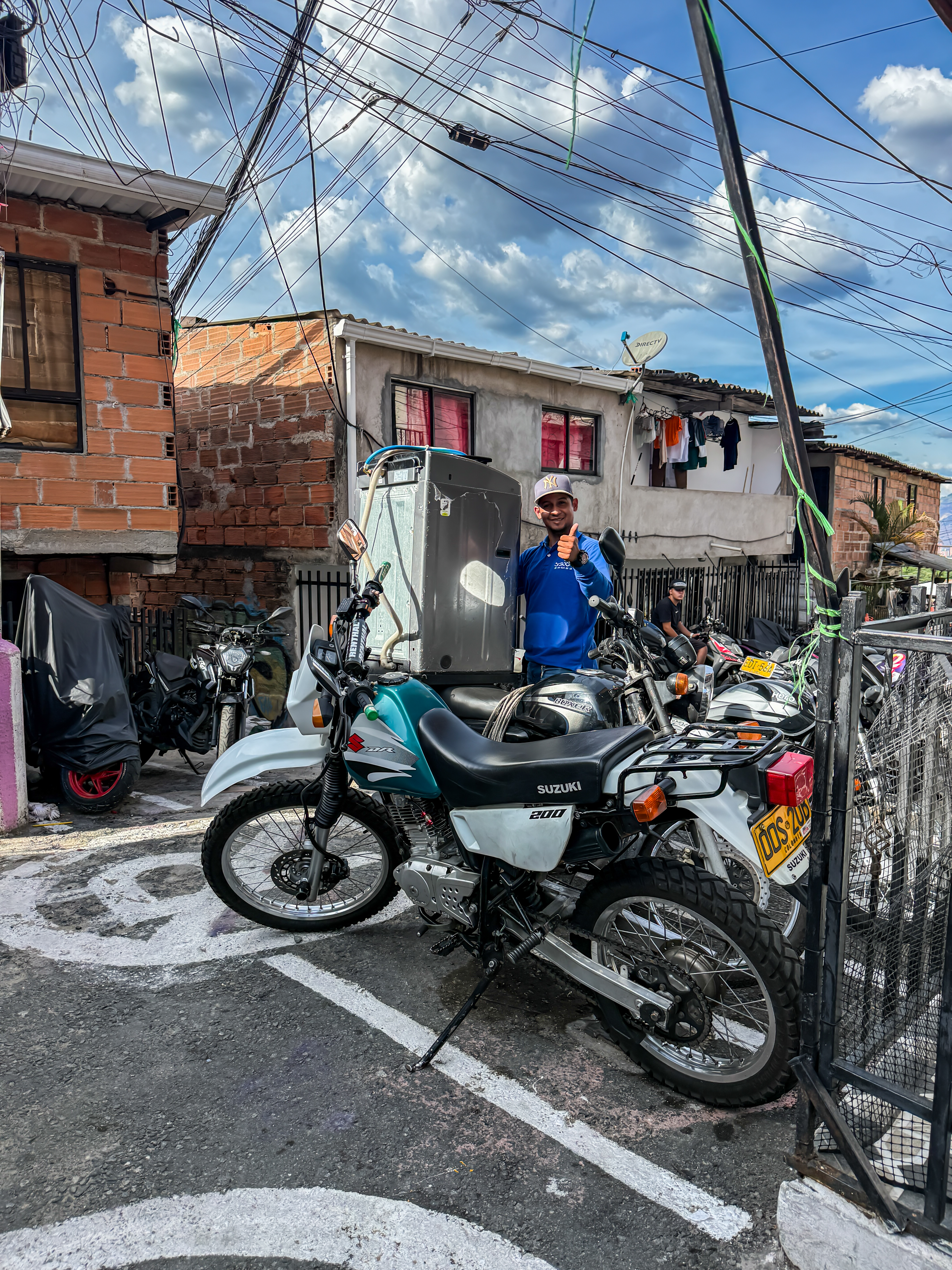
After taking in the airs with the gondola, our driver rejoined us for a short drive uphill to where the streets gave in to the vertiginous crowding of the commune. Now it was climbing the steep hills on narrow foot paths between the cheek to jowl residences and businesses. And by narrow, I mean largely shoulder width, Cathy and I walking hand in hand, not an option. No more autos, but plenty of the ubiquitous motorcycles and scooters. This resourceful fellow strapped the washing machine to the back of his bike, and when the motor vehicle could go no farther, used the same straps to lash it to his back before humping it up the hill to wherever it was headed.
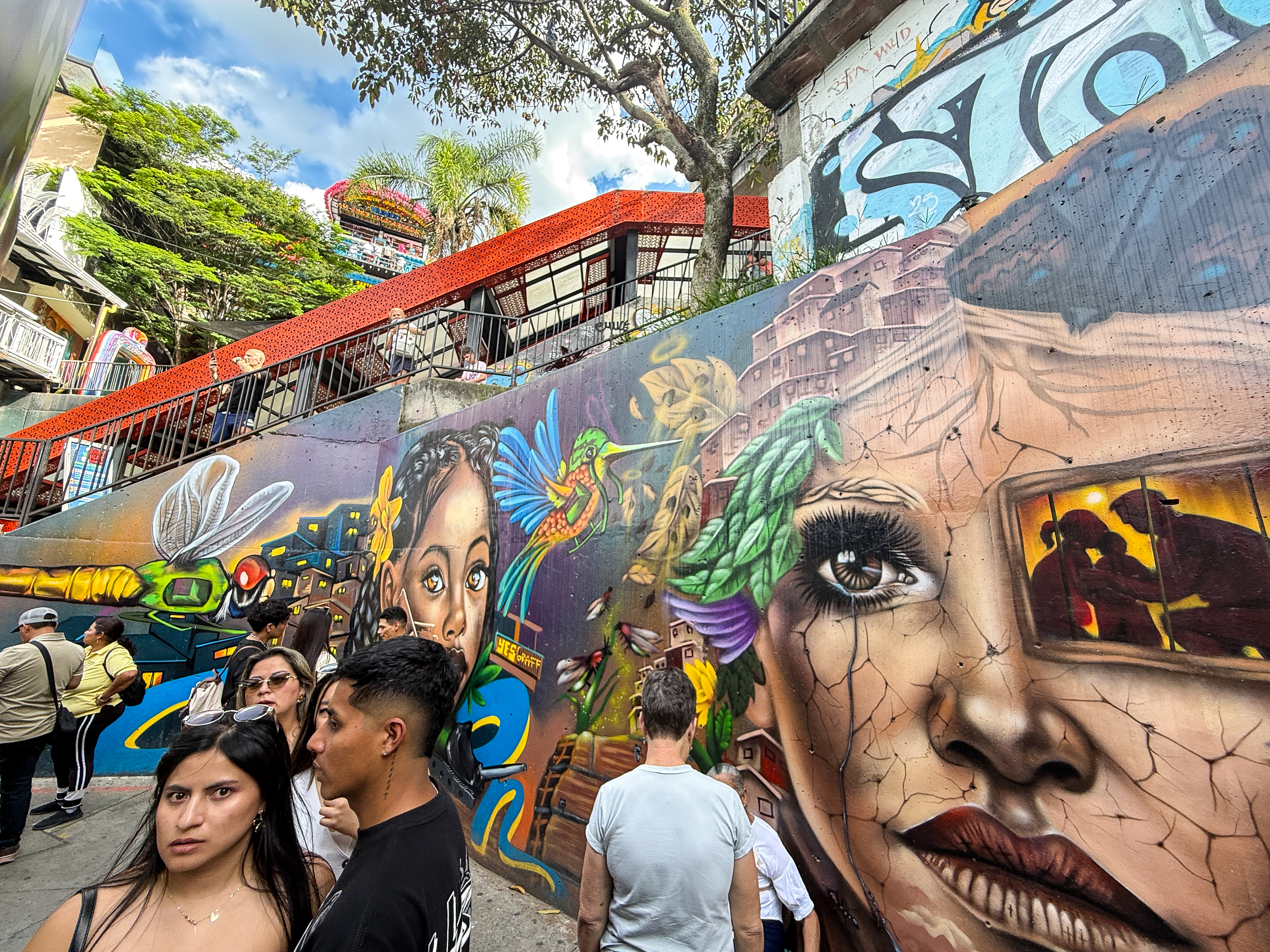
One of Impulse’s sales pitches for would-be travelers was the integration of graffiti in daily Colombian life, particular evidence of the broader embrace of color. Colombians are a colorful people in a colorful land. Graffiti is found everywhere from retaining walls, as here, to the full height sides of towering modern skyscrapers. Not counterculture art, but proudly extolling beauty and vibrant energy. The government, responding to ambulatory need in crowded and steep Comuna 13, built within the footprint of a couple of lengthways blocks of pathways, electrically powered escalators. You can see the side of one stretch with its red roof. The way the escalators are juxtaposed produces small plazas, the accompanying retaining wall the artists’ canvas. This one tells the story of Comuna 13 before and after inflection. The woman’s left eye depicts a family huddling in their apartment seeking safety over thuggery. Countering this there’s a colorful native colibri (hummingbird) and blue morpho butterfly, the latter as natural stand-in for transformation and renewal, spiritual awakening and plain good luck. Our commune guide steered us to a presentation of hip hop dance and over-the-top gymnastics all creatively choreographed as an income-generating show for and by local youth. Very entertaining. It inescapably dawned on us that Doriel had arranged all of this day to extol a transition to a vibrant, colorful, national navigation towards normalcy, to safety and artistic beauty drawing on the natural gifts of Colombia. And not to be left out, look at the lush greenery in the background. Medellín is a beautiful city, laced everywhere with pathways and plazas chock full of trees.
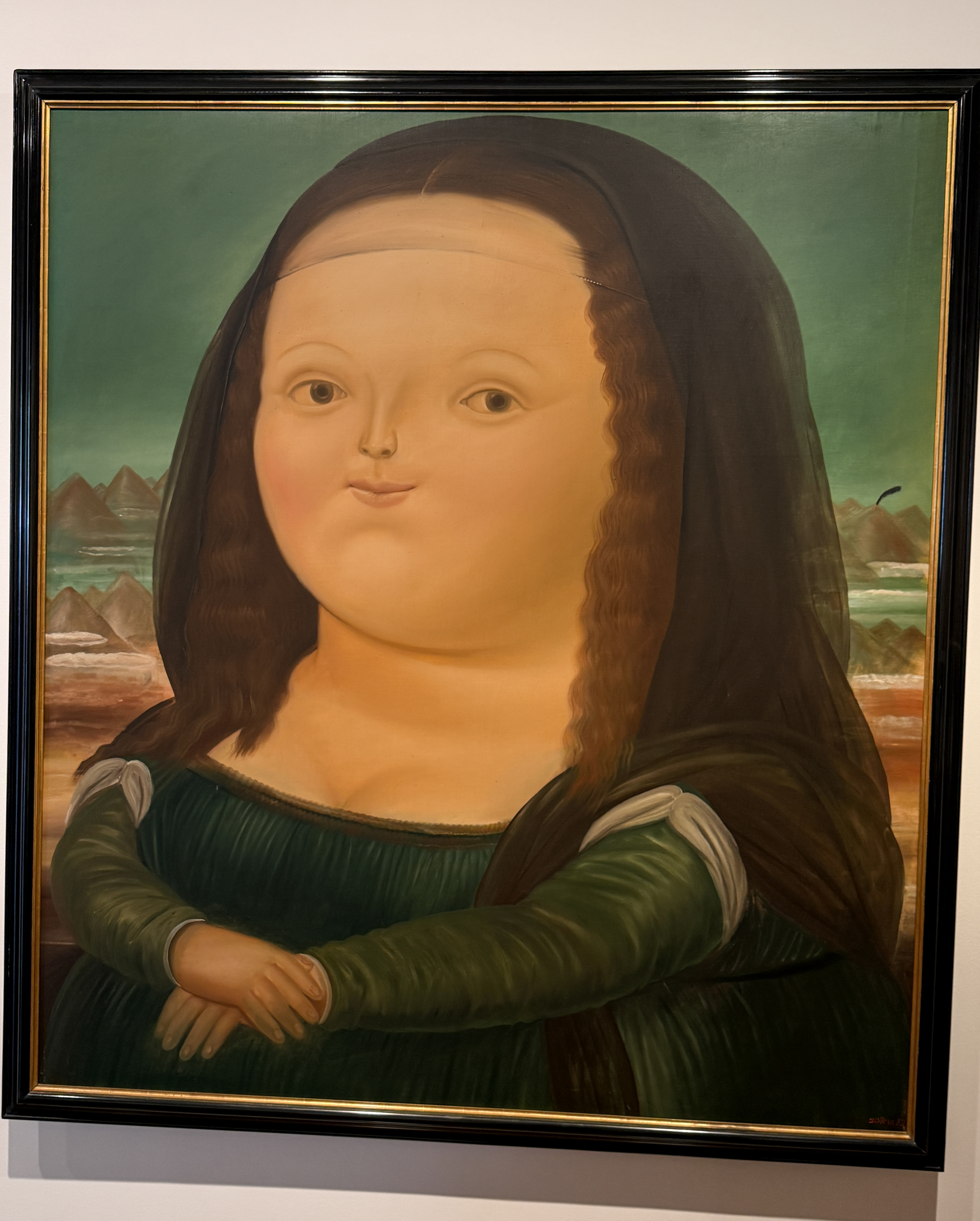
I’ve gone down a bit of a Tom’s careening mind narrative, my posing an answer to the “Why Colombia?” question, in ways so worn on their sleeve in Medellín. In fact, we began our visit in Bogota, including time with the Botero art museum and his take on the Mona Lisa. I don’t think Leonardo da Vinci feels artistically threatened.
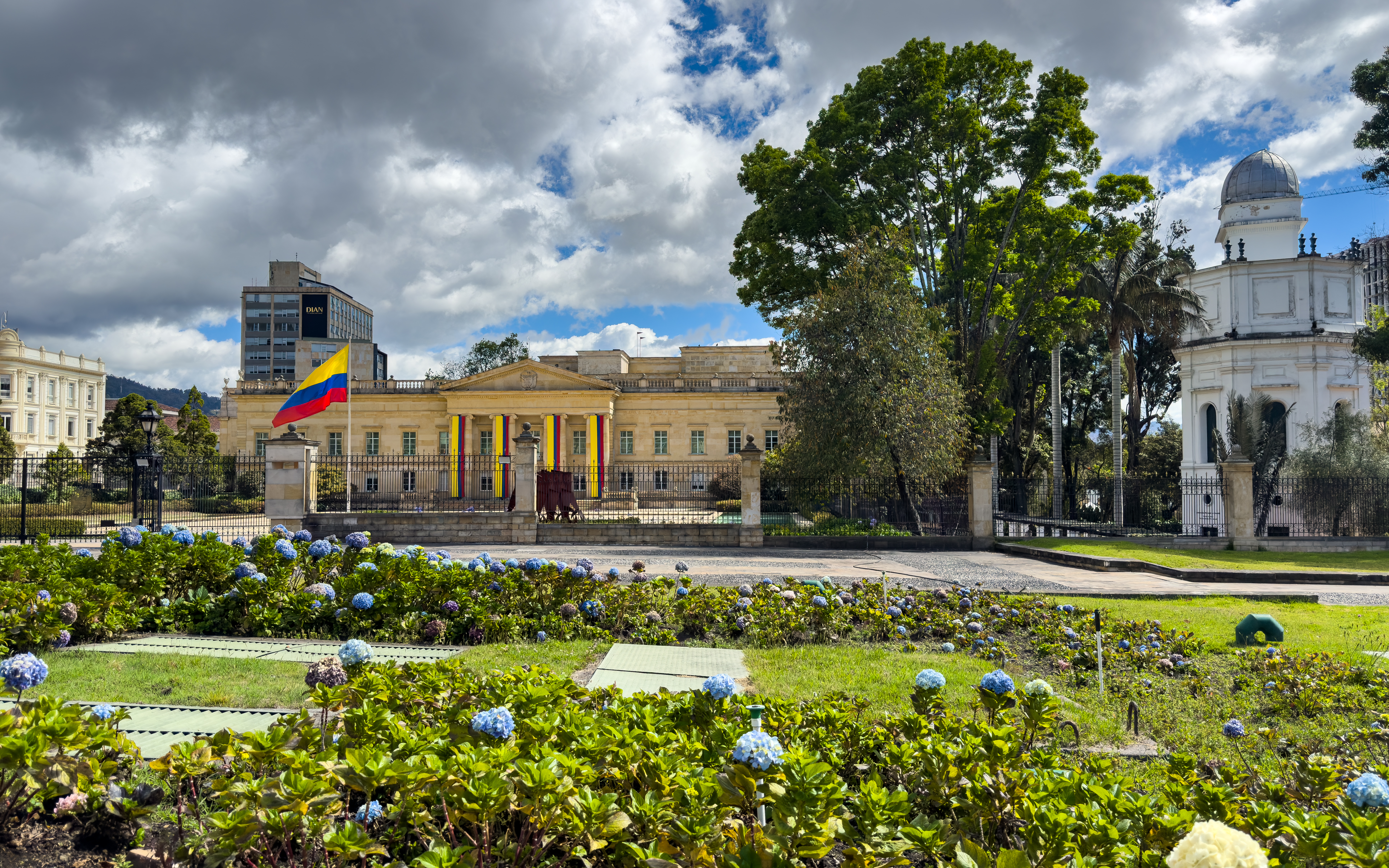
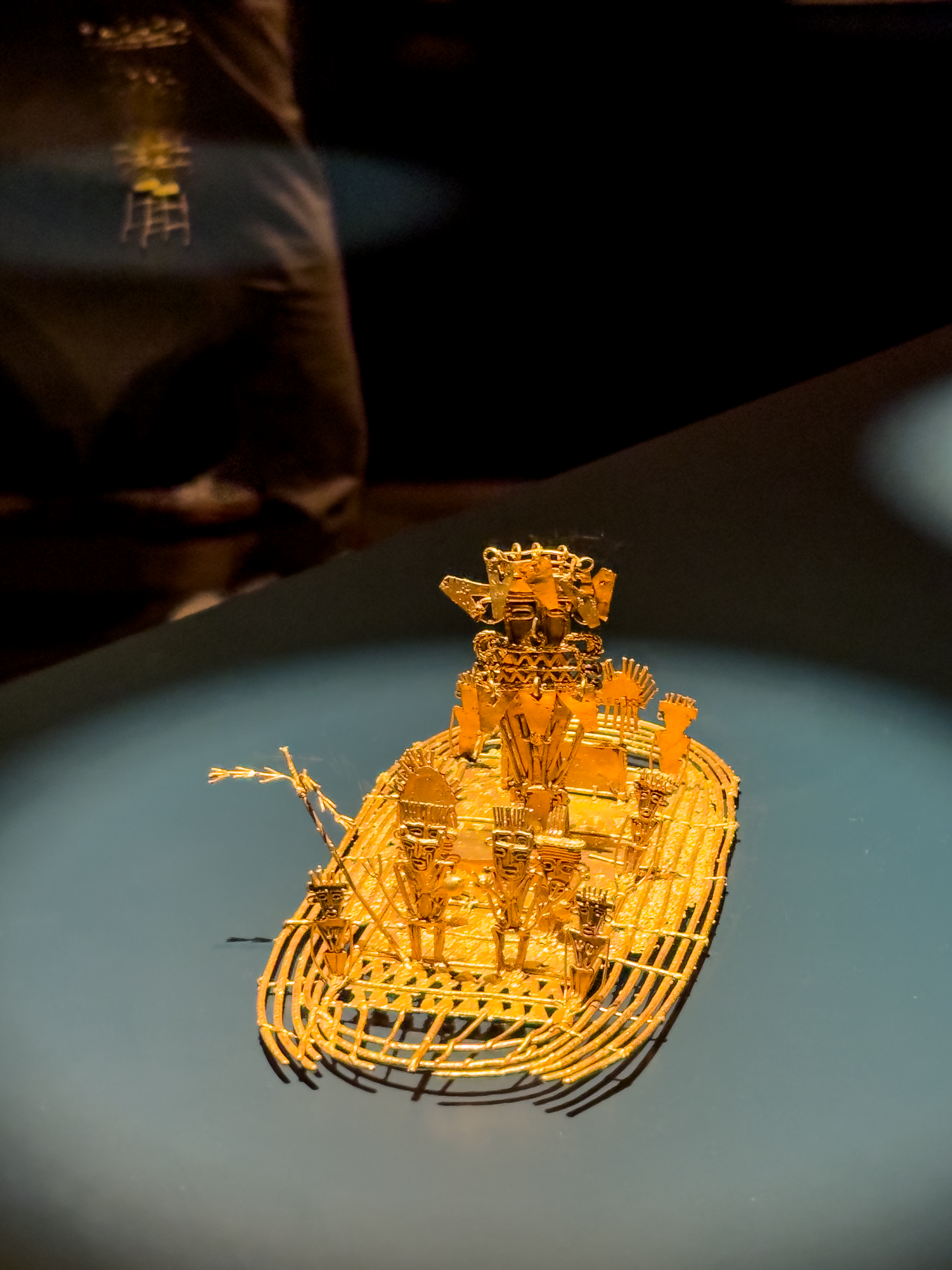
Guide “GiGi” took us up the funicular to the Monserrate overlook with its over 10,300 foot perspective (the very first image above). Both the Bogotá funicular and Medellín’s cable cars received engineering input from the Swiss, but were manufactured and installed in Colombia by locals. Meanwhile the Gold Museum glittered its prominence. The stuff of Spanish Conquistadors seeking a mythical city of gold and galleons shepherding their plunder to Spain. Not to mention the airport name.
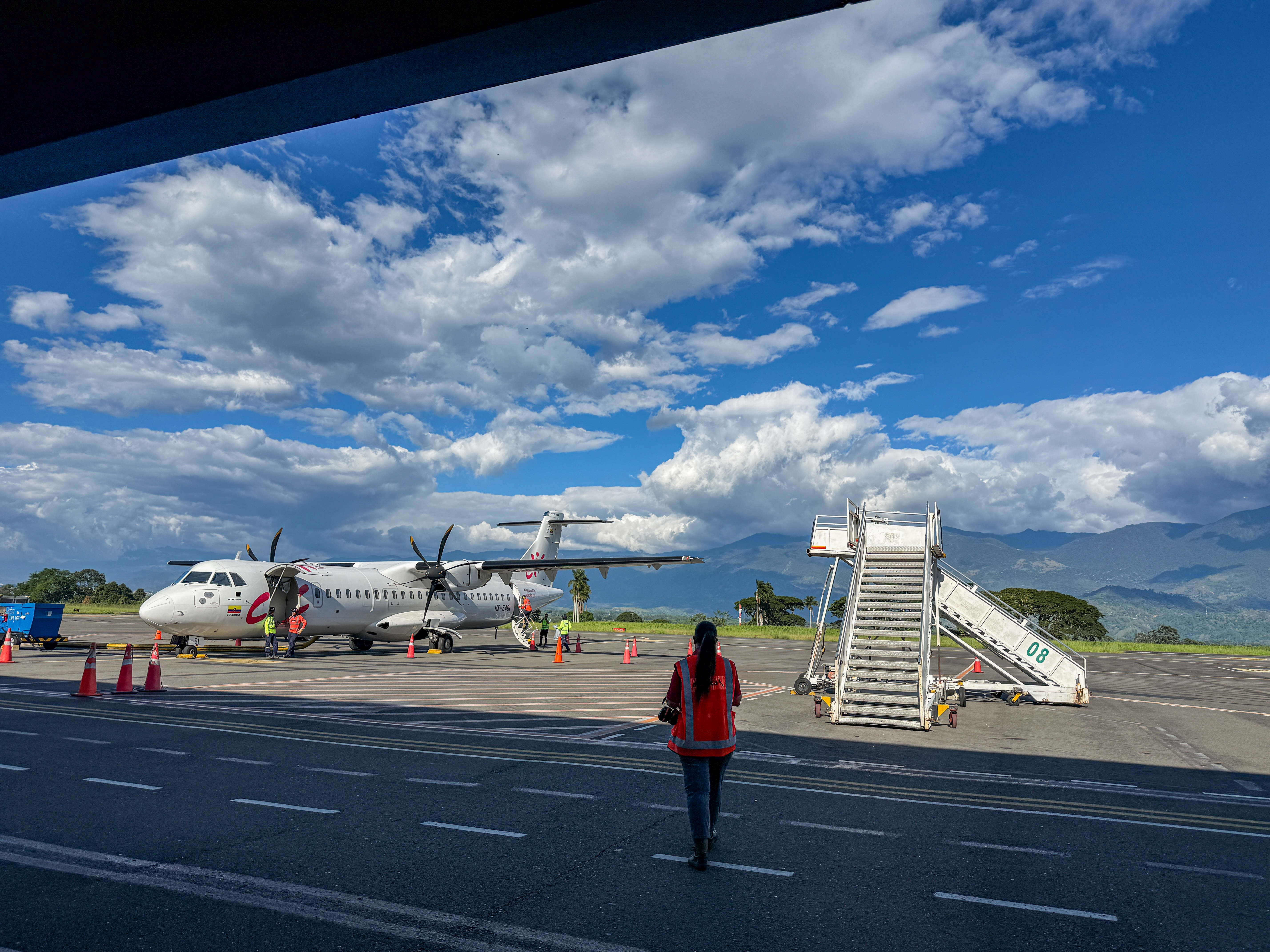
On the third day we flew aboard a Colombian regional carrier Clic Air ATR turboprop from Bogotá’s El Dorado airport to Manizales—west of Bogotá and south of Medellín to access the coffee and cacao growing regions and where we also planned some hiking and bird watching. The original plan was to fly into Pereira but that was too few miles from ground zero of the 10th August magnitude 7.4 earthquake that threatened to make a “Why Colombia?” shambles of our plans. But Impulse quickly rerouted us to undamaged Manizales, confirming that operations there were normal and our lodgings, the roads, and our local guides were all thumbs up “Go.” Press on.
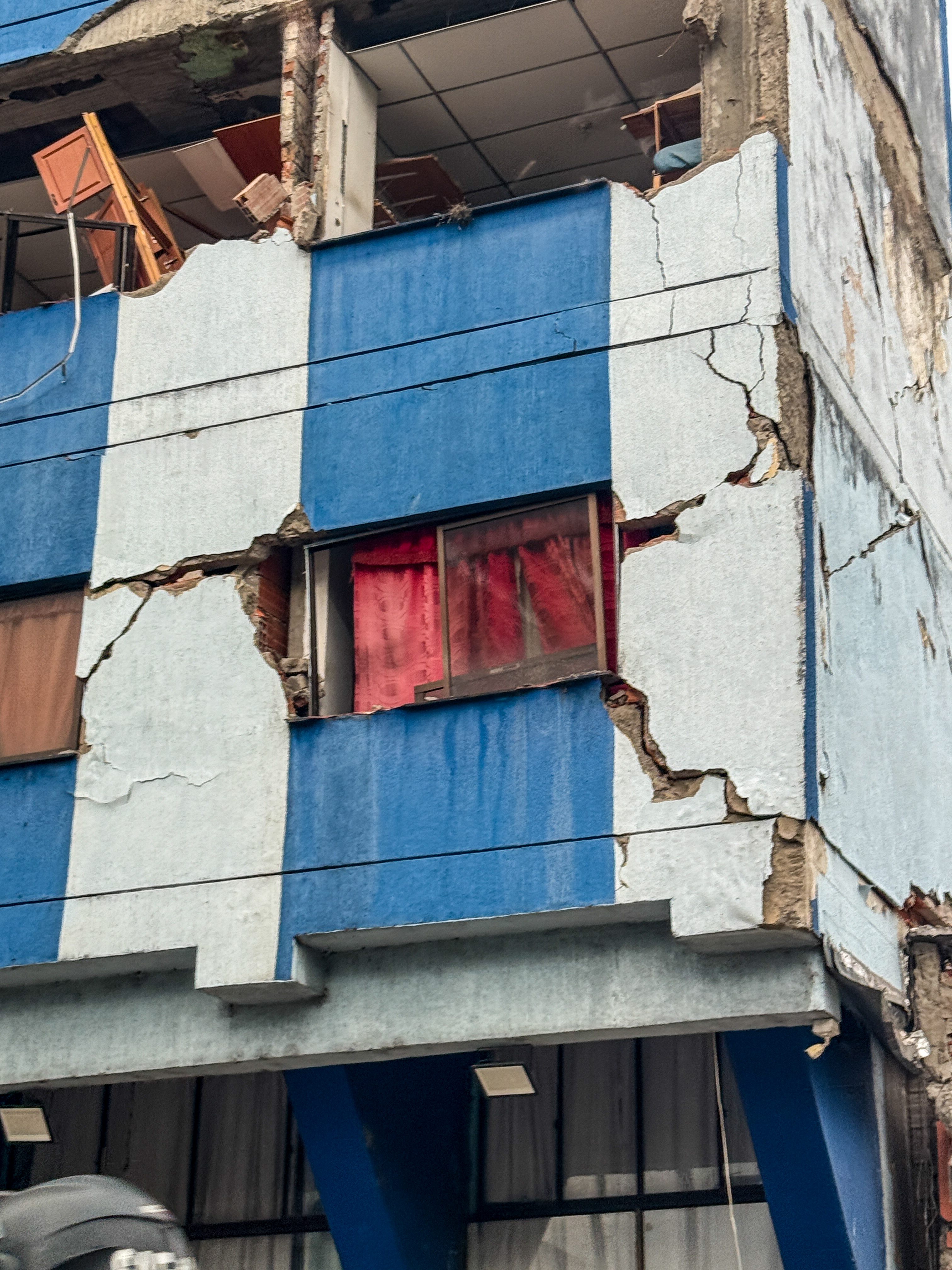
Here, as everywhere, it was just us with our English speaking guide and driver. The vehicles were always modern and in good repair. Which is more than we could say about Pereira as we drove through after arriving at Manizales. Significant damage like this, rubble strewn across the ground, people living under tarpaulins in neighborhood parks.
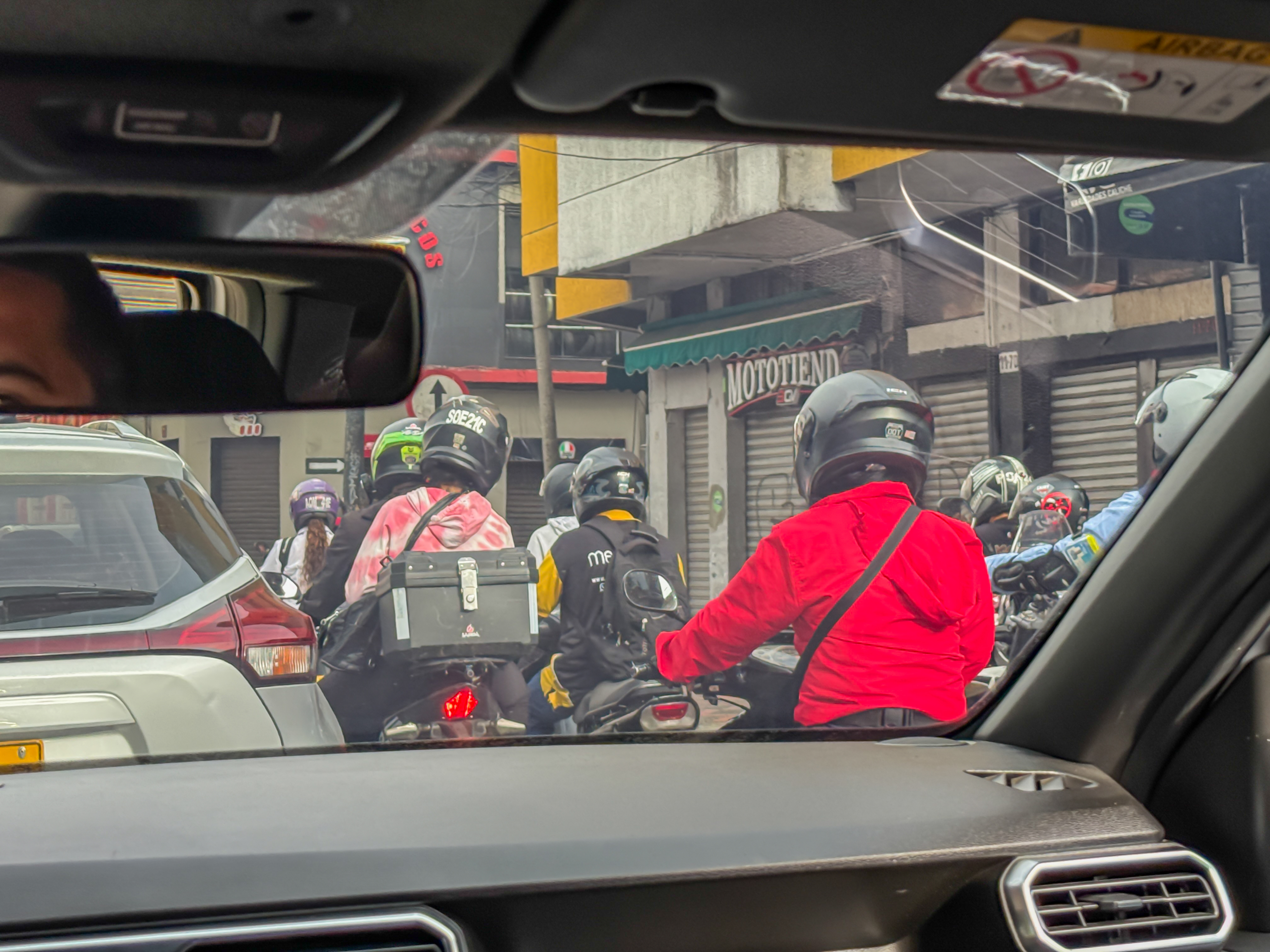
And as everywhere, traffic was heavy and charging ahead. Not as horrific as driving in India, but it is not for the faint of heart. The space between lanes was routinely clogged with countless motorcycles and scooters. The black box on the bike in this scene was quite common and was used for personal effects or the Colombian equivalent of DoorDash.
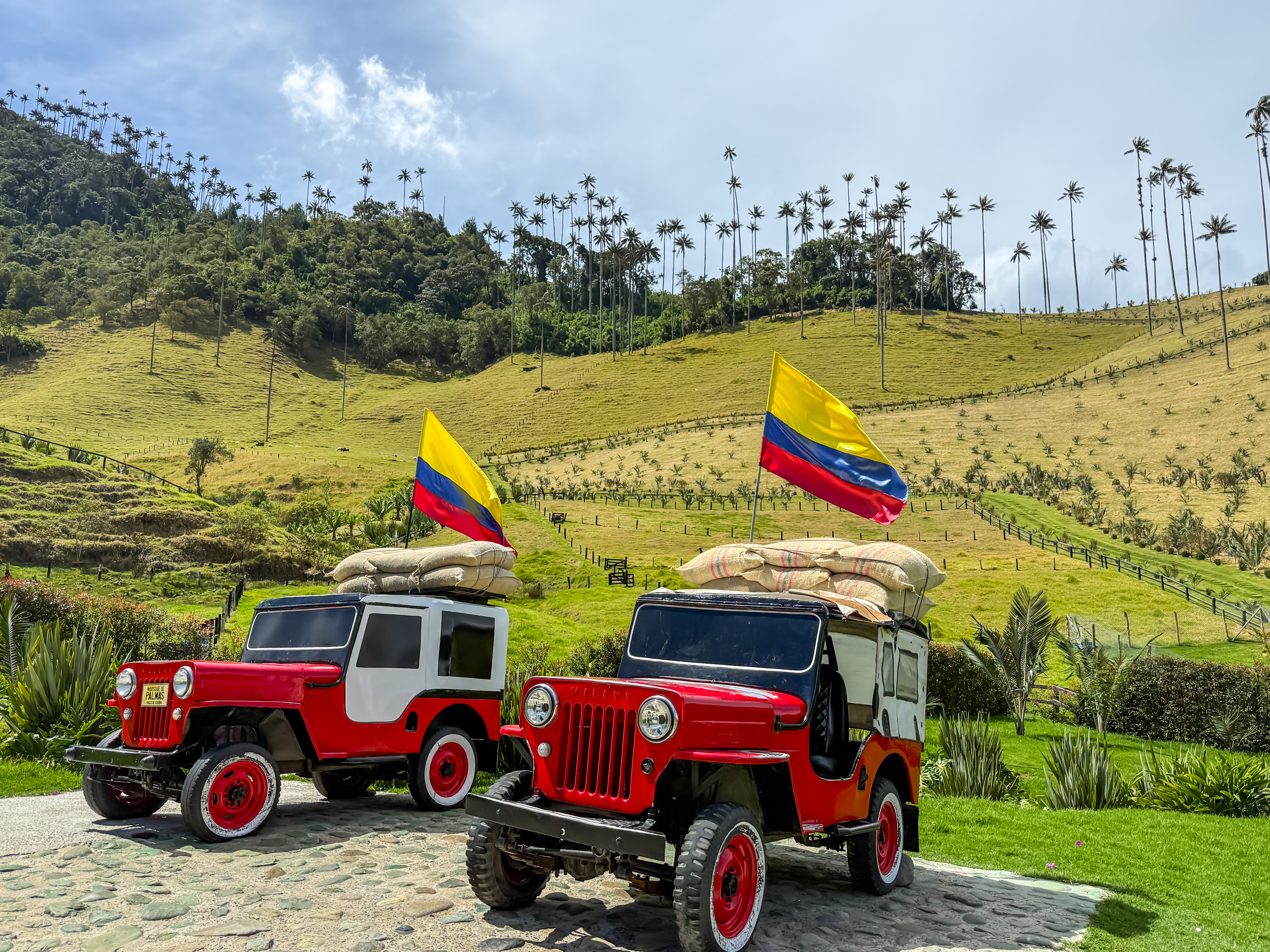
An hour’s drive from our lodging brought us to the Cocora Valley with its remarkable wax palm, the national tree of Colombia, and the tallest palm in the world, reaching over 75 meters of willowy height swaying languidly in the Cordillera breezes above a tiny 3-5 meter root ball. And in a bit of “if you’ve got it why not flaunt it” fun, the trailhead area for our hillside trail climb featured a pair of Colombian-essential Willys. Willys, the original manufacturer of what we now think of as Jeeps, and in-country, are still Willys. Many of them go back well into the last century, still in service due to their robust simple design and ease of maintenance. They are used everywhere to connect the centers of small towns to the outlying areas, taking goods and people in both directions. The people transport is a hoot, passengers stuffed inside and standing on the rear bumper hanging onto whatever amounts to a handhold. At drop-offs, it’s like watching clowns exit a VW under the big tent.
That’s Cathy and guide Juan Pablo ahead of me as we embark on a 1200′ elevation gain to 9700 feet. The trail is laced with those rectangular pads to keep it walkable in spite of not infrequent mountain rain. I found that with my particular gait sometimes it was easier to walk the side of the trail like where Cathy is standing. Besides, what little boy doesn’t want to play in the dirt?. My internal combustion engine valves didn’t float, but I might have missed that sound over my gasping inspiration. The physiological kind. The scenery was plenty quiet with the inspiration it supplied.
Now, Juan Pablo—ex Army, BTW—was not only keen to urge on our stamina like a somehow soft-spoken Drill Sergeant, while regaling us with the sights, wide and close at hand. He also wanted to do his own clever take on capturing our moments along the way.
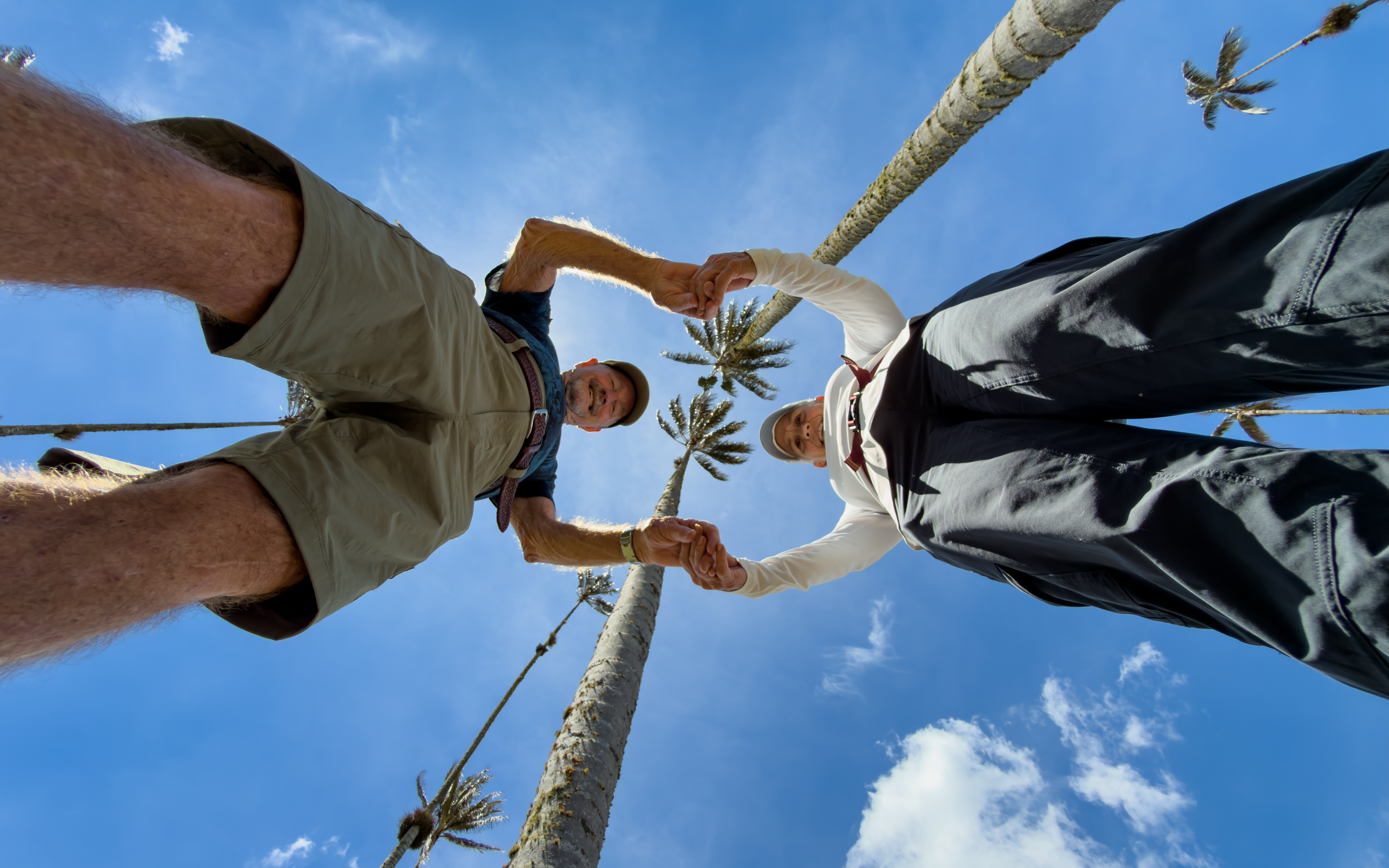
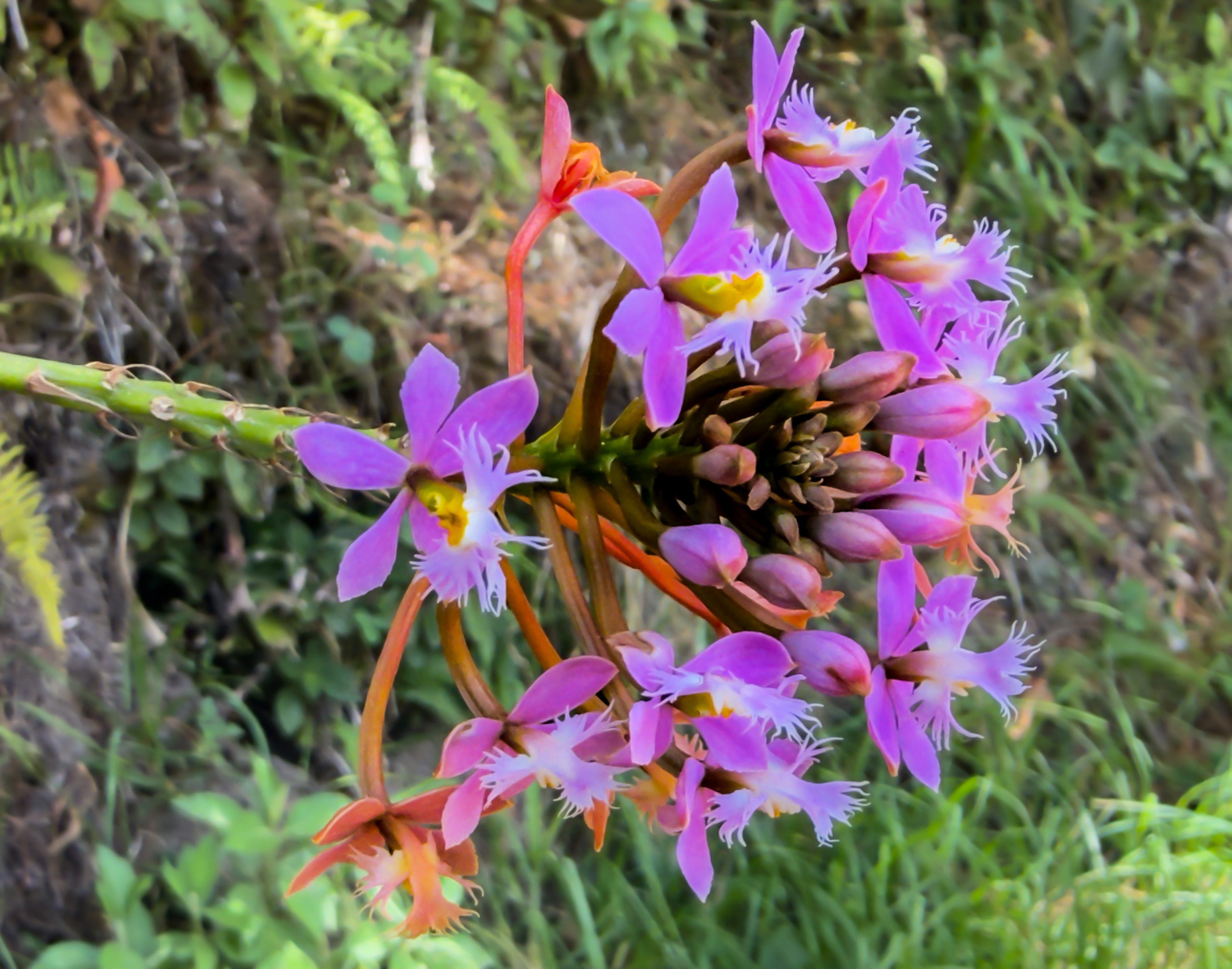
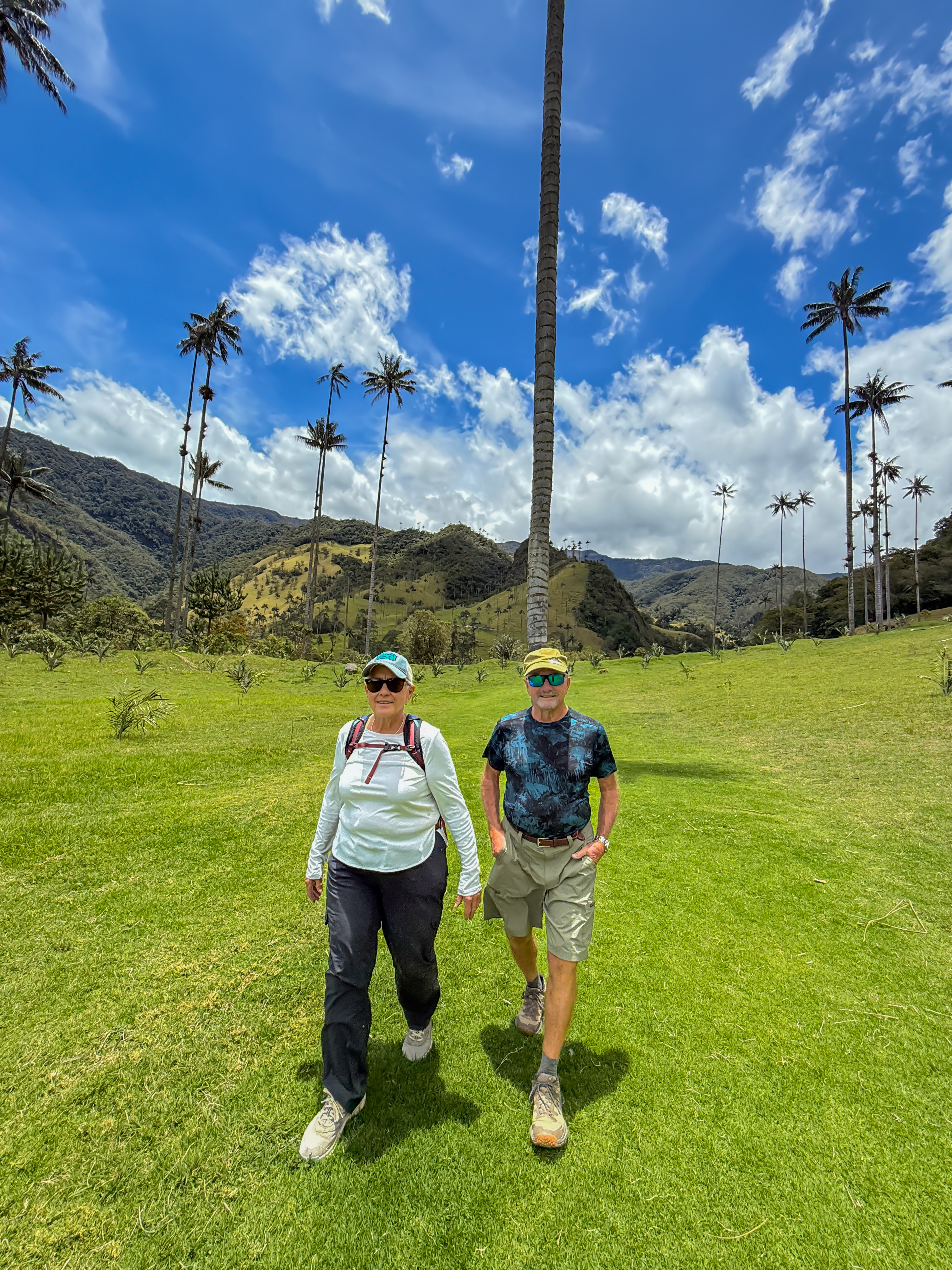
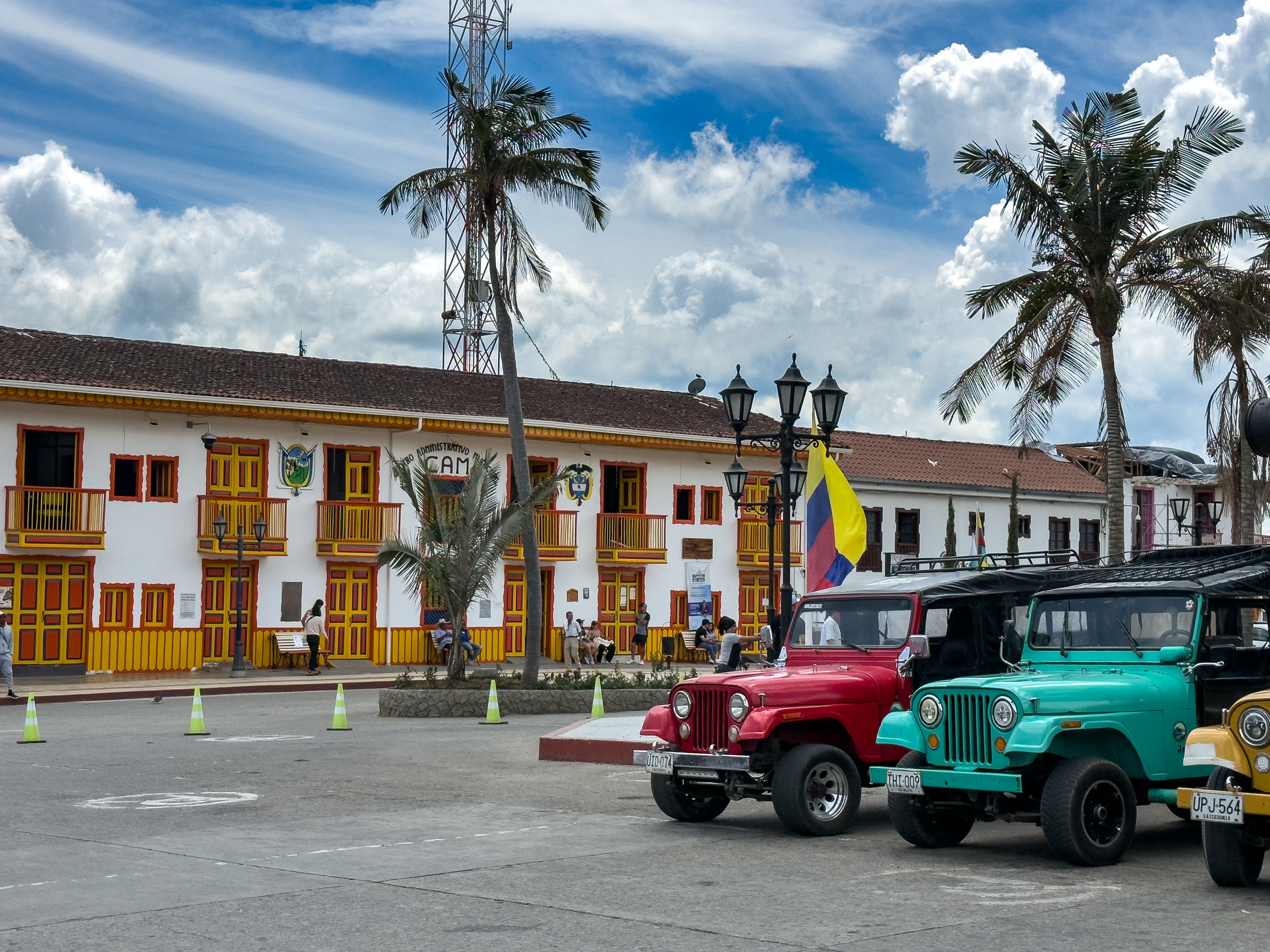
After the hike we had lunch off Salento’s plaza principal, the colorful town offices as background to three Willys waiting to depart to the town’s hinterland.
Our second lodging in this coffee and cacao growing region as we thought of it, turned out to be a true gem. The 10-room boutique Casa Rivera del Cacao. https://www.casariveradelcacao.com/en. Ensconced in the midst of its own cacao plantation, sprinkled with coffee and plantains, all of it hidden in a lush valley. Innkeeper and chocolate guru José, positively grinned when I enquired if he was nicknamed Pepe? An icebreaker that got us along even more famously as I caught him momentarily off guard with such a question by an Americano. (You should know that Pepe stems from the Spanish pronunciation of the initials “P. P.” from the Latin, standing for “Pater Putativas,” the putative father that was Joseph—José in Español—to Mary.) An educated and worldly businessman who has forsaken his previous life in the furtherance of all things chocolate, he guided us throughout the plantation, and settled us into an amiable world history including of the gastronomic science turning cacao fruit into our own finished dark chocolate bars. It’s DELICIOUS being mentored by a gent who recently won gold medals at a Chocolate competition in Paris. And you need to know—those gold medals are emblazoned with the French phrase “Un Coup de Coeur” roughly translated as “a Blow to the Heart.” A blow of the love at first sight variety. Sound like what your tastebuds tell you?
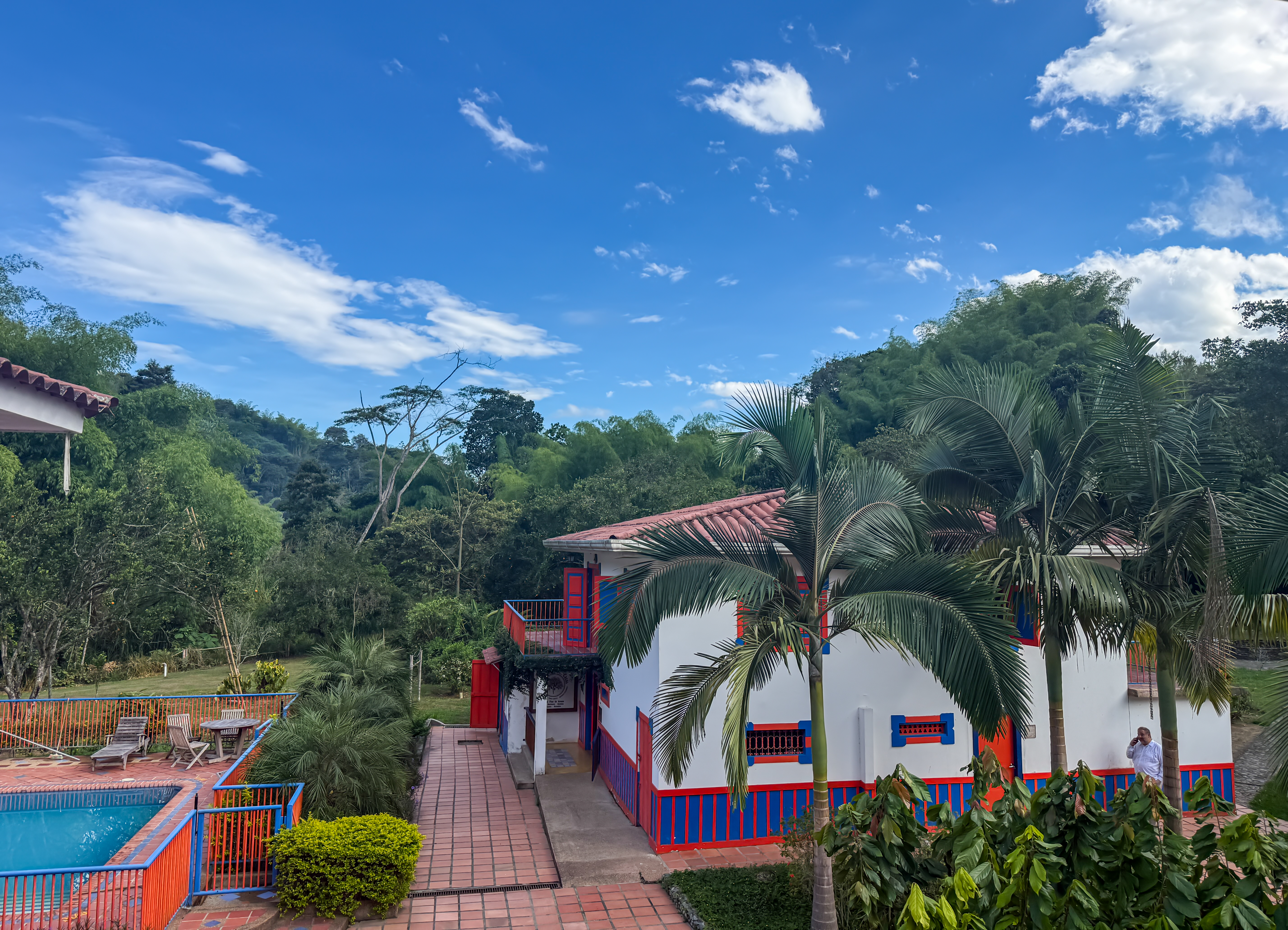
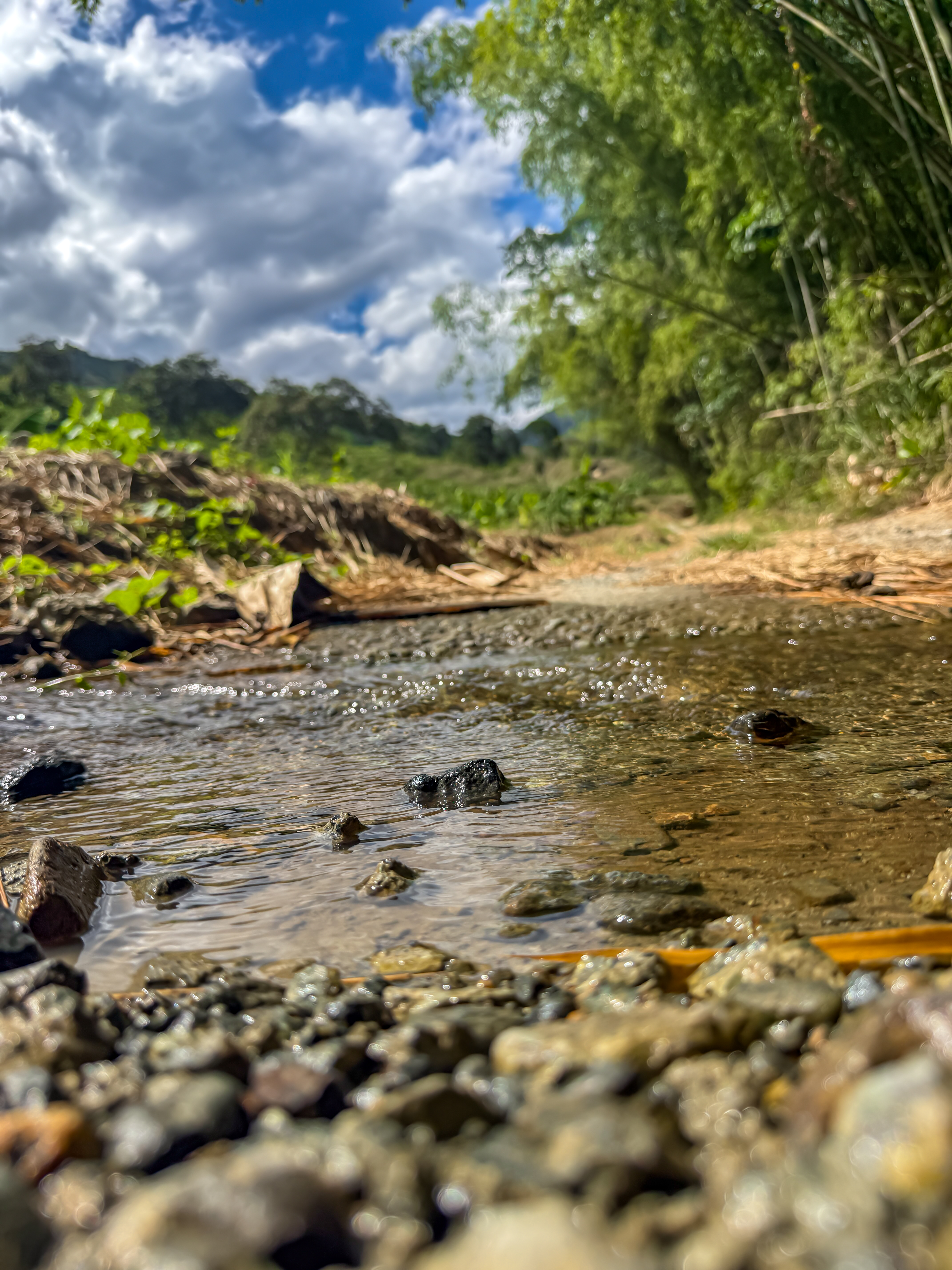
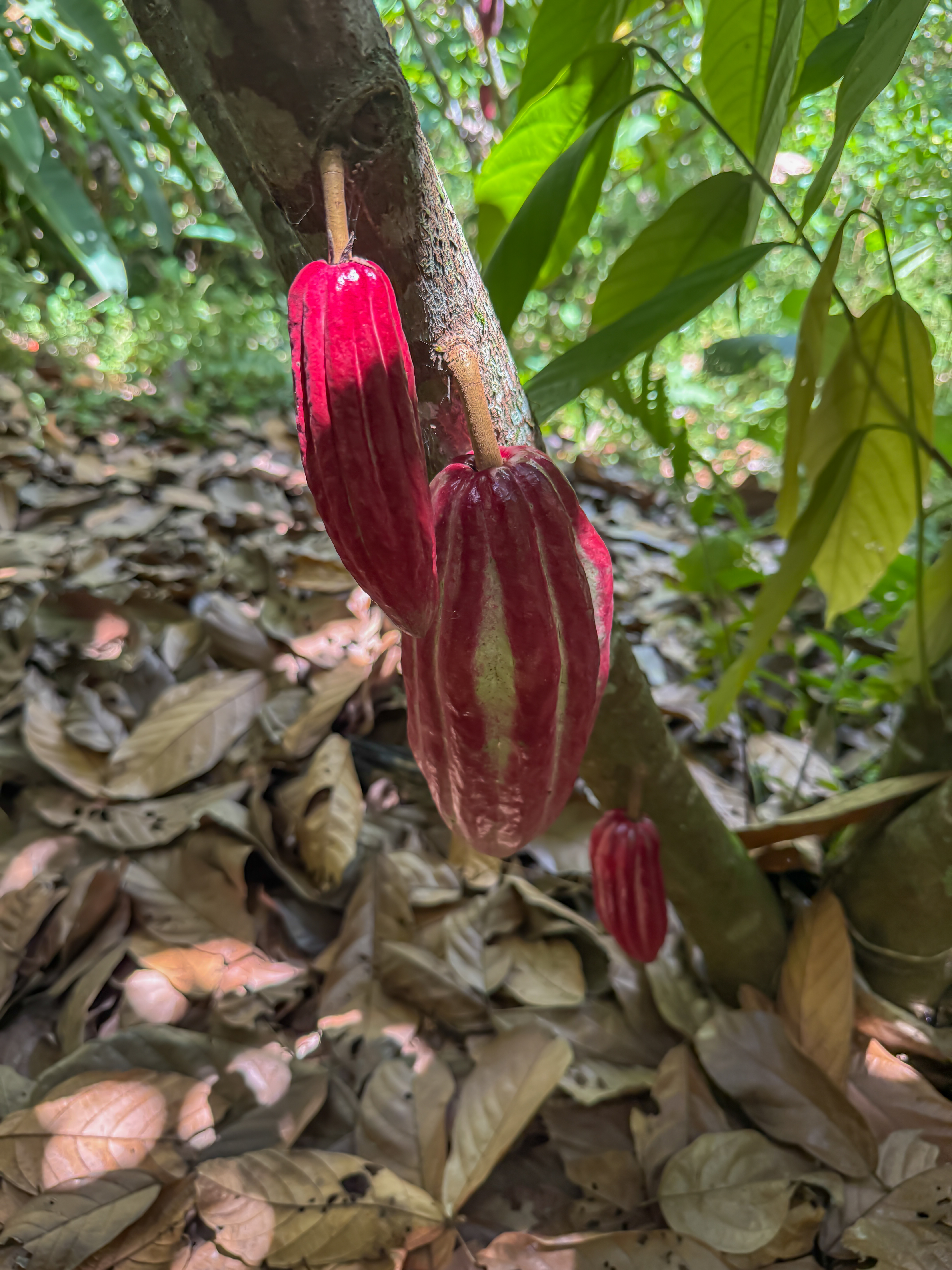
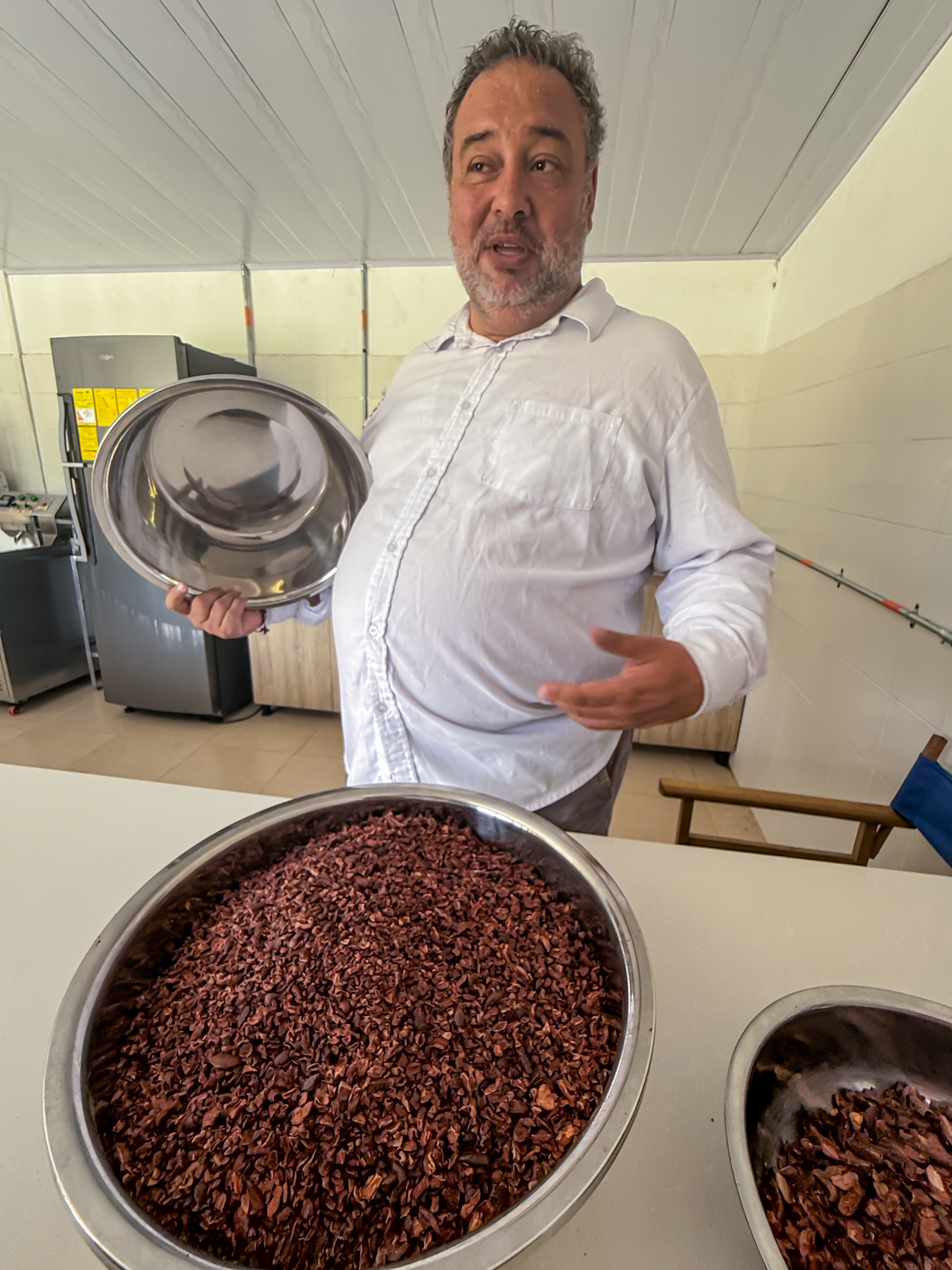
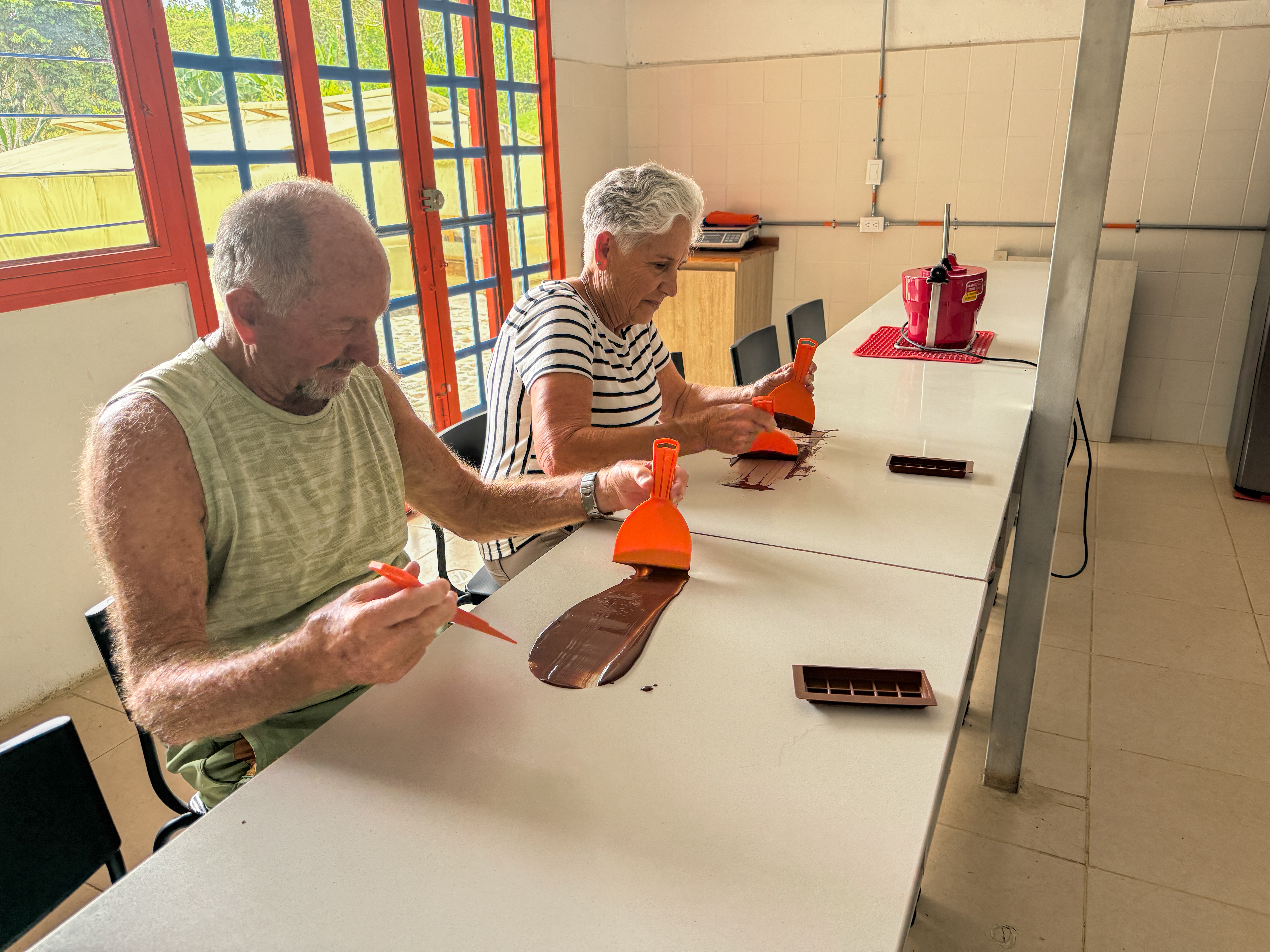
Decidedly rural…country. But a place of gustatory delight. Would we care to partake of a five course meal featuring the chef’s offering of specialties from as many different Colombian regions? Oh, twist our arms.
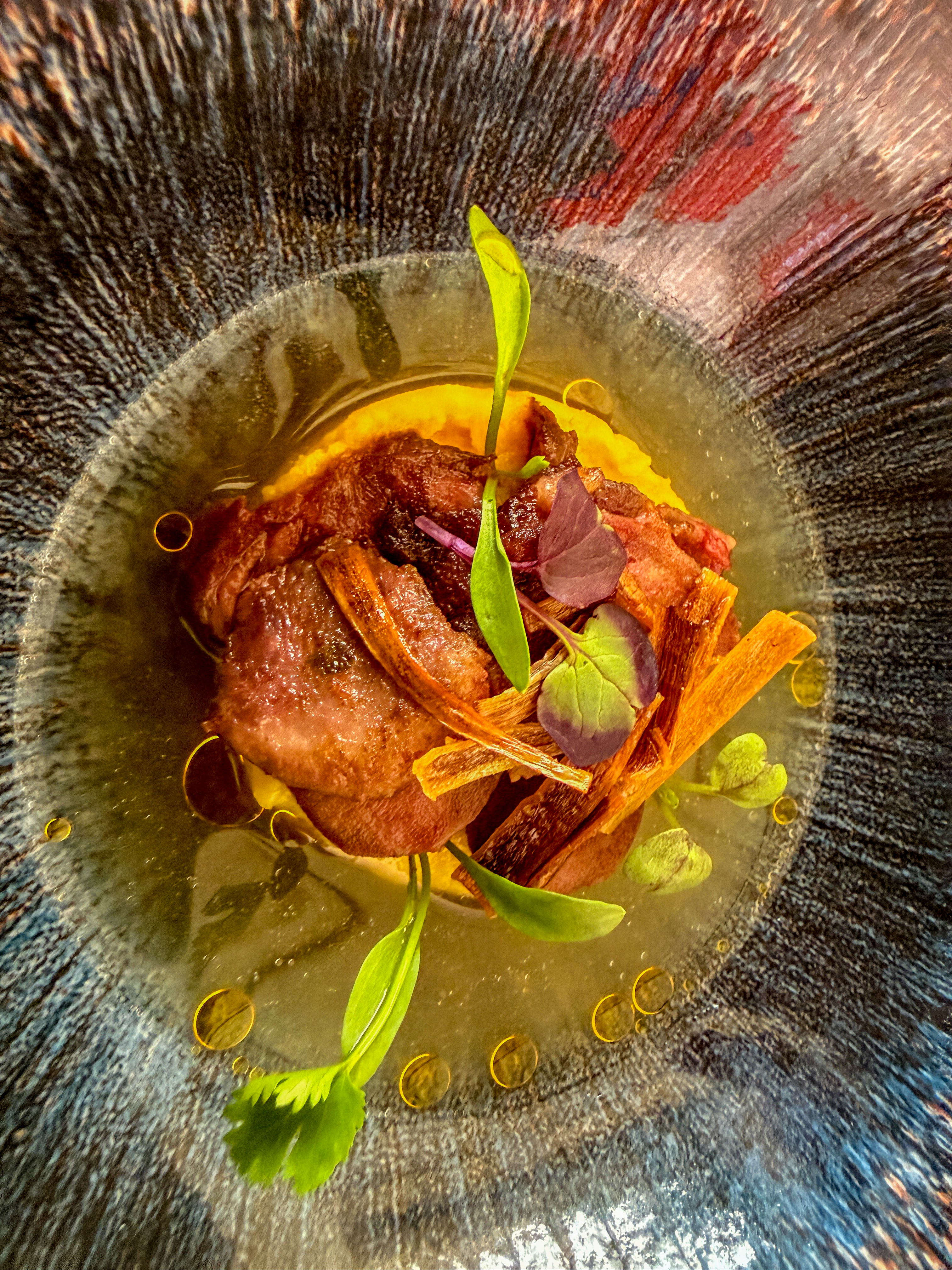
This the place to “Why Colombia” wonder as to traveler turistas? In cities like Bogotá and Medellín the water is safe to drink from the tap. Elsewhere in Colombia, stick to purified bottled water and beverage ice, and it was provided everywhere. We ate in small local cafés and upscale restaurants. Routinely delicious, and nary a problem. I even tried Colombian coffee, quite the lark for this non-coffee-drinker, and of course the hot chocolate at Casa Rivera. Club Colombia cerveza was quite serviceable, but we were warned off local wines, preferring Chilean and Argentine. Margaritas were always a delight, but we struck out on pisco sours, a distilled grape liquor that caught our fancy in Chile decades back.
Traveling, we are informed by our personal past. The lushness of the early morning jaunt to the SoñArte nature reserve before flying to Medellín, transported us back to Rwanda’s “Gorillas in the Mist” Virunga mountains. Why we travel—new experiences in old memories. Life.
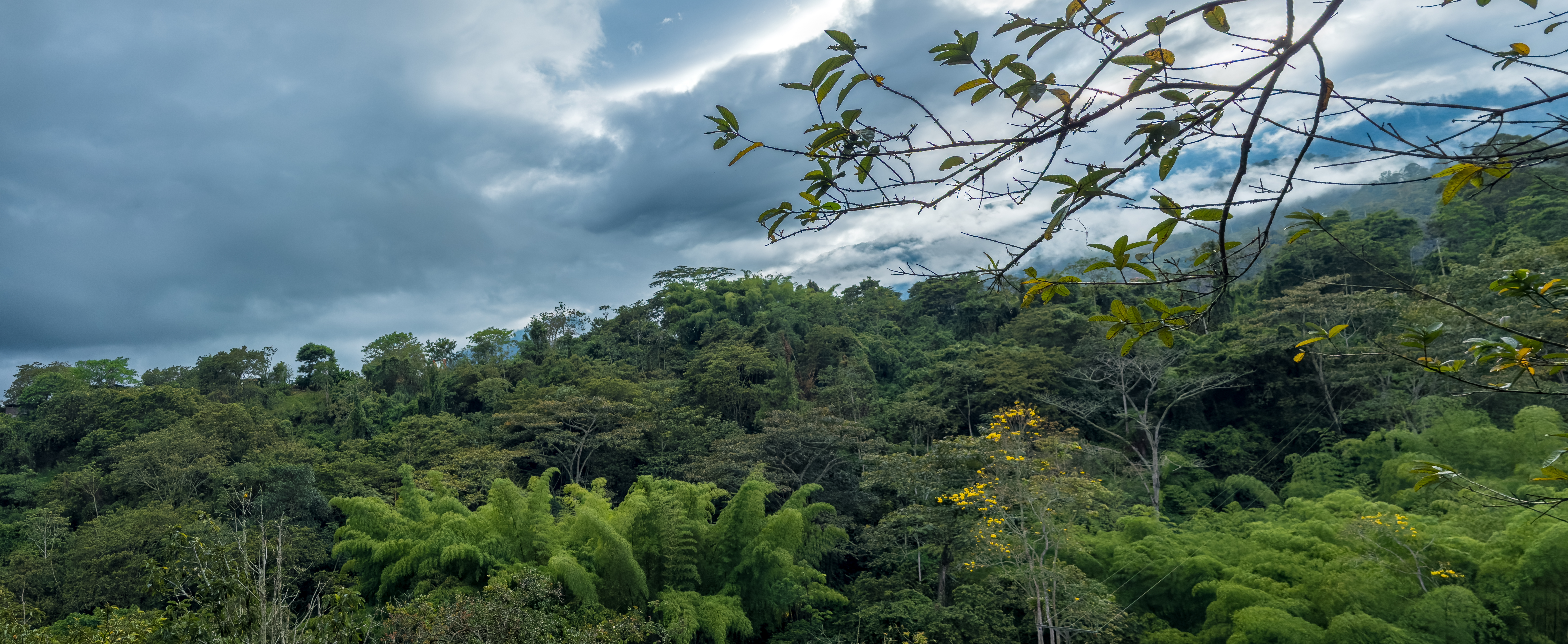
SoñArte is a private birder’s nature reserve, applauded by the Audubon Society, and in the heart of the Colombian North-South migratory routes. The country’s mix of mountains, plains, and coasts playing host to 20% of all bird species on earth and nearly 80 or so that are endemic to only here. Given the way tropical birds’ iridescent plumage reflects the light differently depending on viewing angle, our guide, Daniel, confirmed that determining a species is helped by both behavior and song. I’m no bird expert, but find their antics a delight, and their colors in keeping with the vibrance of Colombia and its people.
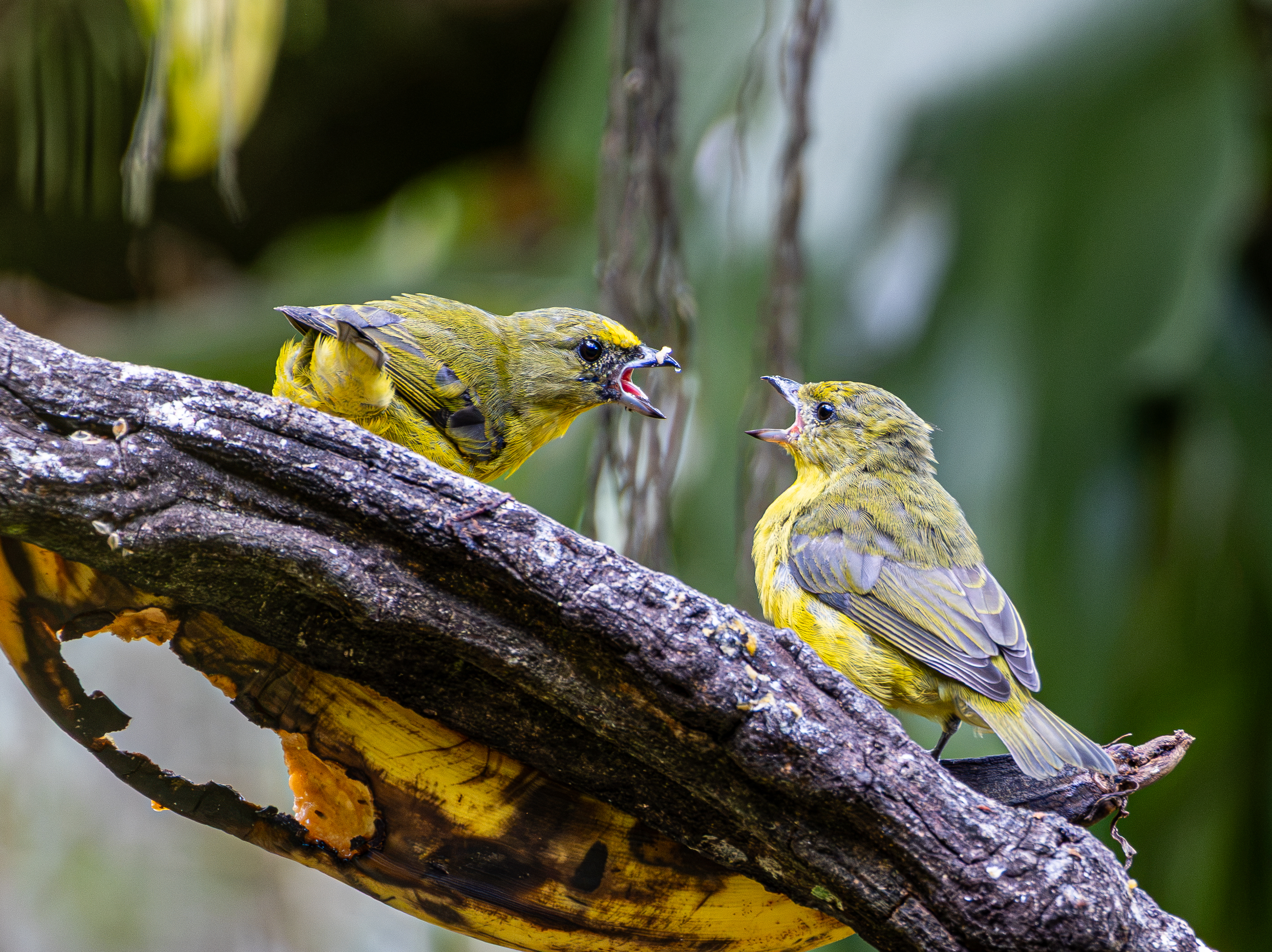
My birding friend Billy says the above is not a marital spat, but likely adult and youngster sorting out some life lesson.
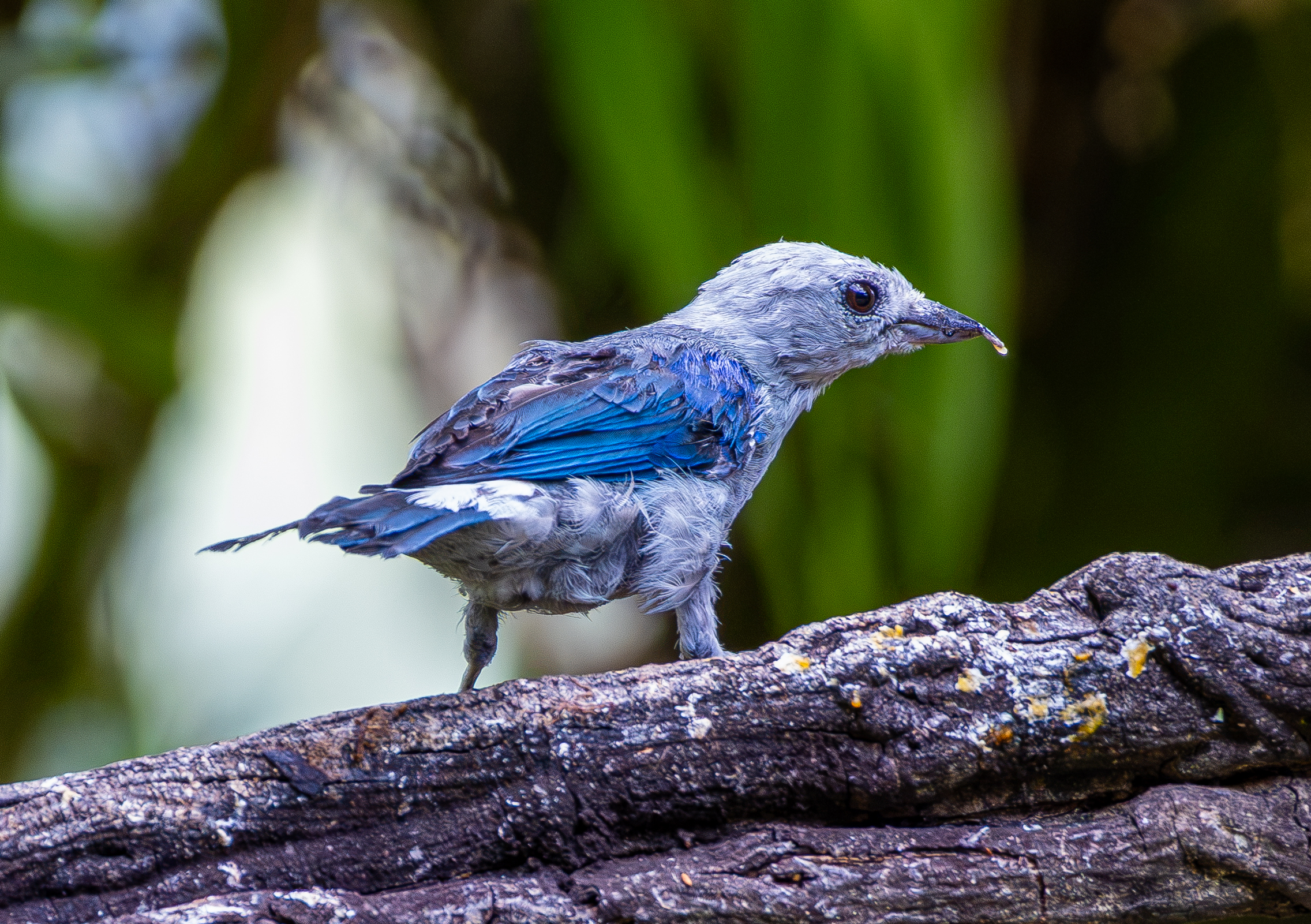
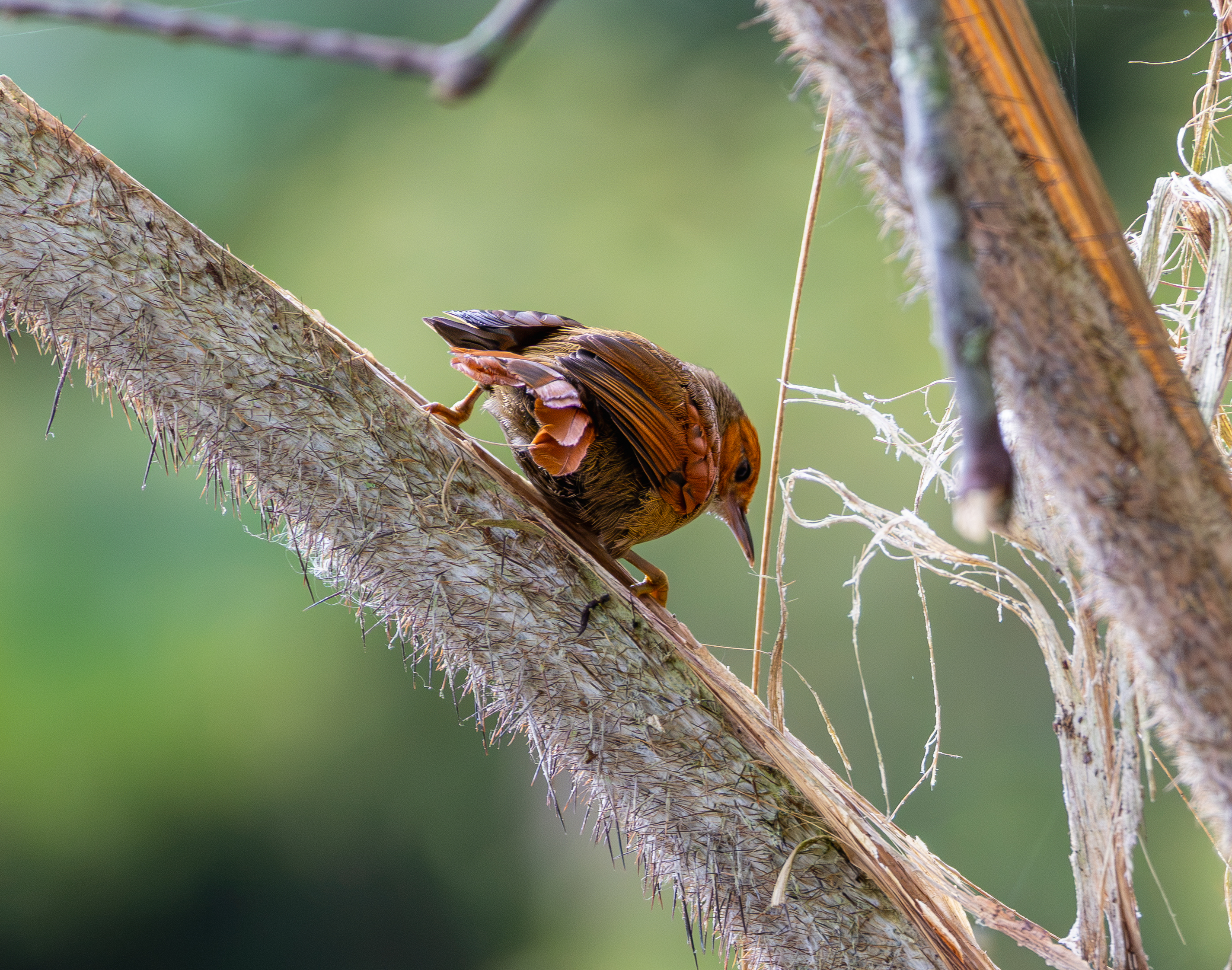
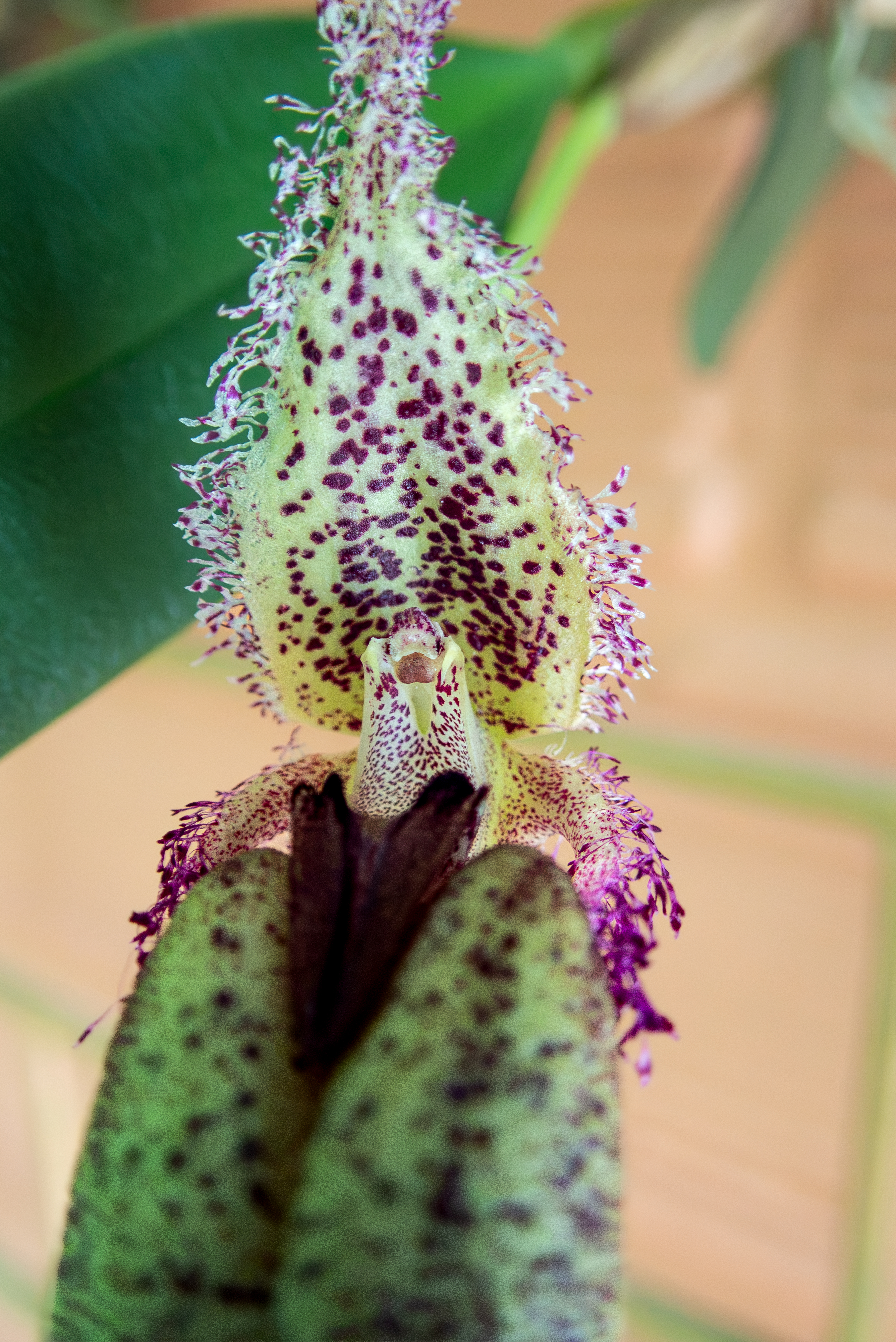
And hereabouts at Finca Romelia there were orchids and pollinators.
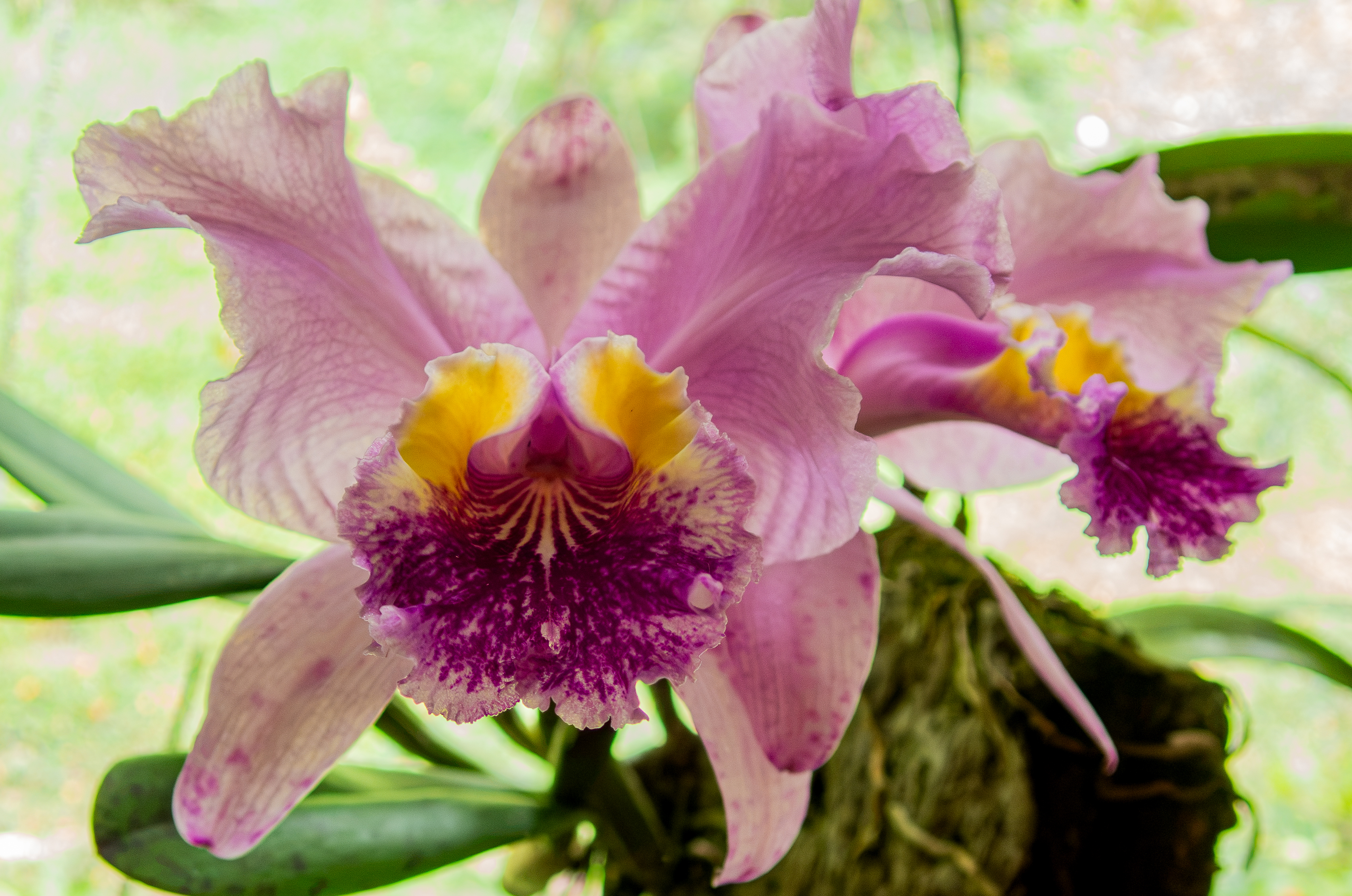
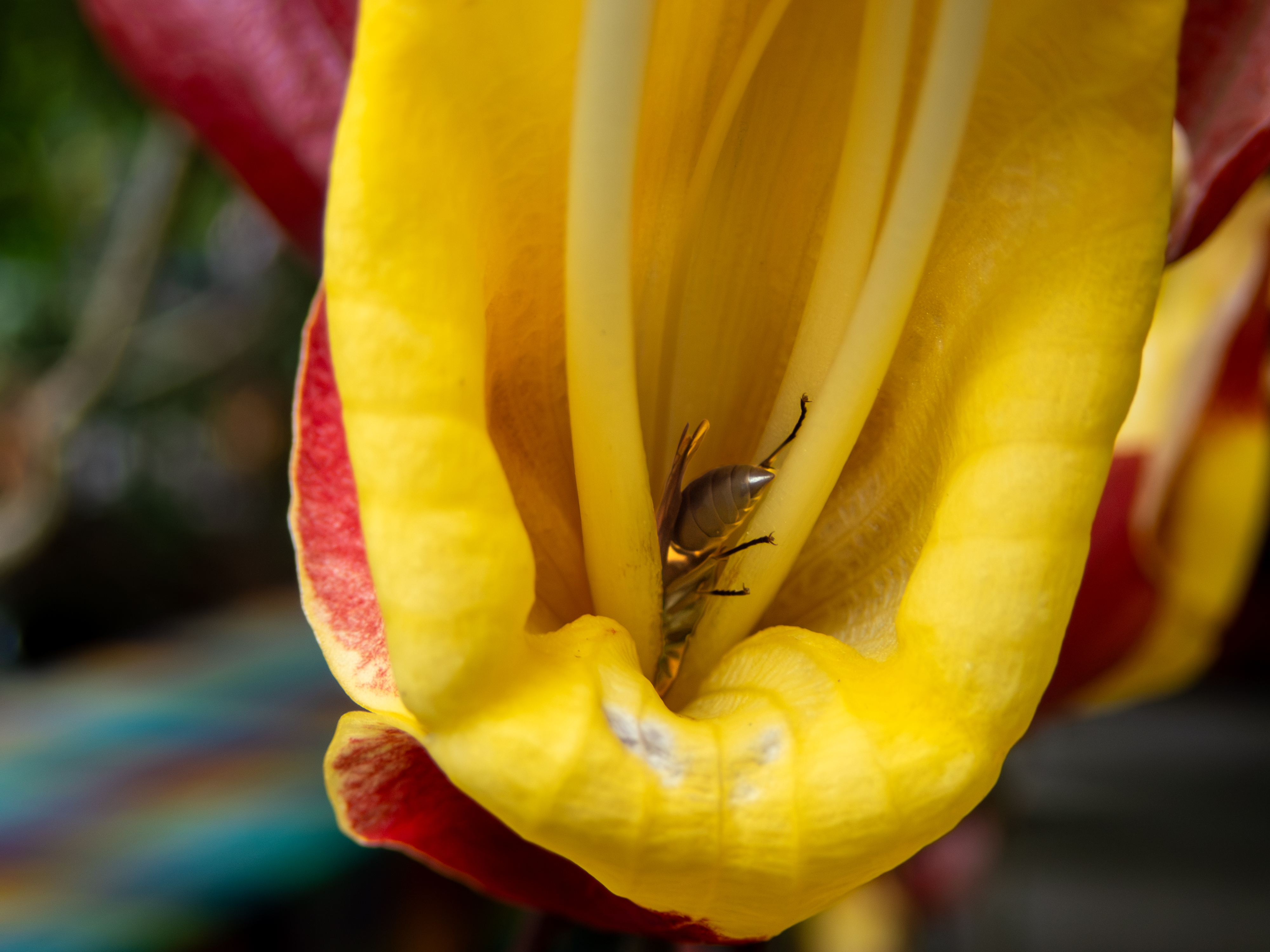
Leaving Medellín for the jungle-meets-the sea Pacific coast, I found myself in another past history meets present travel experience. Not the Virunga mountains, but the dense vegetation, twisting rivers and heat and humidity of 1968 and 1969 Vietnam.
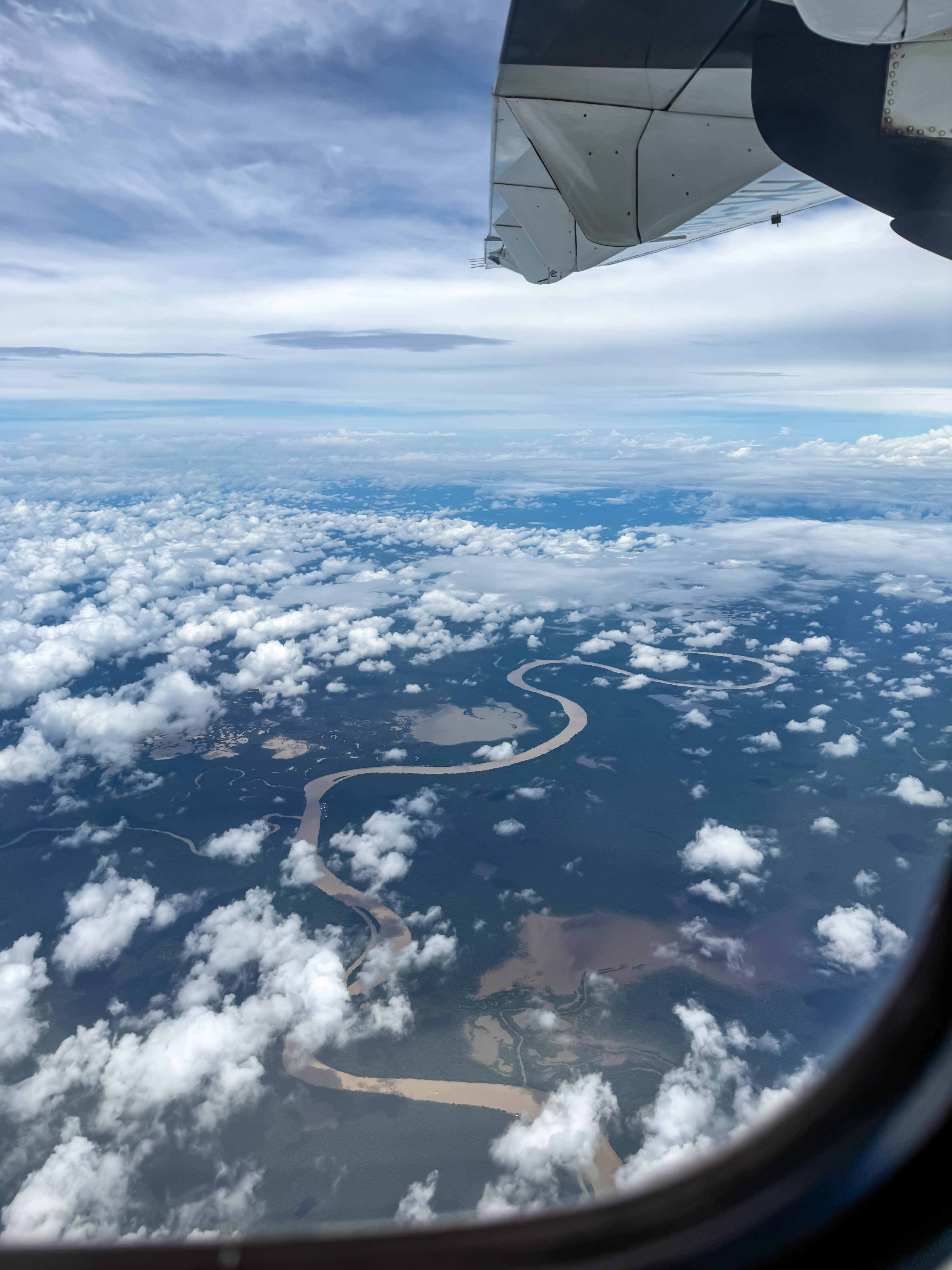
The Clic Air ATR 42 delivered us into Bahia Solano’s José Celestino Mutis aerodrome redolent of SE Asia’s mission mindset. Note the clouds topping the ridges of hills either side of the short final approach course and the downwind landing rollout in robust rain. Welcome back, grunt.
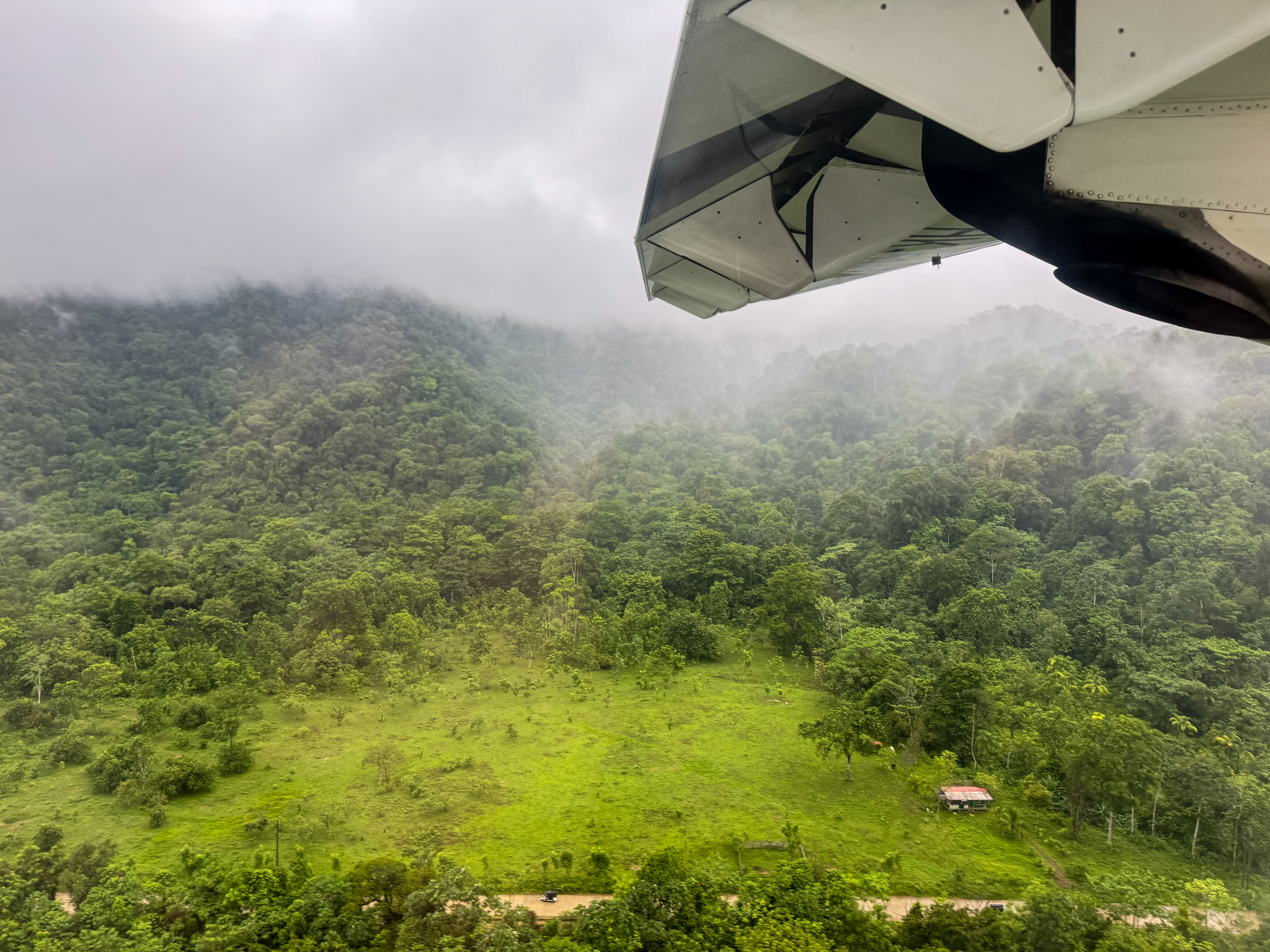
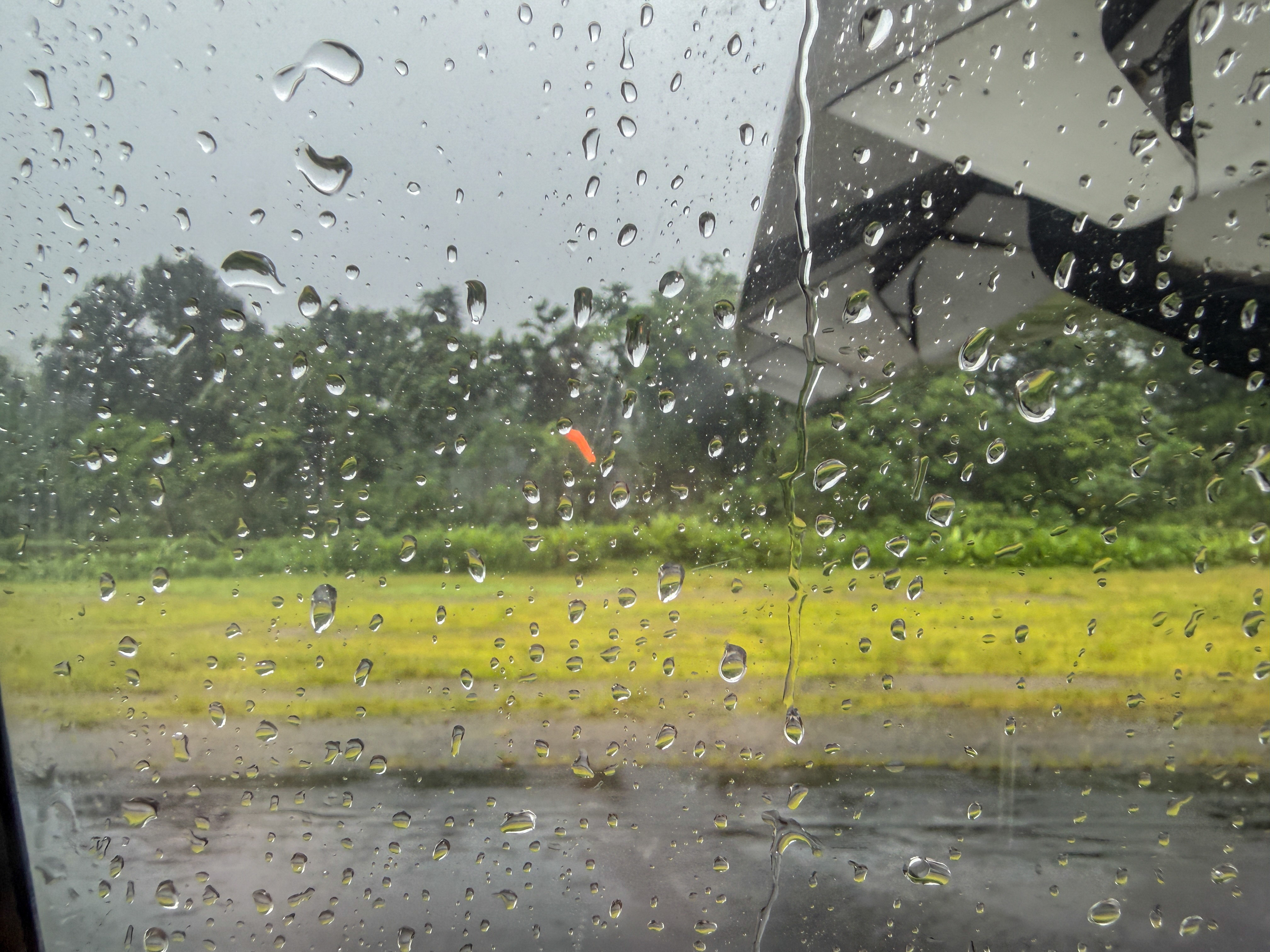
Our reason for going to this stretch of Pacific coast was its visceral natural offerings, and it was definitely unvarnished. After our turboprop landed, and turned around at the end of the runway, the small parking ramp became available only after another turboprop taxied out from that one-in, one-out pad. We swung into the ramp, did a 180 turn, then taxied backwards to reach our shutdown spot. Fortunately I had looked up the weather at the Bahia Solano aerodrome and both of us had our umbrellas ready for the dash across the ramp into the “arrivals area”—a tin roofed, open sided passageway about 15 feet wide and 100 feet long. Bags collected, while trying to make our way to a vehicle with the name of our Kurrulau lodging affixed to the side, I was stopped while still under the tin roof by our assigned guide. Melana, who having deduced that we didn’t look “local,” introduced herself and shared that we were waiting for two more passengers on another inbound flight. Which meant that our plane had to first leave.
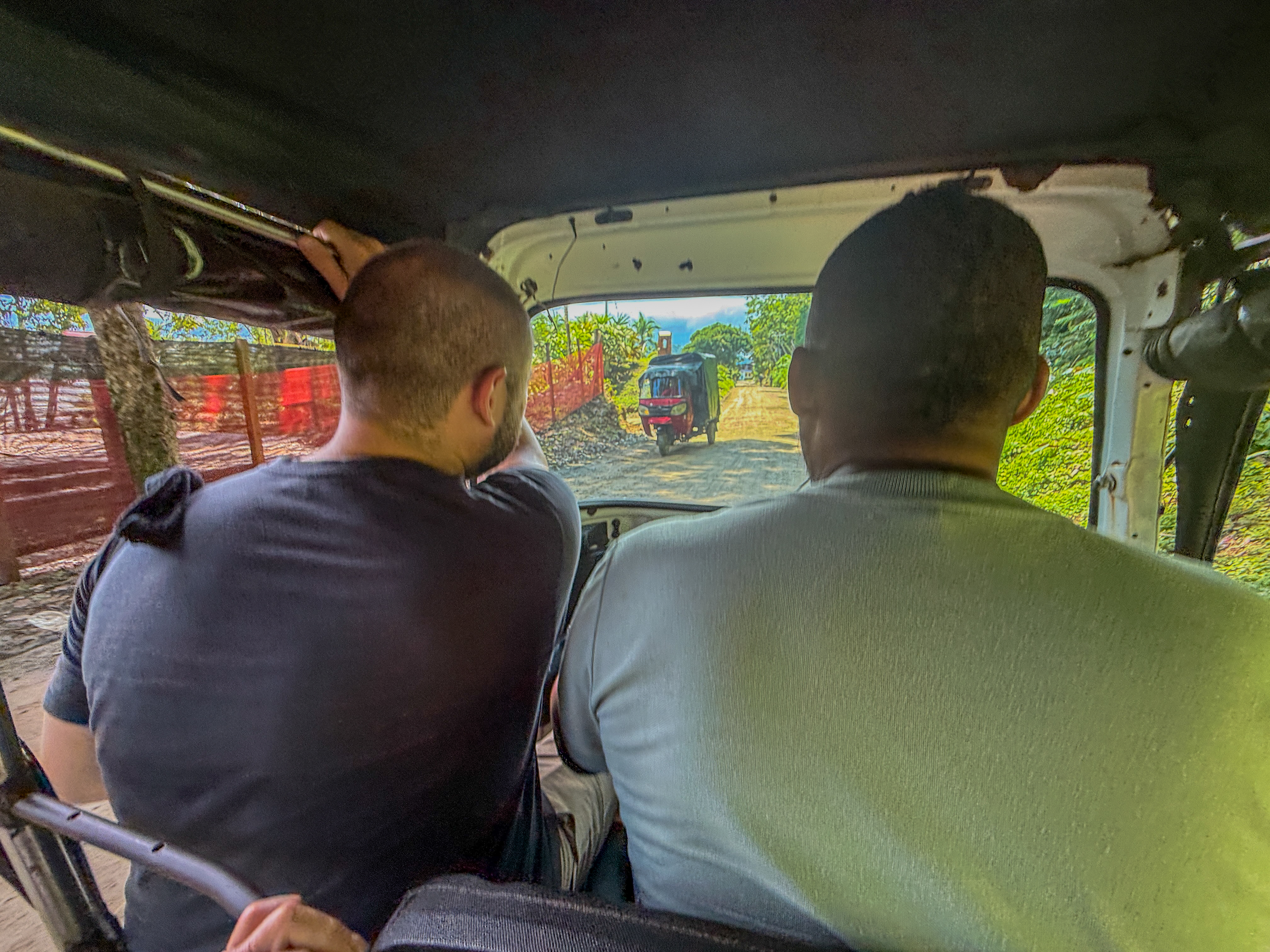
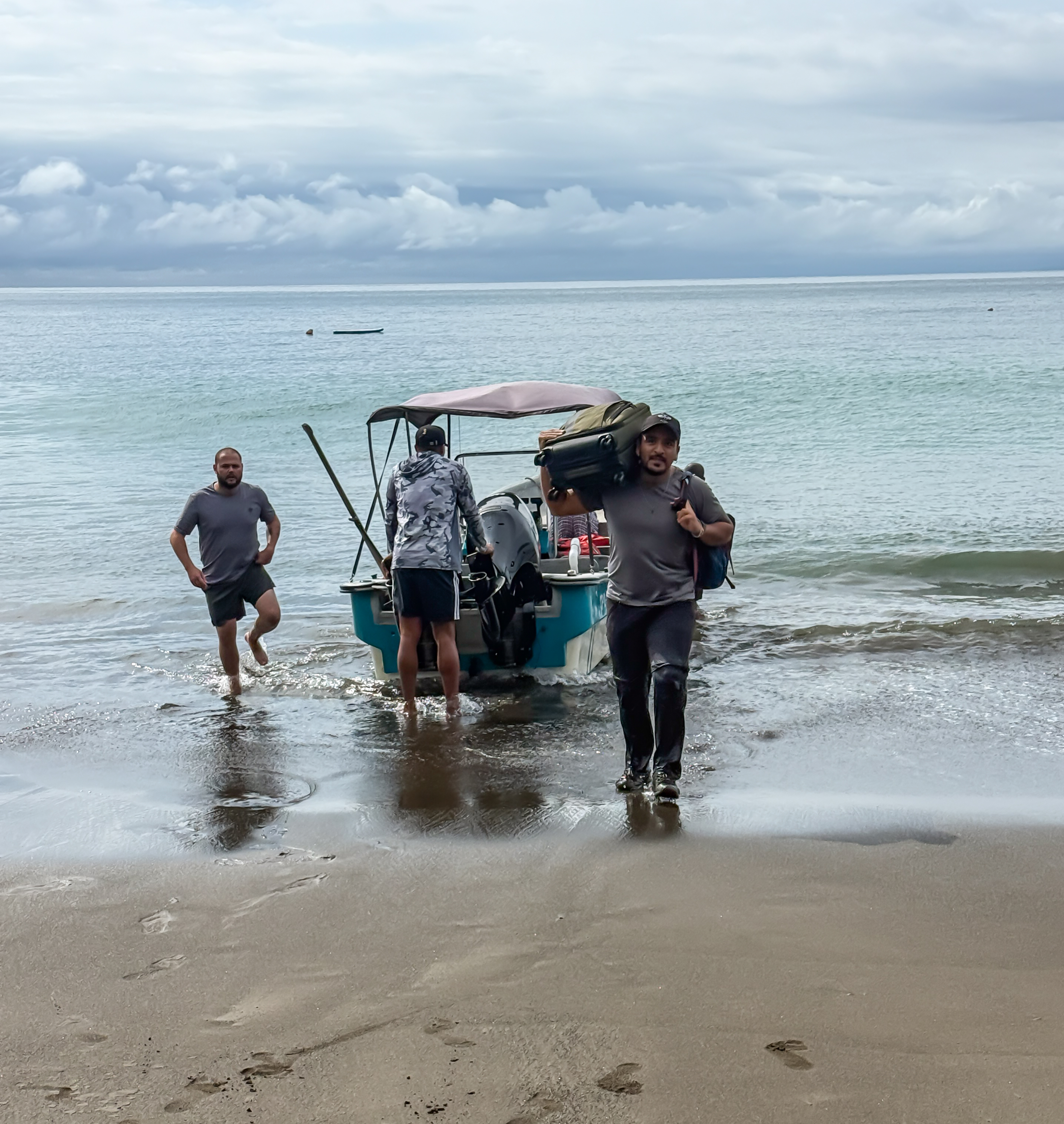
A common form of Colombian remote transport—the local Tuk-Tuk take on the rickshaws of yore. Once we collected the inbound passengers, it was off to a small harbor so as to wade from the shore into your basic 20 foot-long panga for our :30 transit by sea to the Kurrulau Hotel Playa Pacifica. https://www.kurrulau.com/. Yep, wade to the boat, then at our destination, wade from the boat. A Carnival cruise of a different sort.
The lodge consisted of multiple stilt-elevated walkways to small groups of likewise elevated single-walled, tin-roofed rooms, each with “en-suite bath”, including cold water shower, and comfortable beds under mosquito netting. Overhead fans. The U.S. CDC labeled the area as one of severe malaria risk. We took prophylactic pills, but the bug annoyance was very modest to nonexistent. There was electricity and lights when the generator functioned, which was most of the time. Ditto Wi-Fi when the electricity was available. Which was most of the time. The hotel had begun only about three years previously as a sort of outward-bound camp for Colombian teenagers. It’s in the midst of growing pains for adult vacationers. But it lived up to its offering the immediacy of raw nature. On our first two evenings we were treated to hours of thunderstorms, lightning with tympanic accompaniment, and rain coming down like a cow peeing on a flat rock. The noise on the tin roof was as deafening as it had been outside Chu Lai. And in fact, here’s an opportunity to show their proactive effort to serve their guests. On the first night as we were about to head to the dining and common room, the rain began first. Melana took it upon herself to scamper the 150-200 yards to our hooch and bring us umbrellas, her impish smile a reflection of an ever solicitous shy nature.
A principal hope of ours was that our timing there would align with the annual migration of humpback whales from Antarctica for calving and mating at this miles-broad bahia. We scored during afternoon whale searches in the same all-purpose panga. Note the multi-canopy jungle overhanging the shore.
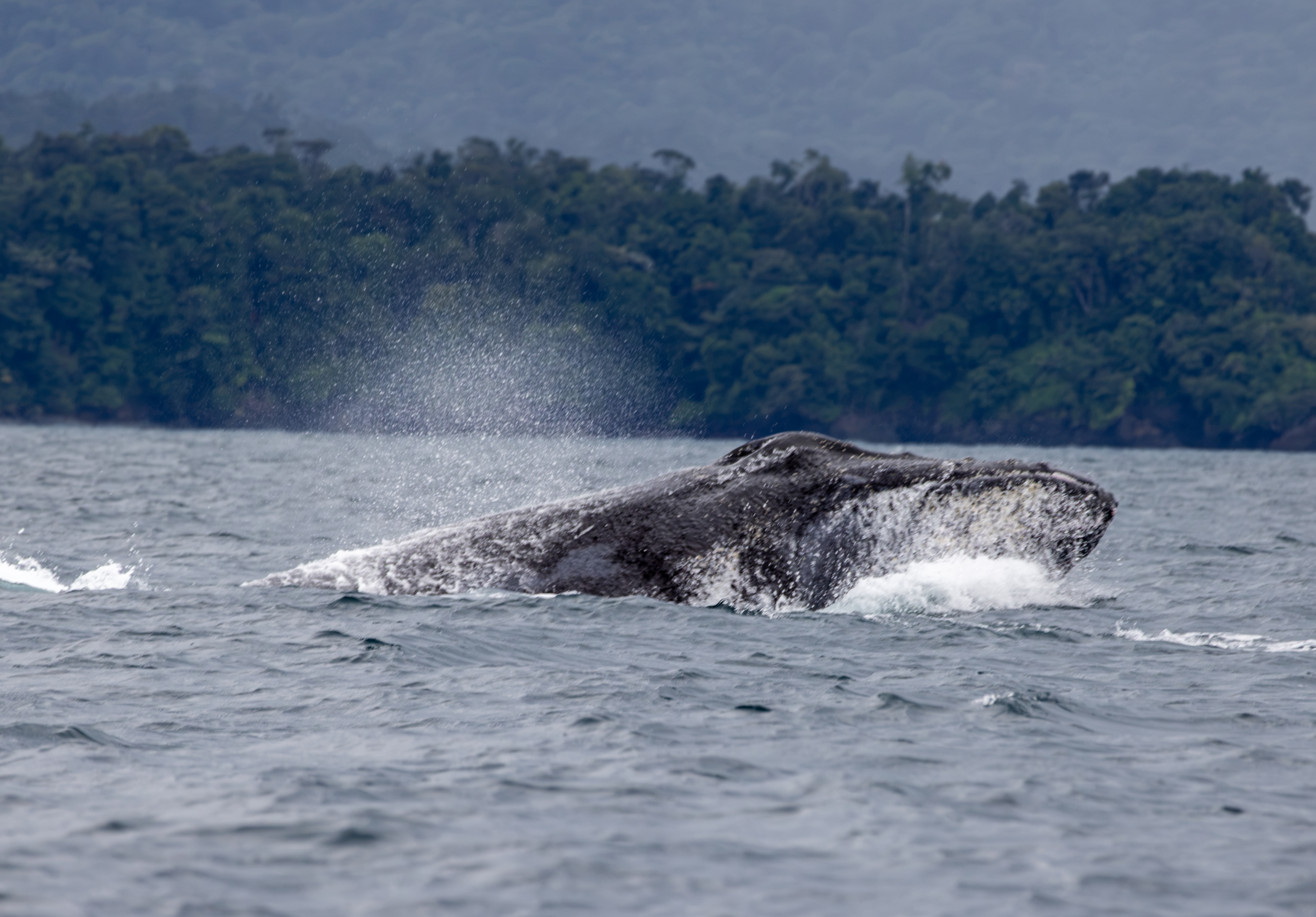
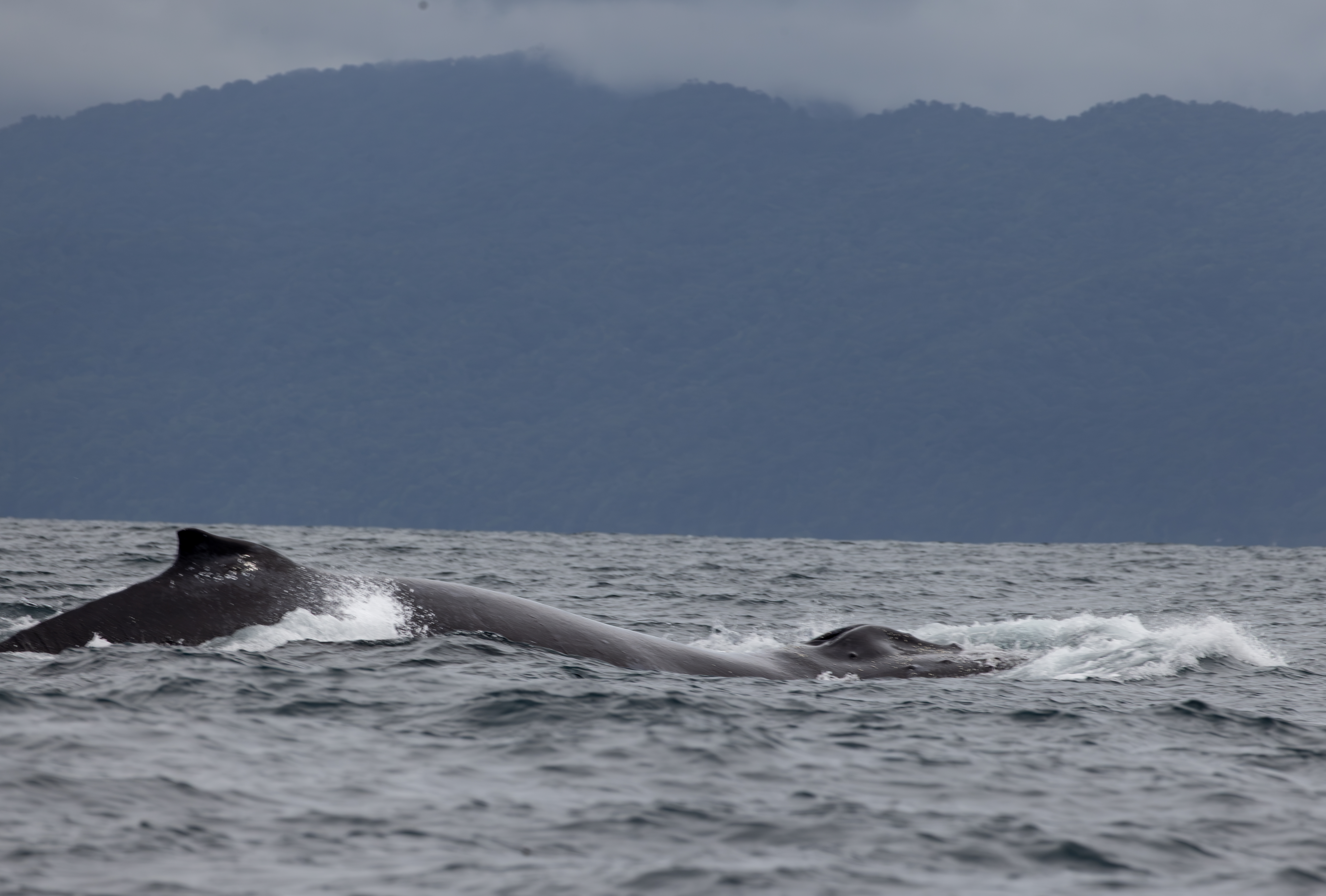
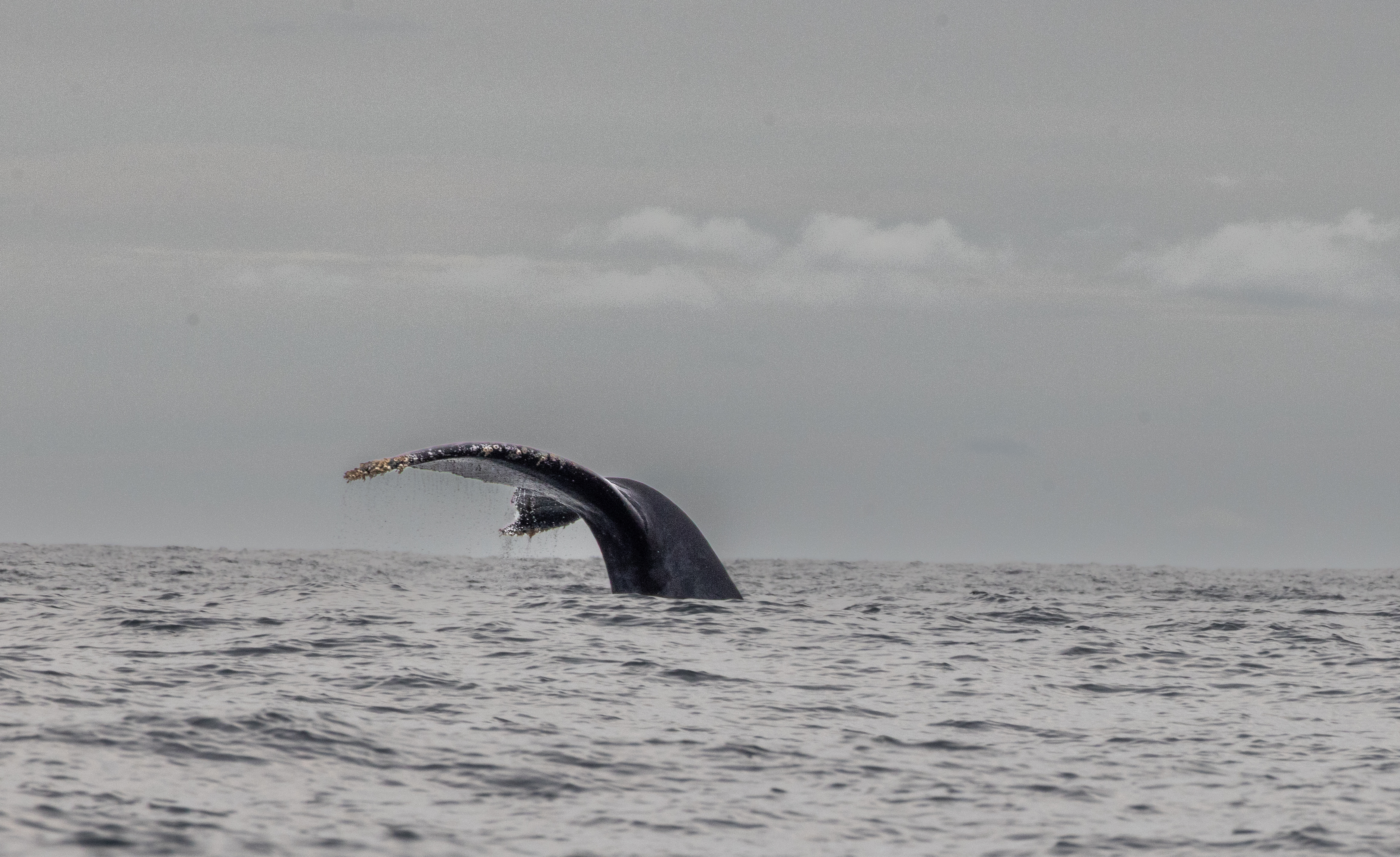
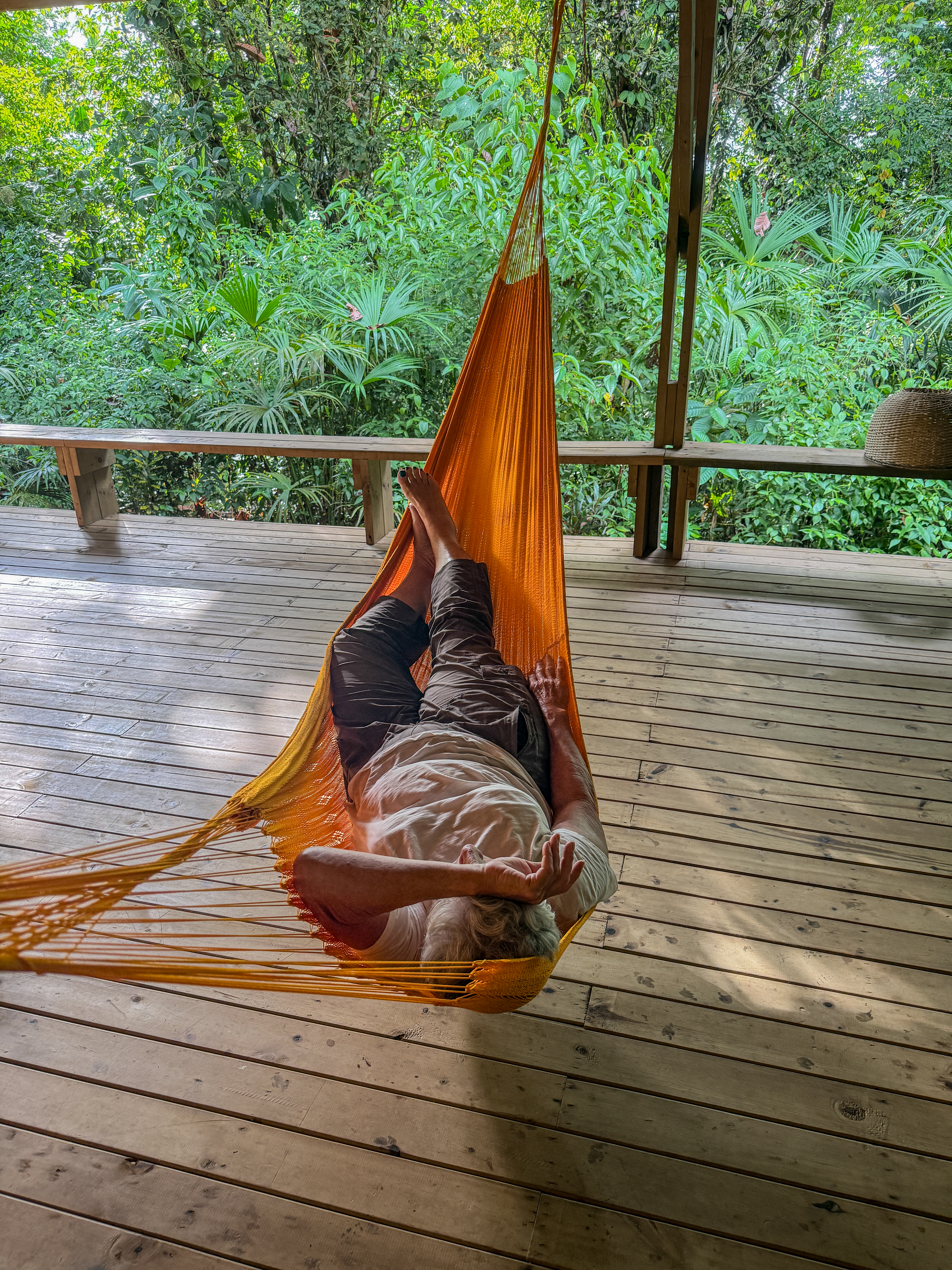
All that panga crashing about can be fatiguing. Cathy, resting on her laurels.
Jungle hikes to waterfalls were also offered. Nice in their own right, serendipitous in the bargain.
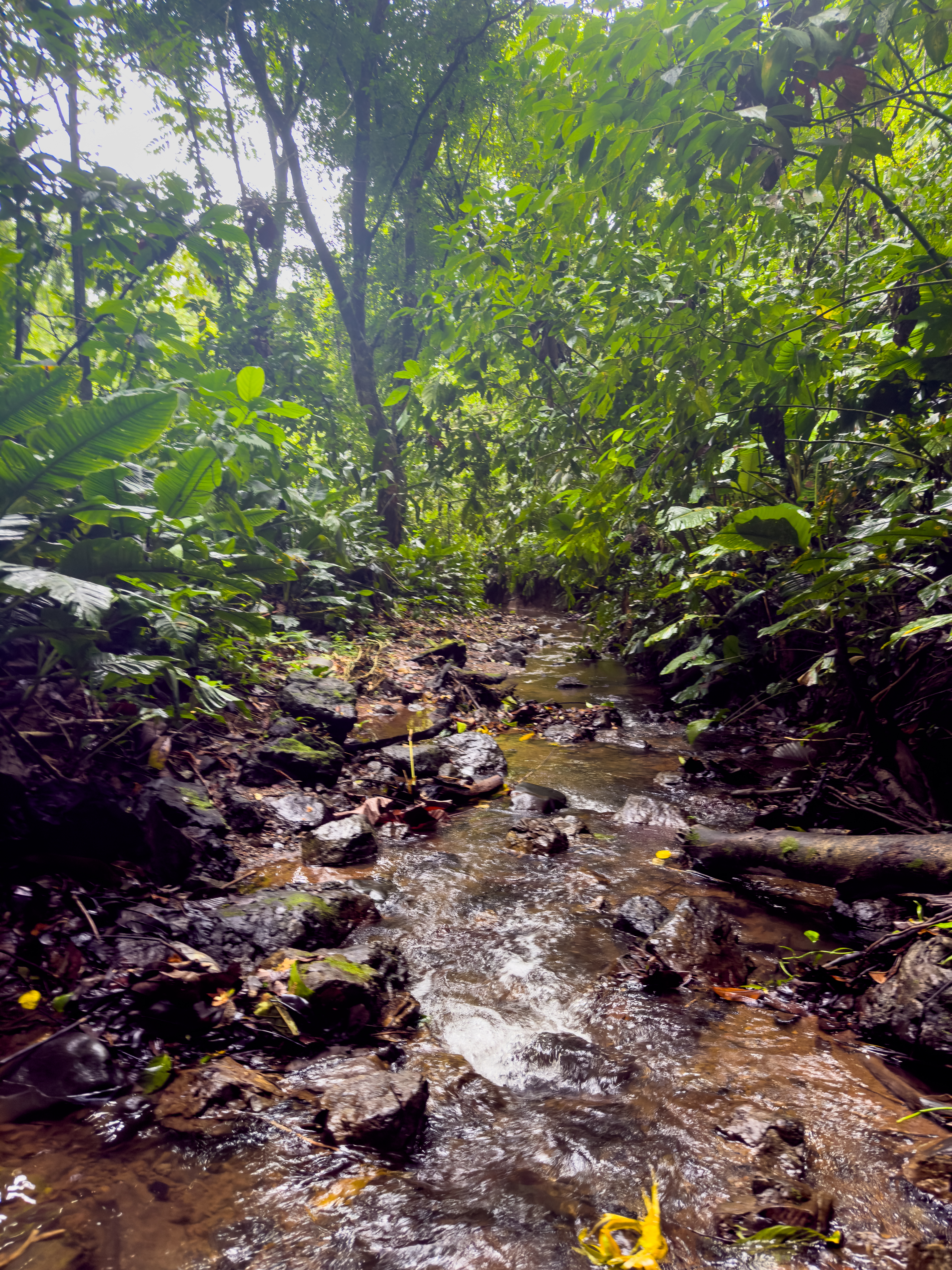
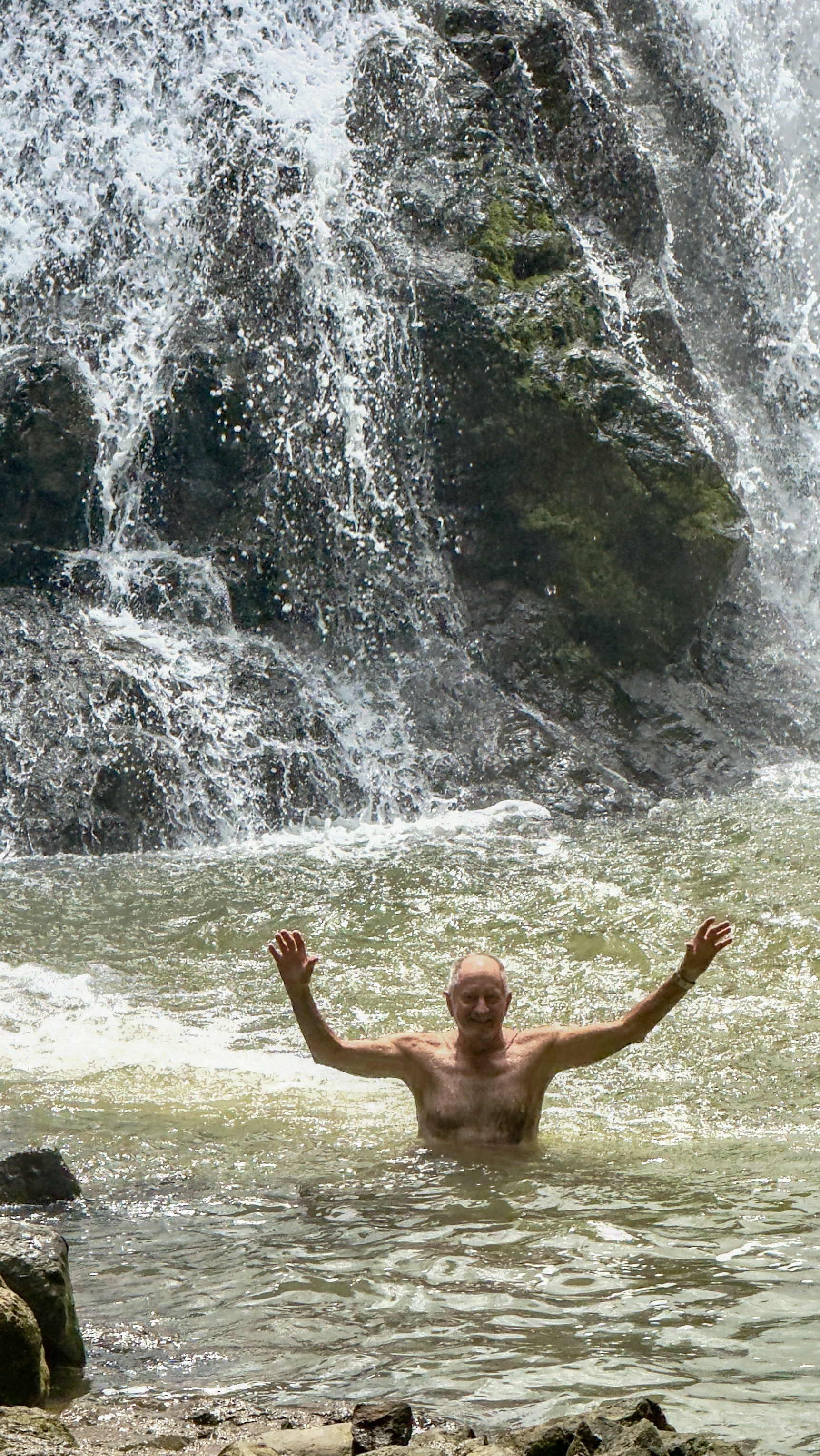
The trail destination, and His Geezerness deftly avoiding being swept downstream.
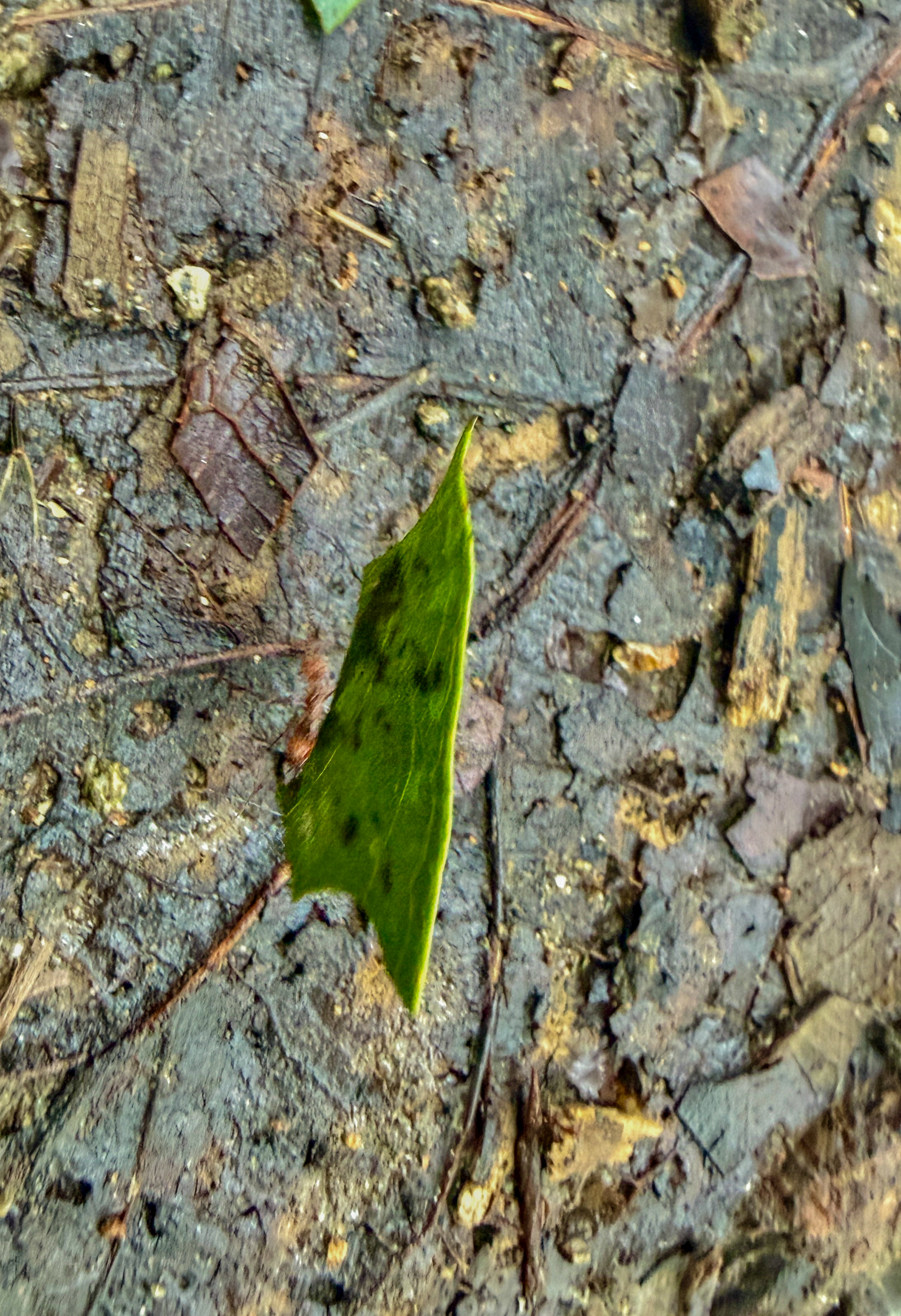
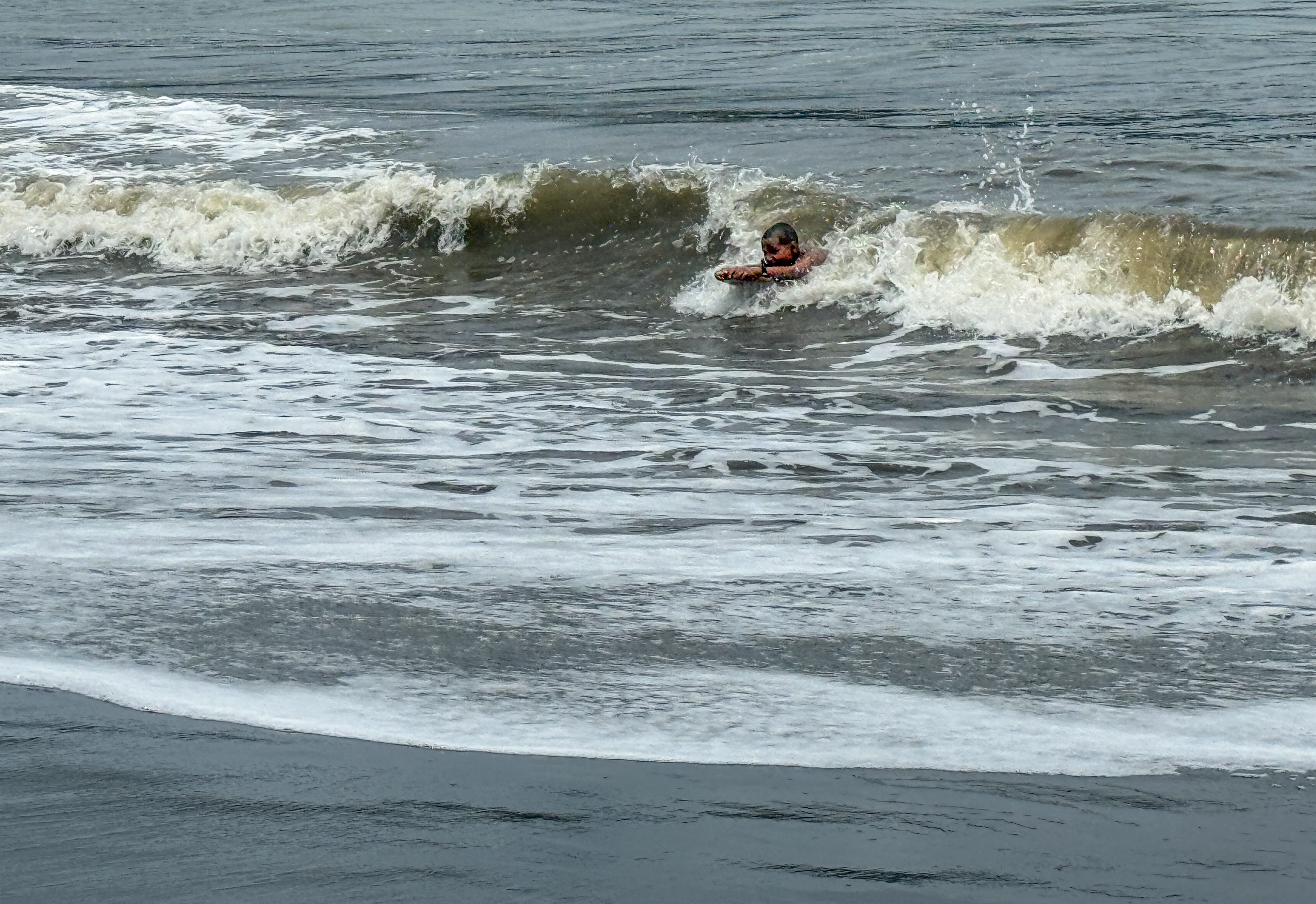
Serendipity knocked twice. First, the leaf-cutter. Then returning to the shore, two indigeño youngsters paipo-boarding in the shore break. Small prone-ridden leftovers from something in their tiny village. Where Tom Morey got his Boogie-board inspiration. I couldn’t resist, doffing my sandals and shirt, I waded in and joined them. I was offered their boards, but gestured that I’d stick to body surfing. I can only imagine what they thought of me. Worth the whole trip.
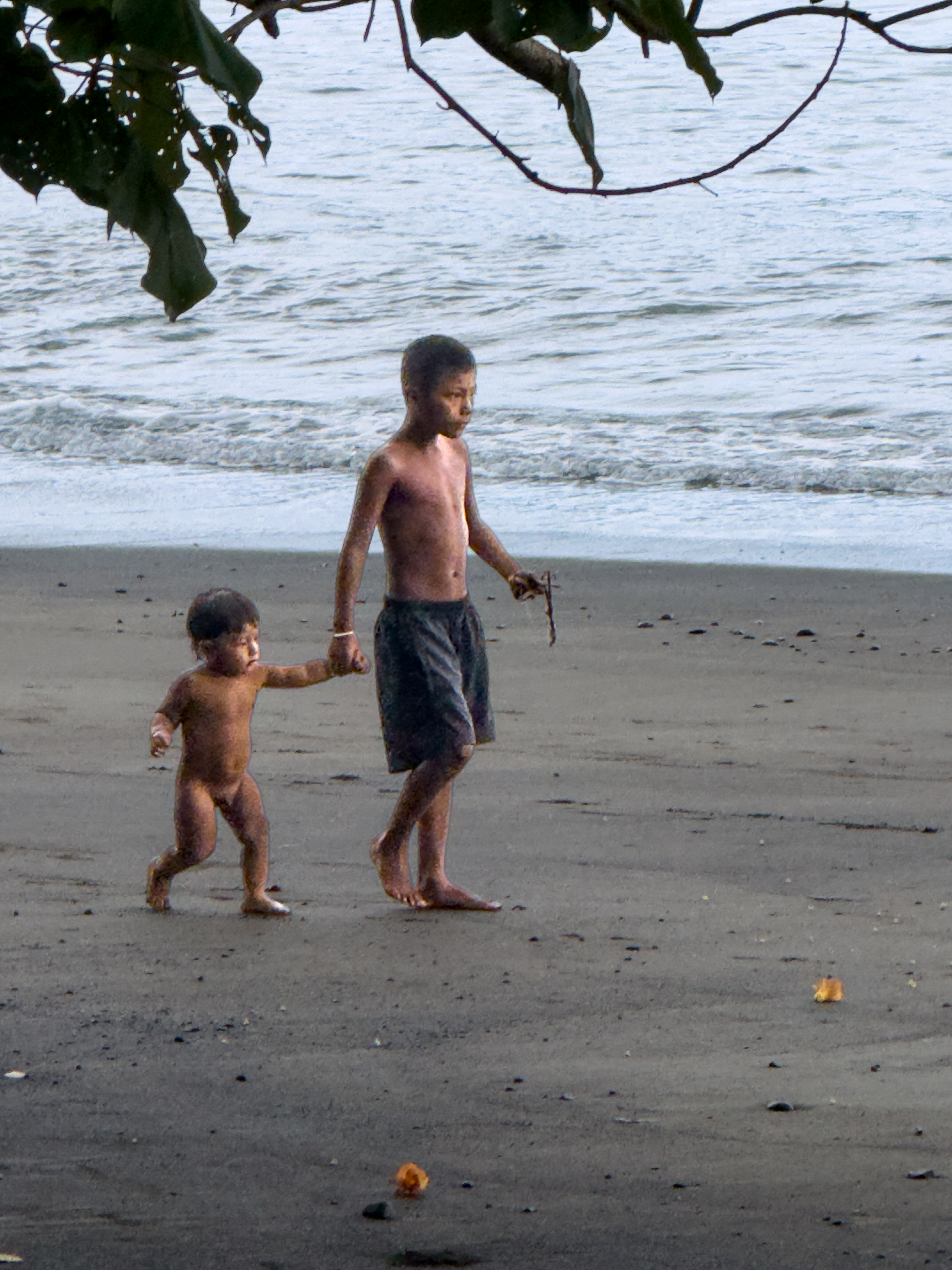
After depleting vim and vigor it was time to chill and recharge. The beach view as big brother undertakes mom’s necessaries. Infinitely preferable to the U.S. daily news. Note the fallen flowers scattered by the breeze.
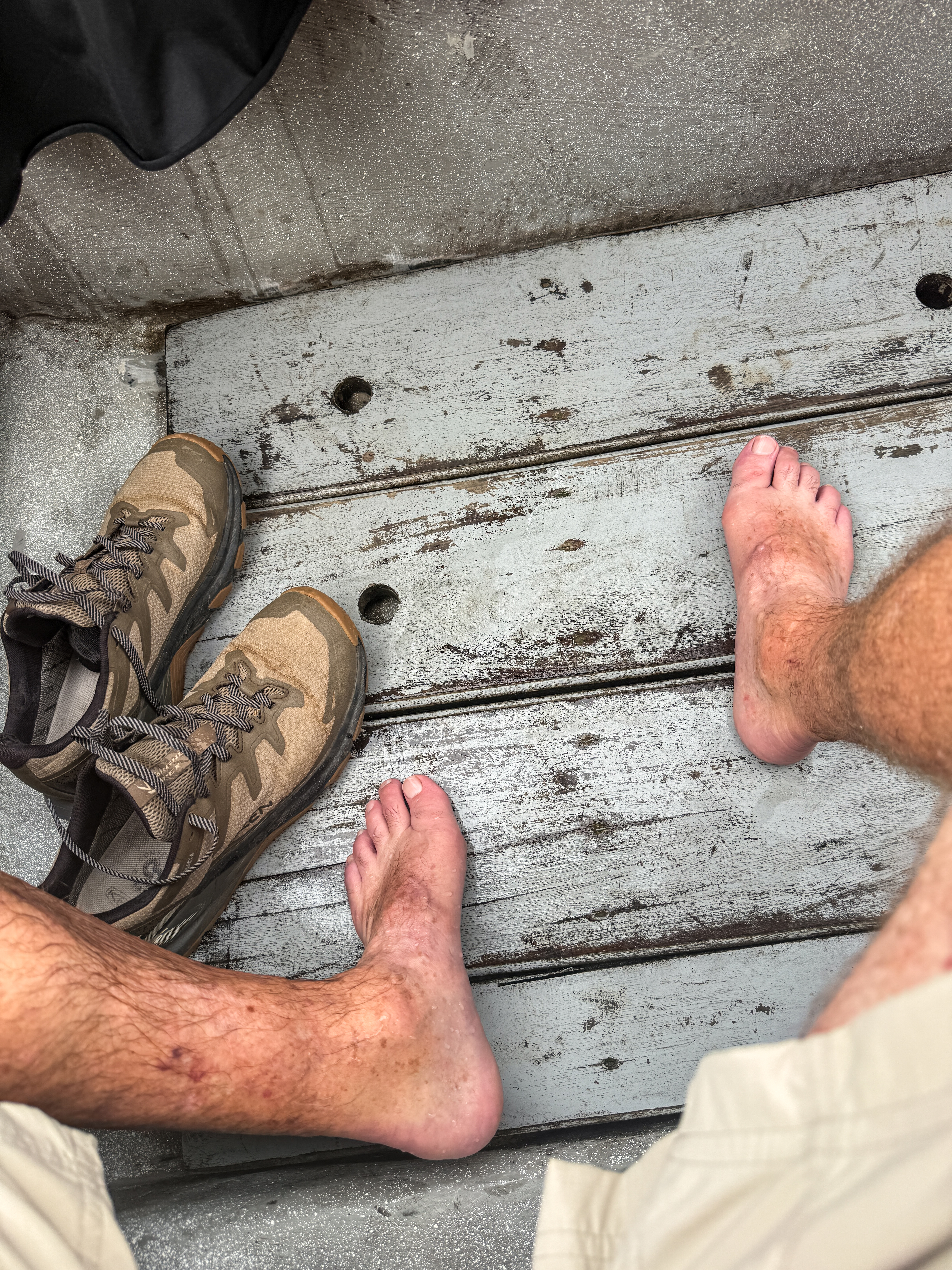
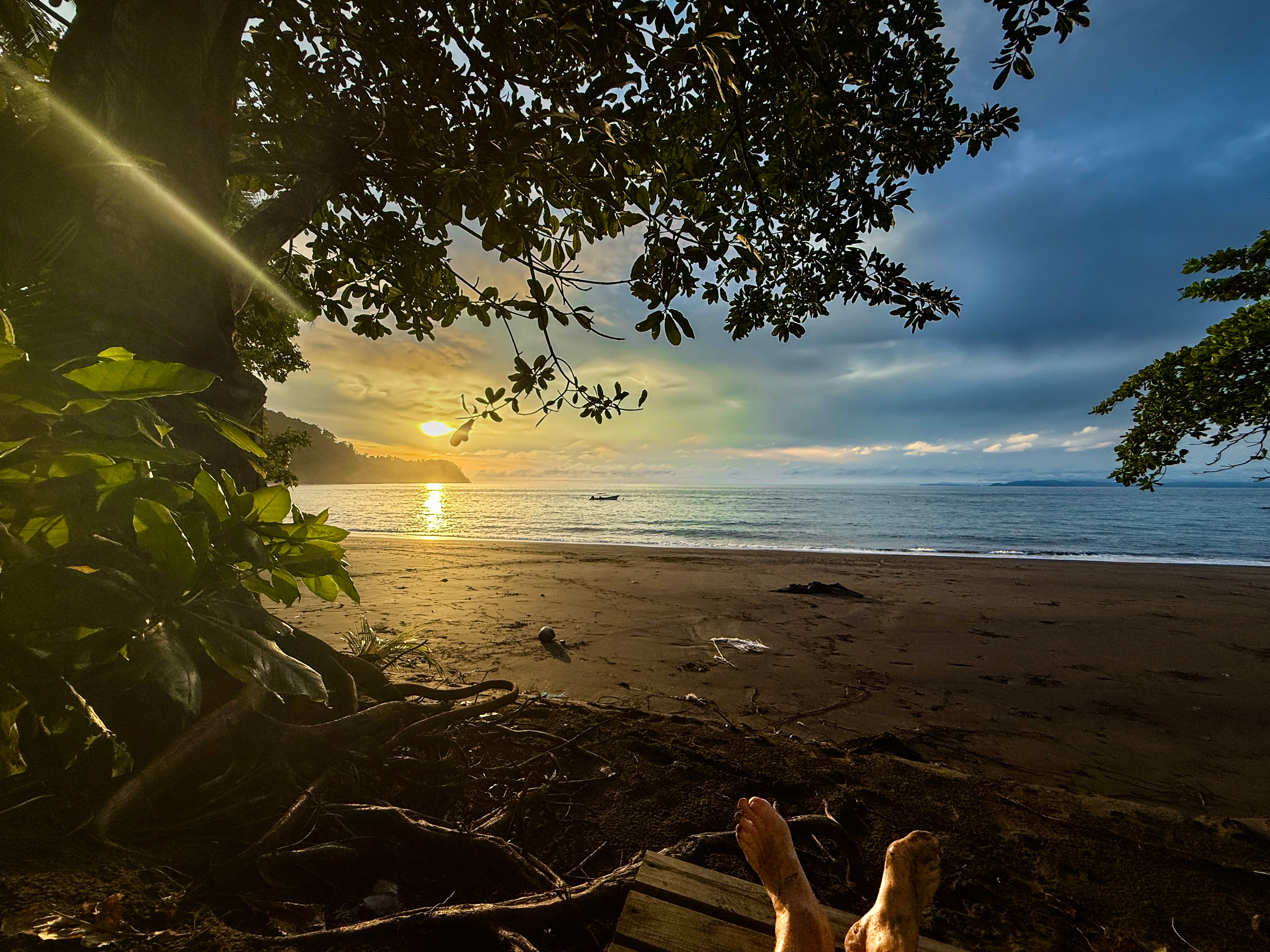
Afternoon becomes sundown. A cold brewski denouement to the day. Shameless posing of my feet.
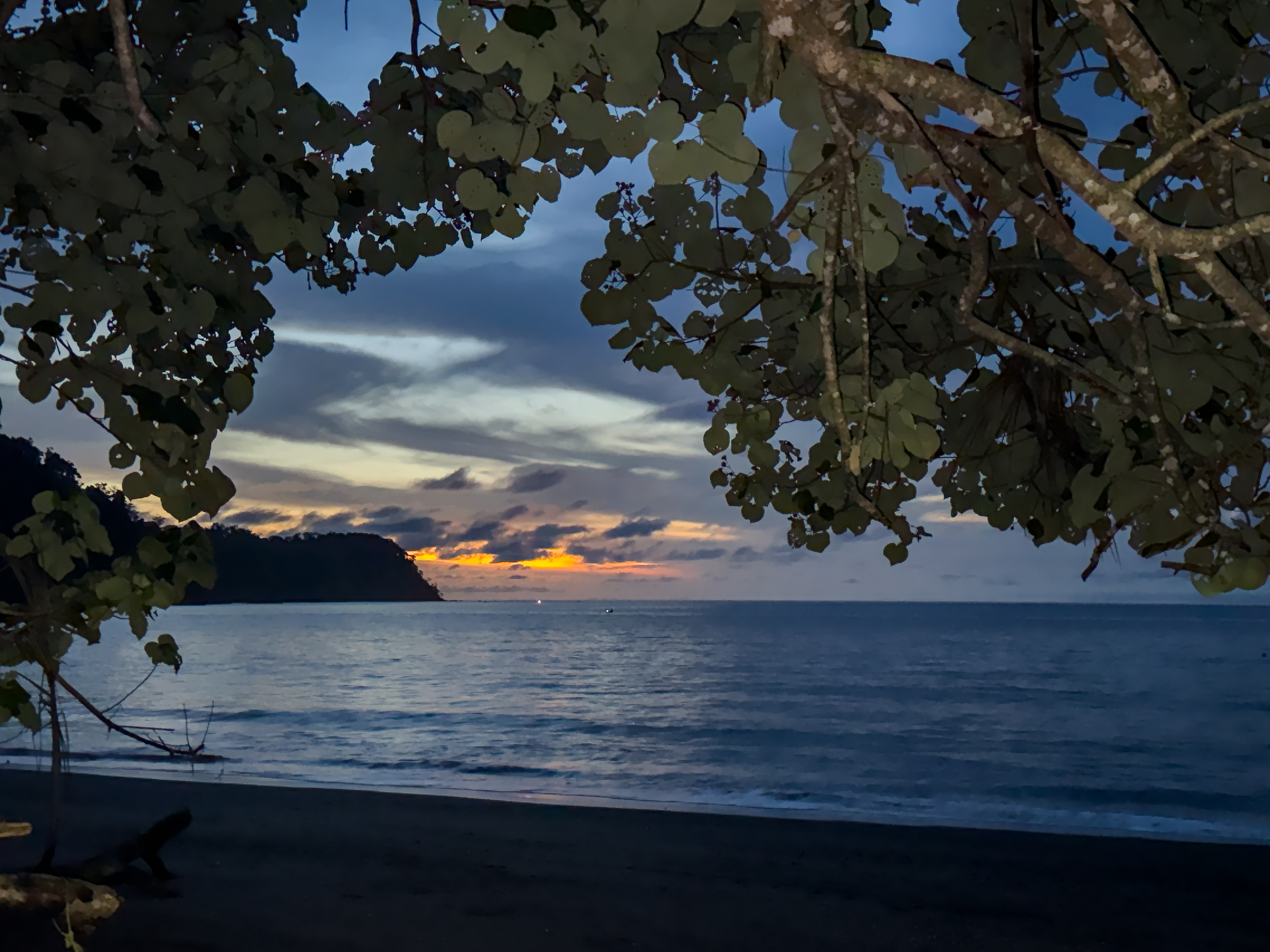
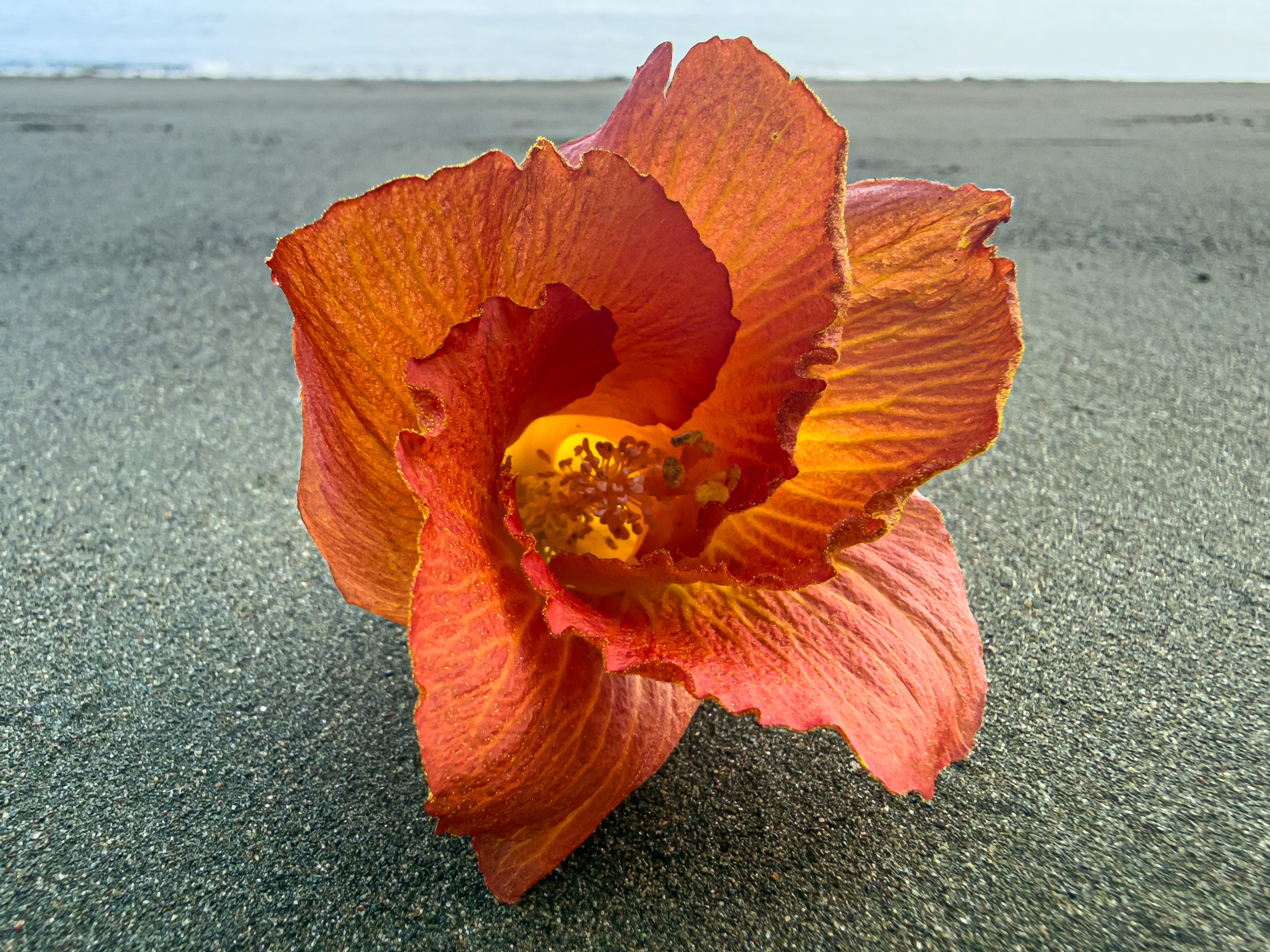
Early the next morning I Robinson Crusoed the beach, scattering away countless one-(left) armed crabs, nature yet again validating Colombia’s robust colorfulness. This, just fallen from an overhanging tree.
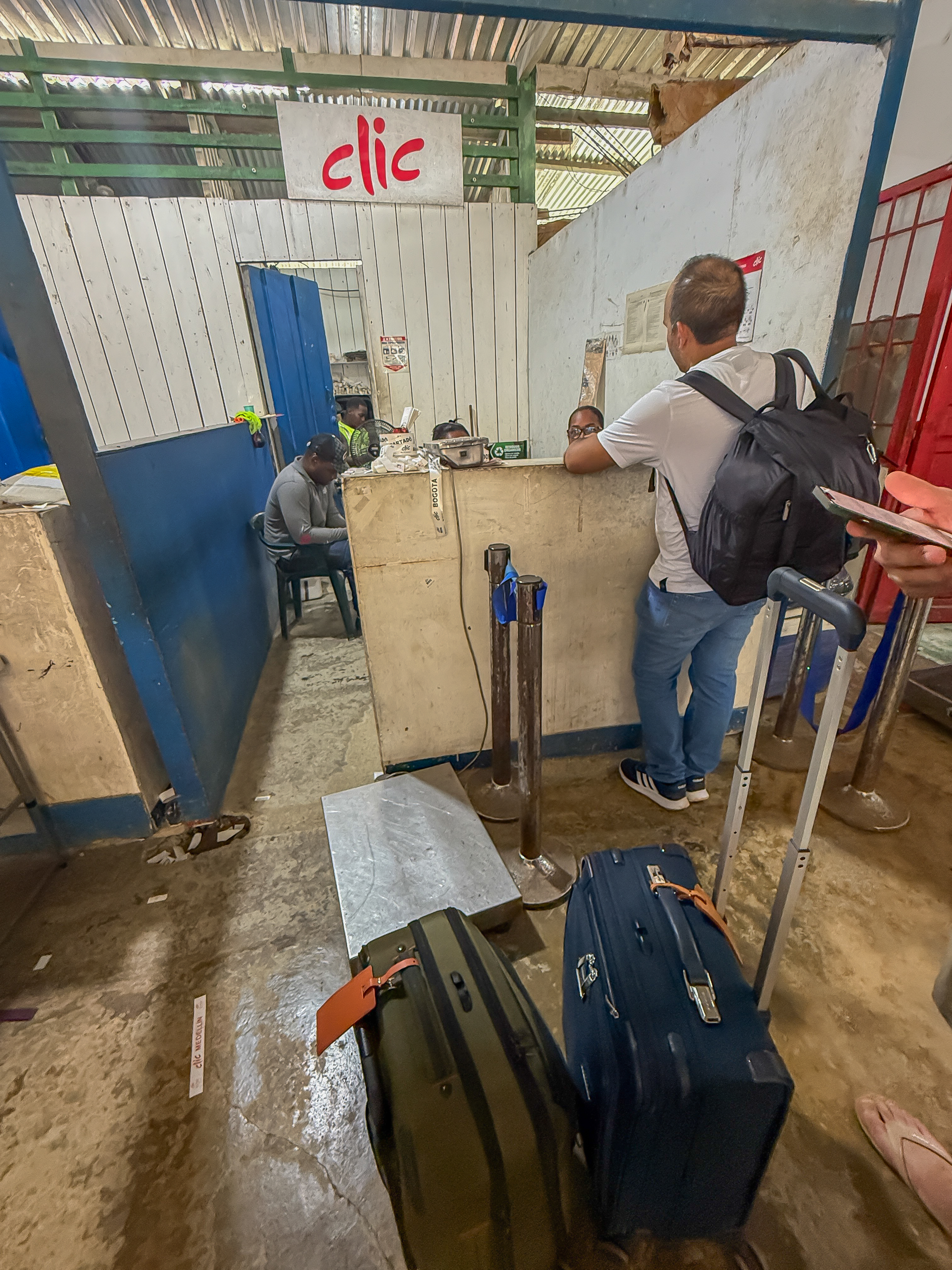
The beach, combed. The desayuno consumed. The water-taxi panga delivered us to the Bahia harbor beach, and the Tuk-Tuk presented us at the airport check-in counter. Our bags waiting to be weighed, about 12 kg, each. Followed by an on-time flight to Medellín and an overnight back at the Diez Hotel before our next morning’s return to the U.S.
I’ll close with another glimpse of the simpatico nature of every local we encountered on this journey. We left Medellín’s Hotel Diez the first time to go to Bahia Solano, from which we returned four days later. We chose to leave some of our non jungle goodies with the Diez staff for pickup on our return. At our return check-in I sought to mention this to the counter staff, but before I could utter the request, Einer, the same bellboy who took our leave-it stuff, seeing us arrive, was already settling in behind me with it and greeting us by name in the bargain. That’s first rate service.
But why Colombia? A beautiful multi-faceted country with a gracious simpatico gente. And they were very pleased to share it all with these Americanos. Could be you, too…….
Tomás y Catalina

